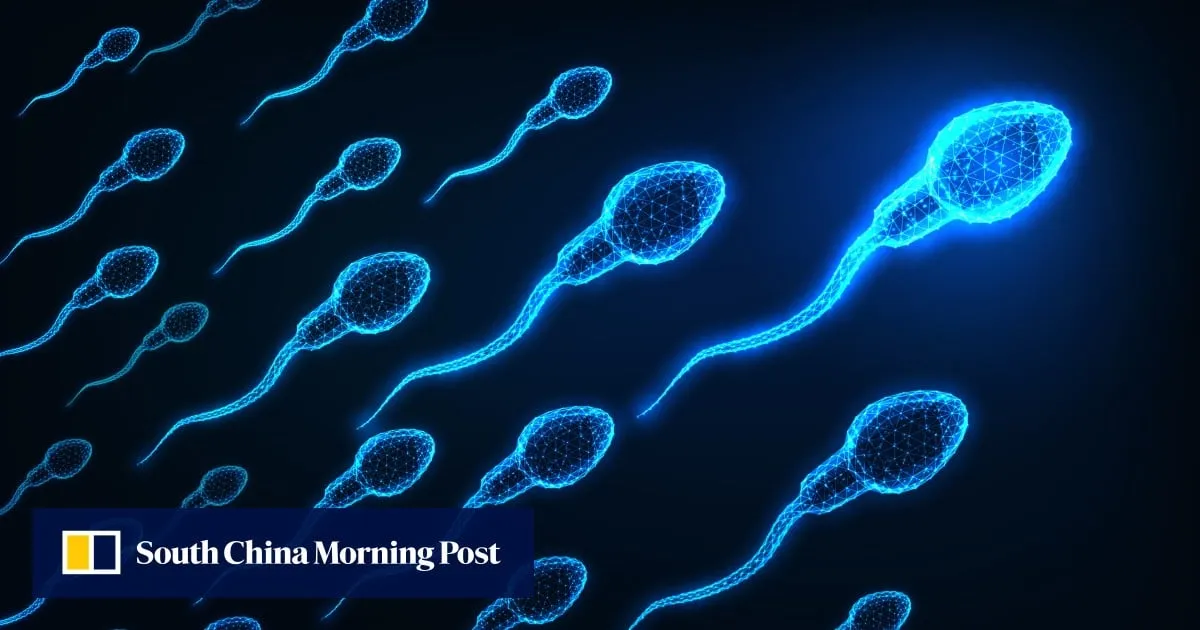
Scientists have used a tiny plastic “obstacle course” to test how much sperm would struggle to navigate during sex in the weightlessness of space.Some particularly resilient sperm still made it through the course, suggesting that conceiving children in space will still be possible, according to research published on Thursday.However, a bigger problem could be that the development of embryos after fertilisation was harmed by a lack of gravity, the Australian team of researchers found.With humanity setting its eyes on colonising space – next week NASA hopes to launch its first crewed mission around the Moon in half a century – scientists have been studying how difficult it will be to procreate on spaceships or other worlds.One of the biggest challenges is that sperm will no longer be pulled downwards by Earth’s gravity.An earlier concept of a NASA Moon base. Photo: NASA via TNS“Sperm need to actively find their way to an egg, and this study is the first to put that ability to the test under space-like conditions,” said Nicole McPherson, a researcher at Adelaide University in Australia.
SRCSouth China Morning Post
LANGEN
LEANCenter-Right
WORDS178
ENT6
THU · 2026-03-26 · 17:45 GMTBRIEF NSR-2026-0326-37575
NSR-2026-0326-37575News Report·EN·Technology
Sex in space? Sperm struggles to navigate without gravity, scientists find
Scientists at Adelaide University in Australia have researched the challenges of human reproduction in space, focusing on sperm navigation in weightless conditions. Using a specialized obstacle course, they tested sperm's ability to reach an egg without gravity's assistance.
Agence France-PresseSouth China Morning PostFiled 2026-03-26 · 17:45 GMTLean · Center-RightRead · 1 min
South China Morning PostFIG 01
Reading time
1min
Word count
178words
Sources cited
1cited
Entities identified
6entities
Quality score
100%
§ 01
Briefing Summary
AI-generatedNEWSAR · AI
Scientists at Adelaide University in Australia have researched the challenges of human reproduction in space, focusing on sperm navigation in weightless conditions. Using a specialized obstacle course, they tested sperm's ability to reach an egg without gravity's assistance. While some sperm successfully navigated the course, suggesting conception is possible, the study indicates a potentially greater issue: the impact of zero gravity on embryo development after fertilization. As space colonization becomes a more realistic goal, understanding the effects of space on human reproduction is crucial. NASA's upcoming crewed mission around the moon highlights the increasing importance of this research. The study provides insights into the difficulties of procreation in space environments, where sperm lack the gravitational pull they experience on Earth.
Confidence 0.90Sources 1Claims 5Entities 6
§ 02
Article analysis
Model · rule-basedFraming
Technology
Human Interest
Tone
Mixed Tone
AI-assessed
CalmNeutralAlarmist
Factuality
0.80 / 1.00
Factual
LowHigh
Sources cited
1
Limited
FewMany
§ 03
Key claims
5 extracted01
Nasa hopes to launch its first crewed mission around the moon in half a century next week.
factualnull
Confidence
1.00
02
Sperm need to actively find their way to an egg, and this study tests that ability.
quoteNicole McPherson, a researcher at Adelaide University
Confidence
1.00
03
Scientists tested sperm navigation in weightlessness using a tiny plastic “obstacle course”.
factualnull
Confidence
1.00
04
Embryo development after fertilization may be harmed by lack of gravity.
factualAustralian team of researchers
Confidence
0.90
05
Some sperm were resilient enough to navigate the course, suggesting space conception is possible.
factualnull
Confidence
0.80
§ 04
Full report
1 min read · 178 words§ 05
Entities
6 identifiedKey playerOppositionContextPositiveNeutralNegative
Organizations2
§ 06
Keywords & salience
10 termssex in space
1.00
sperm
0.90
gravity
0.80
weightlessness
0.70
fertilisation
0.60
embryo development
0.60
reproduction
0.50
space colonisation
0.50
nasa
0.40
space travel
0.40
§ 07
Topic connections
Interactive graph No topic relationship data available yet. This graph will appear once topic relationships have been computed.