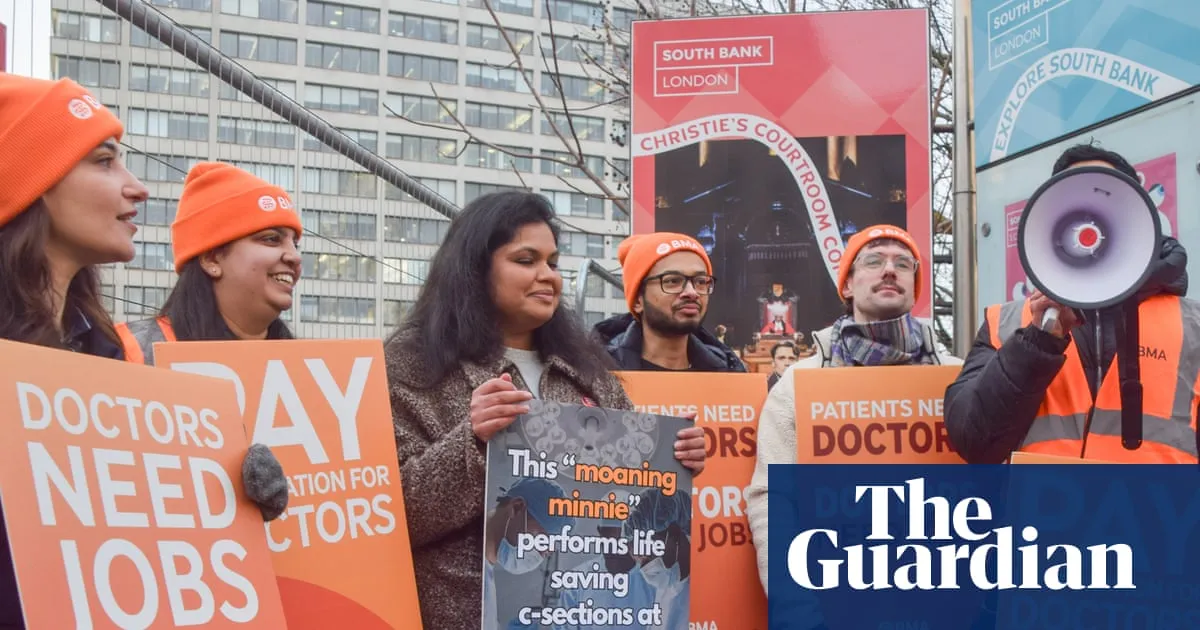
NHS bosses have accused resident doctors of seeking to cause “maximum harm” to patients by striking for six days next month over pay and jobs.Wes Streeting has given resident – formerly junior – doctors in England until 2 April to reconsider their rejection on Wednesday of his “generous” offer to end the dispute. It would have given them £700m in extra pay over the next three years.The British Medical Association’s decision to withdraw from talks with the government and NHS chiefs aimed at settling the long-running dispute has sparked a war of words.Glen Burley, NHS-england" class="entity-link entity-organization" data-entity-id="722" data-entity-type="organization">NHS England’s financial reset and accountability director, said during NHS-england" class="entity-link entity-organization" data-entity-id="722" data-entity-type="organization">NHS England’s board meeting on Thursday that the BMA’s decision was “really disappointing for patients. I mean, this is a point where we know we’ll be at a busy stage again. So it feels like it’s trying to push maximum harm and we will try and make sure that doesn’t happen.”He added that he was “really shocked” that the BMA’s resident doctors committee opted against putting Streeting’s offer to all members, leaving it to them to decide whether or not to accept it.Jim Mackey, NHS-england" class="entity-link entity-organization" data-entity-id="722" data-entity-type="organization">NHS England’s chief executive, said the BMA’s rejection and six-day strike from 7 April means that the dispute – which began in March 2023 – would continue for the forseeable future.Mackey said that after intensive negotiations with the BMA since early January, “we felt very, very, very close that we had a deal that could work for all parties. It’s incredibly disappointing that it fell to bits at the last minute.“But we are where we are, so we are going to have to get ourselves organised about navigating what’s probably a long period now of dispute.” The NHS is bracing itself for industrial action equivalent to a “long distance” run, he added.On Wednesday, the BMA claimed talks “had been making good progress” until two weeks ago “when the government began to shift the goalposts”, but did not explain what had changed.As the Guardian reported at the time, ministers had offered to hand resident doctors £700m in additional income between 2026 and 2029. They would have gained that by moving up through pay scales quicker, as a way of meeting their longstanding demand for ”full pay restoration” through a 26% salary uplift.However, the BMA insisted that medics should get the money in one year – 2026-27 – and, when the government ruled that out, walked away from the negotiations.In the Commons on Thursday, Streeting told the BMA that it had a week to look again at his offer – or risk him withdrawing it altogether, including a plan to expand specialist medical training places from 1,000 to 4,500, to meet another key BMA demand.Dr Jack Fletcher, the RDC’s chair, said it was “misleading” of Streeting to claim that resident doctors had seen their pay rise by 35% over the last four years – that was “wildly overstating the case” – because inflation over that period had eroded the value of the rise.
SRCThe Guardian - World News
LANGEN
LEANCenter-Left
WORDS498
ENT7
THU · 2026-03-26 · 20:14 GMTBRIEF NSR-2026-0326-37893
NSR-2026-0326-37893News Report·EN·Conflict
NHS bosses say resident doctors’ strike will cause ‘maximum harm’
NHS bosses have accused resident doctors in England of planning a six-day strike in April that will cause "maximum harm" to patients. This follows the British Medical Association's (BMA) rejection of a government offer of £700 million in extra pay over three years, intended to resolve a long-running dispute over pay and jobs that began in March 2023.
Denis Campbell Health policy editorThe Guardian - World NewsFiled 2026-03-26 · 20:14 GMTLean · Center-LeftRead · 2 min
The Guardian - World NewsFIG 01
Reading time
2min
Word count
498words
Sources cited
6cited
Entities identified
7entities
Quality score
100%
§ 01
Briefing Summary
AI-generatedNEWSAR · AI
NHS bosses have accused resident doctors in England of planning a six-day strike in April that will cause "maximum harm" to patients. This follows the British Medical Association's (BMA) rejection of a government offer of £700 million in extra pay over three years, intended to resolve a long-running dispute over pay and jobs that began in March 2023. NHS England leaders expressed disappointment that the BMA withdrew from talks and did not put the offer to its members for a vote. The BMA claims the government shifted the goalposts in negotiations, demanding the money be paid in one year instead of over three. The government has given the BMA until April 2nd to reconsider the offer.
Confidence 0.90Sources 6Claims 5Entities 7
§ 02
Article analysis
Model · rule-basedFraming
Conflict
Economic Impact
Tone
Mixed Tone
AI-assessed
CalmNeutralAlarmist
Factuality
0.70 / 1.00
Factual
LowHigh
Sources cited
6
Well sourced
FewMany
§ 03
Key claims
5 extracted01
Resident doctors rejected an offer to hand them £700m in additional income between 2026 and 2029.
factualArticle
Confidence
1.00
02
The offer would have given resident doctors £700m in extra pay over the next three years.
factualArticle
Confidence
1.00
03
Wes Streeting gave resident doctors until 2 April to reconsider their rejection of his offer.
factualArticle
Confidence
1.00
04
The BMA claimed talks had been making good progress until the government began to shift the goalposts.
quoteBMA
Confidence
0.90
05
NHS bosses accuse resident doctors of seeking to cause “maximum harm” to patients by striking.
quoteNHS bosses
Confidence
0.90
§ 04
Full report
2 min read · 498 words§ 05
Entities
7 identifiedKey playerOppositionContextPositiveNeutralNegative
People3
Organizations3
Locations1
§ 06
Keywords & salience
8 termsresident doctors' strike
1.00
nhs
0.90
pay dispute
0.80
british medical association
0.70
negotiations
0.60
pay offer
0.60
industrial action
0.50
healthcare
0.40
§ 07
Topic connections
Interactive graph Network visualization showing 25 related topics
View Full Graph Person Organization Location Event|Click node to navigate|Edge numbers = shared articles