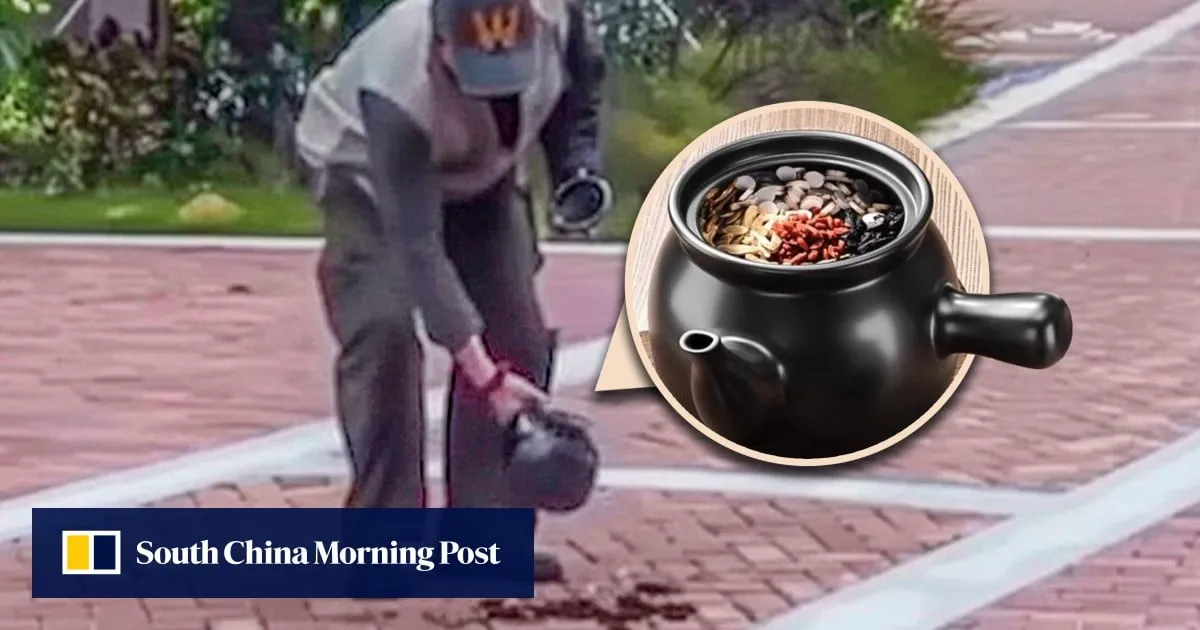
While walking along China’s roads, it is not uncommon to see leftover herbs scattered on the surface.This is not some random dumping problem, it is in fact Traditional Chinese Medicine (TCM) leftovers deliberately poured out by the people who cooked them.Superstition has it that by pouring the TCM leftovers on public roads, other people can walk and drive over them, thereby helping keep illness at bay.Traditional Chinese Medicine leftovers seen scattered on a road in China. Photo: sohu.comThere is a folk legend that the habit originated in the Tang Dynasty (618–907).Sun Simiao, who was hailed as China’s King of Medicine, lived away from the court and was keen on treating ordinary people.He was said to have passed by a village one time and saw an elderly man pouring leftover TCM ingredients he had cooked outside his door.Sun was curious at the rare action and checked with the man.The man told Sun that he had consumed more than 10 doses of medicine, but his condition had not improved.
SRCSouth China Morning Post
LANGEN
LEANCenter-Right
WORDS167
ENT4
SAT · 2026-03-28 · 10:00 GMTBRIEF NSR-2026-0328-40624
NSR-2026-0328-40624News Report·EN·Human Interest
Why Chinese pour leftover TCM medicine onto roads, hoping others will walk, drive over it
In China, it is a common practice to see leftover Traditional Chinese Medicine (TCM) herbs scattered on roads. This is done intentionally, as people pour out the remains of their cooked TCM in public areas.
Fran LuSouth China Morning PostFiled 2026-03-28 · 10:00 GMTLean · Center-RightRead · 1 min
South China Morning PostFIG 01
Reading time
1min
Word count
167words
Sources cited
1cited
Entities identified
4entities
Quality score
100%
§ 01
Briefing Summary
AI-generatedNEWSAR · AI
In China, it is a common practice to see leftover Traditional Chinese Medicine (TCM) herbs scattered on roads. This is done intentionally, as people pour out the remains of their cooked TCM in public areas. The belief is that when others walk or drive over the discarded herbs, it will help prevent illness. This custom is rooted in a folk legend from the Tang dynasty involving Sun Simiao, known as China's King of Medicine. The story recounts an elderly man pouring out his unused TCM, hoping it would benefit others after his own treatment failed. This practice continues today due to this superstitious belief in the medicinal properties transferring through contact.
Confidence 0.85Sources 1Claims 5Entities 4
§ 02
Article analysis
Model · rule-basedFraming
Human Interest
Public Health
Tone
Measured
AI-assessed
CalmNeutralAlarmist
Factuality
0.70 / 1.00
Factual
LowHigh
Sources cited
1
Limited
FewMany
§ 03
Key claims
5 extracted01
Sun Simiao was hailed as China’s King of Medicine.
factualnull
Confidence
1.00
02
People in China sometimes pour leftover TCM medicine onto roads.
factualnull
Confidence
1.00
03
Superstition suggests walking/driving over TCM leftovers keeps illness at bay.
factualnull
Confidence
0.90
04
The habit originated in the Tang dynasty (618–907).
factualnull
Confidence
0.80
05
Sun Simiao saw an elderly man pouring leftover TCM ingredients outside his door.
factualnull
Confidence
0.70
§ 04
Full report
1 min read · 167 words§ 05
Entities
4 identifiedKey playerOppositionContextPositiveNeutralNegative
Locations1
§ 06
Keywords & salience
8 termstraditional chinese medicine
1.00
tcm leftovers
0.90
superstition
0.70
folk legend
0.60
tang dynasty
0.50
sun simiao
0.50
herbal medicine
0.40
chinese culture
0.40
§ 07
Topic connections
Interactive graph Network visualization showing 51 related topics
View Full Graph Person Organization Location Event|Click node to navigate|Edge numbers = shared articles