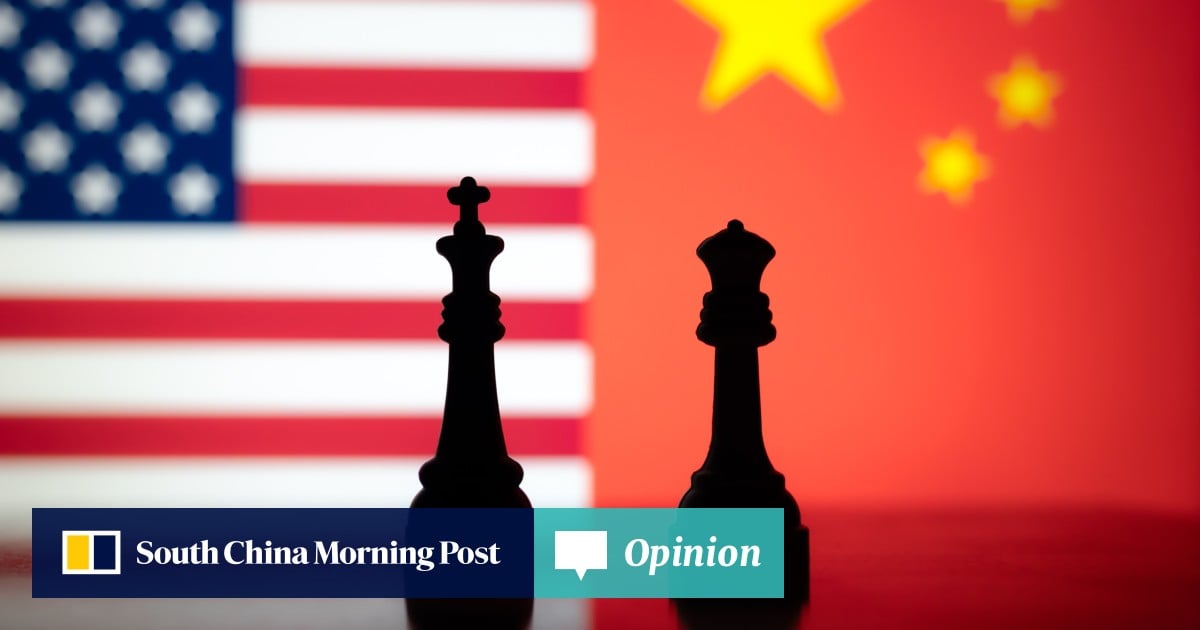
In January, a top Chinese AI researcher told an industry summit in Beijing there was less than a 20 per cent chance of any Chinese company surpassing a leading US artificial intelligence firm in the next three to five years.The remark by Lin Junyang, until recently a technical leader working on Qwen, one of China’s most capable open-source AI models under Alibaba (which owns the China-morning-post" class="entity-link entity-organization" data-entity-id="12558" data-entity-type="organization">South China Morning Post), made headlines. But much of the commentary missed a more important question Lin posed: “Does innovation happen in the hands of the rich or the poor?”The United States held an estimated 74 per cent of global AI computing power in mid-2025, compared with China’s 14 per cent. Lin described the gap as “one to two orders of magnitude”. Because US labs command far more aggregate compute, they can allocate substantial capacity to next-generation research as well as product deployment. Chinese labs, he admitted, are “stretched”: just delivering products consumes most of their compute. The luxury of exploration is one they simply cannot afford.Lin’s 20 per cent remark provoked two broad reactions. Optimists dismissed it: benchmark gaps have shrunk to near parity, Chinese models last year claimed nine of the top 10 open-weight positions on a major leaderboard and export controls have plainly failed to stop progress.Pessimists, however, thought a 20 per cent chance was generous: Huawei Technologies’ chip output is projected at 2-5 per cent of Nvidia’s aggregate AI computing power through to 2027, and DeepSeek founder Liang Wenfeng has admitted “money has never been the problem” while “bans on shipments of advanced chips are”, acknowledging a fourfold compute disadvantage. It is only a matter of time, this camp suggests, before the deficit becomes insurmountable.Both reactions miss the point. They treat the AI race as a contest with one finish line. In reality, compute scarcity and compute abundance have produced two structurally different innovation models – each with distinct strengths, blind spots and implications for governance. Understanding this divergence is key to knowing what Lin’s 20 per cent really means.
SRCSouth China Morning Post
LANGEN
LEANCenter-Right
WORDS339
ENT10
SUN · 2026-03-29 · 08:30 GMTBRIEF NSR-2026-0329-41863
NSR-2026-0329-41863Analysis·EN·Technology
How to assess China’s real chance of winning AI race against US
A Chinese AI researcher, Lin Junyang, estimated a less than 20% chance of a Chinese company surpassing a leading US AI firm in the next 3-5 years. This assessment highlights the significant gap in AI computing power, with the US holding a substantial lead.
Ke MengSouth China Morning PostFiled 2026-03-29 · 08:30 GMTLean · Center-RightRead · 2 min
South China Morning PostFIG 01
Reading time
2min
Word count
339words
Sources cited
3cited
Entities identified
10entities
Quality score
100%
§ 01
Briefing Summary
AI-generatedNEWSAR · AI
A Chinese AI researcher, Lin Junyang, estimated a less than 20% chance of a Chinese company surpassing a leading US AI firm in the next 3-5 years. This assessment highlights the significant gap in AI computing power, with the US holding a substantial lead. Lin suggests that the US's advantage in computing resources allows for more exploratory research, while Chinese labs are primarily focused on product deployment. While some believe China can still close the gap due to advancements in AI models and the ineffectiveness of export controls, others emphasize the challenges posed by chip shortages and a significant compute disadvantage. The article argues that the US and China are pursuing different AI innovation models due to these resource disparities, each with its own strengths and weaknesses.
Confidence 0.90Sources 3Claims 5Entities 10
§ 02
Article analysis
Model · rule-basedFraming
Technology
Economic Impact
Tone
Measured
AI-assessed
CalmNeutralAlarmist
Factuality
0.60 / 1.00
Mixed
LowHigh
Sources cited
3
Well sourced
FewMany
§ 03
Key claims
5 extracted01
Bans on shipments of advanced chips are a problem for Chinese AI development.
quoteLiang Wenfeng
Confidence
1.00
02
There was less than a 20 per cent chance of any Chinese company surpassing a leading US AI firm in the next three to five years.
quoteLin Junyang
Confidence
1.00
03
The United States held an estimated 74 per cent of global AI computing power in mid-2025, compared with China’s 14 per cent.
statisticArticle's own claim
Confidence
0.90
04
Huawei Technologies’ chip output is projected at 2-5 per cent of Nvidia’s aggregate AI computing power through to 2027
statisticPessimists' view
Confidence
0.80
05
Compute scarcity and compute abundance have produced two structurally different innovation models.
factualArticle's own claim
Confidence
0.70
§ 04
Full report
2 min read · 339 words§ 05
Entities
10 identifiedKey playerOppositionContextPositiveNeutralNegative
Organizations5
§ 06
Keywords & salience
10 termsartificial intelligence
1.00
ai race
0.90
china
0.90
united states
0.90
computing power
0.80
innovation
0.70
ai models
0.60
export controls
0.50
lin junyang
0.50
compute scarcity
0.40
§ 07
Topic connections
Interactive graph No topic relationship data available yet. This graph will appear once topic relationships have been computed.