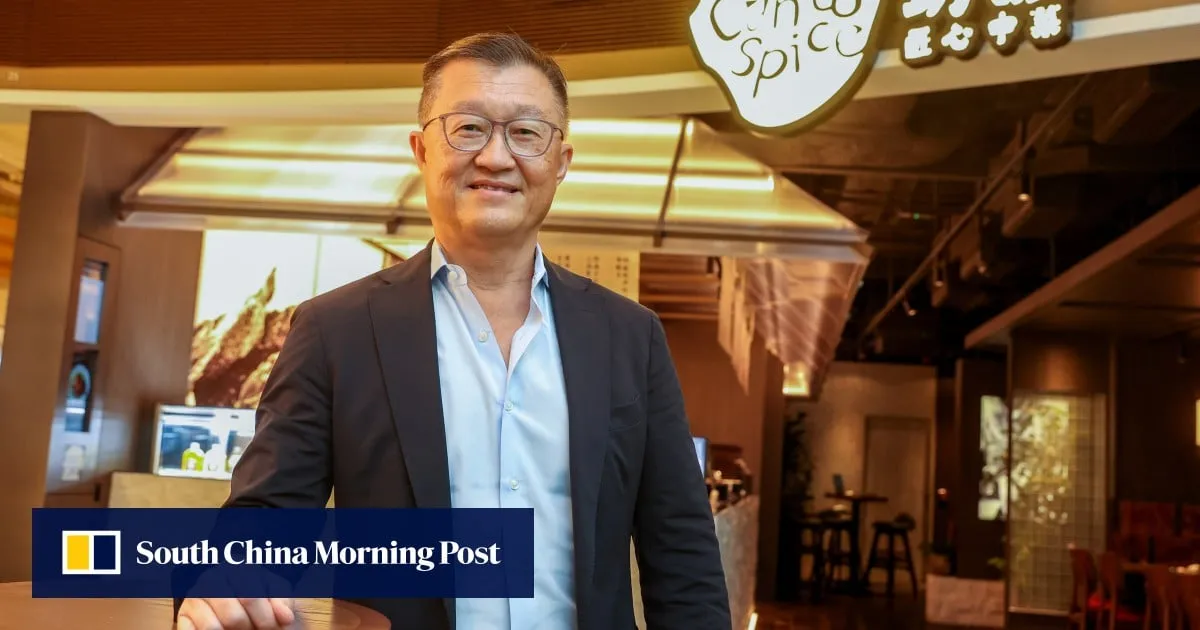
Hong Kong’s traditional Chinese dining landscape is undergoing a structural overhaul, with a leading restaurant operator pivoting to experiential dining and smaller footprints amid a wave of closures and residents heading across the border for shopping and dining.Traditional dim sum and Chinese restaurants have been closing across the city, including three Star Seafood Restaurant branches in districts such as Wong Tai Sin, and the 35-year-old Metropol Restaurant in Admiralty.Martin Lee, chief operating officer for Chinese and Western restaurants at Maxim’s Group, said the industry’s current difficulties had provided an impetus for operators to innovate, noting that employers were usually reluctant to overhaul their business models when the market was thriving.“I feel that the food and beverage industry has its own survival space in every era,” he said. “The catering industry is constantly changing, but transformations always follow major events, from Sars [Severe acute respiratory syndrome outbreak] to the [Covid-19] pandemic.“When times are good, even if you want to, your colleagues [and bosses] feel there is no need to change.“You only have the opportunity to transform when times are bad … when things are not working out, you are slightly forced to step up.”
SRCSouth China Morning Post
LANGEN
LEANCenter-Right
WORDS193
ENT9
SUN · 2026-03-29 · 23:30 GMTBRIEF NSR-2026-0330-42541
NSR-2026-0330-42541News Report·EN·Economic Impact
Hong Kong restaurateurs revamp traditional dining as closures reshape industry
Hong Kong's traditional Chinese restaurant industry is facing significant challenges, marked by closures of established dim sum and seafood restaurants due to economic pressures and residents dining across the border. In response, restaurant groups like Maxim's are adapting by focusing on smaller venues and experiential dining concepts.
Lam Ka-singSouth China Morning PostFiled 2026-03-29 · 23:30 GMTLean · Center-RightRead · 1 min
South China Morning PostFIG 01
Reading time
1min
Word count
193words
Sources cited
1cited
Entities identified
9entities
Quality score
100%
§ 01
Briefing Summary
AI-generatedNEWSAR · AI
Hong Kong's traditional Chinese restaurant industry is facing significant challenges, marked by closures of established dim sum and seafood restaurants due to economic pressures and residents dining across the border. In response, restaurant groups like Maxim's are adapting by focusing on smaller venues and experiential dining concepts. This shift is driven by the need to innovate during a downturn, as industry leaders acknowledge that major events like SARS and the COVID-19 pandemic often catalyze necessary transformations in the food and beverage sector. The industry is being forced to change due to the current economic climate.
Confidence 0.90Sources 1Claims 5Entities 9
§ 02
Article analysis
Model · rule-basedFraming
Economic Impact
Human Interest
Tone
Measured
AI-assessed
CalmNeutralAlarmist
Factuality
0.70 / 1.00
Factual
LowHigh
Sources cited
1
Limited
FewMany
§ 03
Key claims
5 extracted01
The 35-year-old Metropol Restaurant in Admiralty closed.
factual
Confidence
1.00
02
Three Star Seafood Restaurant branches closed in districts such as Wong Tai Sin.
factual
Confidence
1.00
03
Traditional dim sum and Chinese restaurants have been closing across the city.
factual
Confidence
0.90
04
Hong Kong’s traditional Chinese dining landscape is undergoing a structural overhaul.
factual
Confidence
0.90
05
The industry’s current difficulties had provided an impetus for operators to innovate.
quoteMartin Lee, chief operating officer for Chinese and Western restaurants at Maxim’s Group
Confidence
0.80
§ 04
Full report
1 min read · 193 words§ 05
Entities
9 identifiedKey playerOppositionContextPositiveNeutralNegative
Organizations3
§ 06
Keywords & salience
9 termsrestaurant closures
0.90
hong kong
0.80
dining industry
0.80
traditional dining
0.70
experiential dining
0.70
business models
0.60
market transformation
0.60
food and beverage industry
0.50
maxim's group
0.40
§ 07
Topic connections
Interactive graph Network visualization showing 51 related topics
View Full Graph Person Organization Location Event|Click node to navigate|Edge numbers = shared articles