Authorities also designate Anti-Corruption Foundation as ‘terrorist’ group and consider total ban on WhatsApp.Published On 29 Nov 2025Russian authorities have outlawed Human Rights Watch as an “undesirable organisation”, a label that, under a 2015 law, makes involvement with it a criminal offence.Friday’s designation means the international human rights group must stop all work in Russia, and opens those who cooperate with or support the organisation to prosecution.Recommended Stories list of 4 itemslist 1 of 4Russia-Ukraine war: List of key events, day 1,374list 2 of 4Putin says US-backed peace plan as framework is OK ‘in general’list 3 of 4Putin says ready to guarantee no Russian attack on Europelist 4 of 4Finland FM on Russia-Ukraine peace talks and Trump’s potential roleend of listHRW has repeatedly accused Russia of suppressing dissenters and committing war crimes during its ongoing war against Ukraine.“For over three decades, Human Rights Watch’s work on post-Soviet Russia has pressed the government to uphold human rights and freedoms,” the executive director at Human Rights Watch, Philippe Bolopion, said in a statement.“Our work hasn’t changed, but what’s changed, dramatically, is the government’s full-throttled embrace of dictatorial policies, its staggering rise in repression, and the scope of the war crimes its forces are committing in Ukraine.”The decision by the Russian prosecutor general’s office is the latest move in a crackdown on Kremlin critics, journalists and activists, which has intensified since Moscow’s invasion of Ukraine in February 2022.In a separate statement on Friday, the office said it was opening a case against Russian feminist punk band Pussy Riot that would designate the group as an “extremist” organisation.Separately, Russia’s Supreme Court designated on Thursday the Anti-Corruption Foundation set up by the late opposition activist Alexey Navalny as a “terrorist” group.The ruling targeted the foundation’s United States-registered entity, which became the focal point for the group when the original Anti-Corruption Foundation was designated an “undesirable organisation” by the Russian government in 2021.
SRCAl Jazeera
LANGEN
LEANCenter
WORDS317
ENT5
SAT · 2025-11-29 · 06:57 GMTBRIEF NSR-2025-1129-043
NSR-2025-1129-043News Report·EN·Human Rights
Russia bans Human Rights Watch in widening crackdown on critics
Russian authorities have designated Human Rights Watch as an "undesirable organisation", a label that makes involvement with it a criminal offence under a 2015 law. This means the international human rights group must stop all work in Russia and those who cooperate with or support the organisation are open to prosecution.
By News AgenciesAl JazeeraFiled 2025-11-29 · 06:57 GMTLean · CenterRead · 2 min
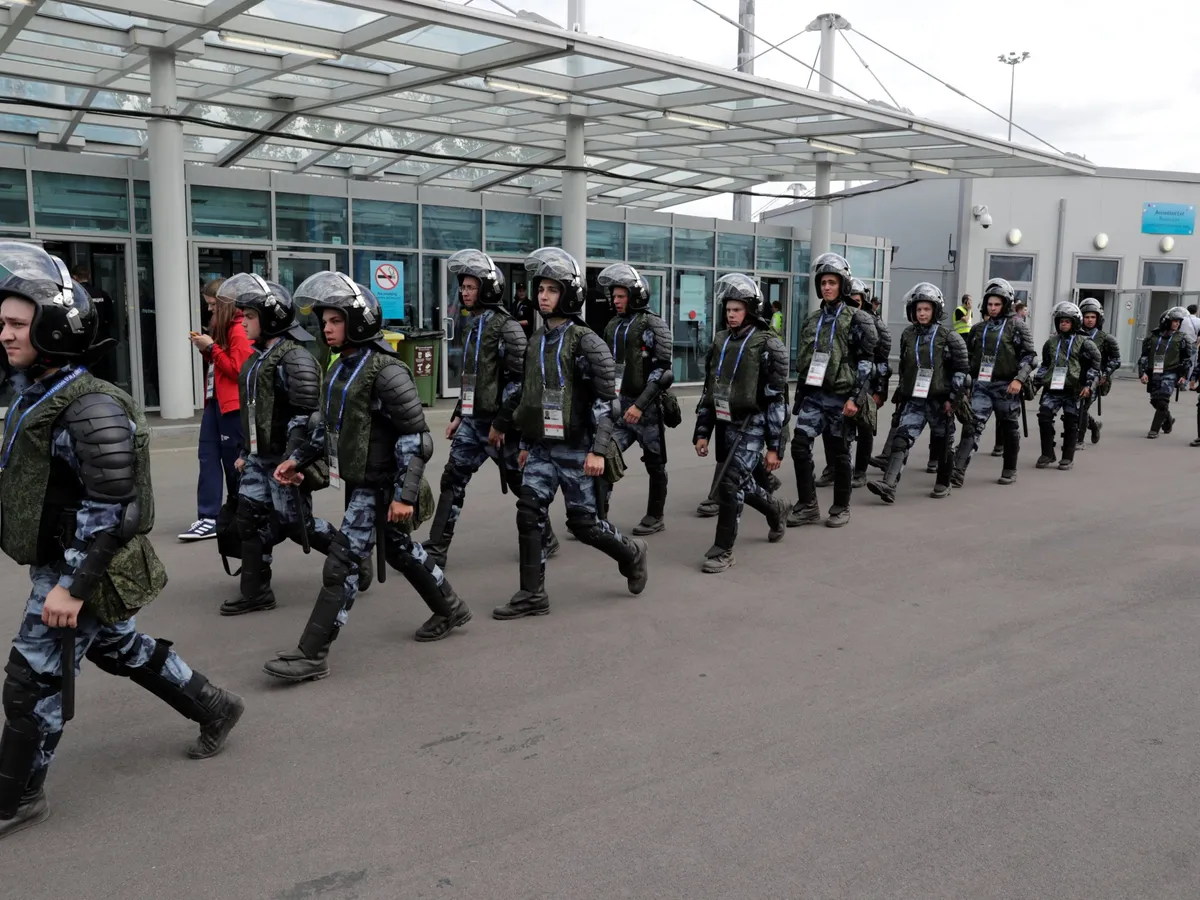
Al JazeeraFIG 01
Reading time
2min
Word count
317words
Sources cited
2cited
Entities identified
5entities
Quality score
100%
§ 01
Briefing Summary
AI-generatedNEWSAR · AI
Russian authorities have designated Human Rights Watch as an "undesirable organisation", a label that makes involvement with it a criminal offence under a 2015 law. This means the international human rights group must stop all work in Russia and those who cooperate with or support the organisation are open to prosecution. The decision is part of a widening crackdown on Kremlin critics, journalists, and activists, which has intensified since Moscow's invasion of Ukraine in February 2022. The Russian prosecutor general's office also designated a Russian feminist punk band as an "extremist" organisation and Russia's Supreme Court designated the Anti-Corruption Foundation set up by Alexey Navalny as a "terrorist" group. These moves follow previous designations of opposition activists and critics, including Human Rights Watch in 2021. The actions are seen as part of a broader effort to suppress dissent and criticism of the Russian government.
Confidence 0.90Sources 2Claims 5Entities 5
§ 02
Article analysis
Model · rule-basedFraming
Human Rights
Political Strategy
Tone
Measured
AI-assessed
CalmNeutralAlarmist
Factuality
0.80 / 1.00
Factual
LowHigh
Sources cited
2
Limited
FewMany
§ 03
Key claims
5 extracted01
For over three decades, Human Rights Watch’s work on post-Soviet Russia has pressed the government to uphold human rights and freedoms.
quotePhilippe Bolopion, HRW
Confidence
1.00
02
Russia’s Supreme Court designated the Anti-Corruption Foundation as a “terrorist” group.
factualArticle
Confidence
1.00
03
The designation means HRW must stop all work in Russia, and opens those who cooperate with or support the organisation to prosecution.
factualArticle
Confidence
1.00
04
Russian authorities have outlawed Human Rights Watch as an “undesirable organisation”.
factualArticle
Confidence
1.00
05
The decision by the Russian prosecutor general’s office is the latest move in a crackdown on Kremlin critics, journalists and activists.
factualArticle
Confidence
0.90
§ 04
Full report
2 min read · 317 words§ 05
Entities
5 identifiedKey playerOppositionContextPositiveNeutralNegative
Organizations1
§ 06
Keywords & salience
6 termshuman rights watch
0.80
russia crackdown
0.70
human rights
0.60
ukraine war
0.50
putin regime
0.50
censorship
0.40
§ 07
Topic connections
Interactive graph Network visualization showing 51 related topics
View Full Graph Person Organization Location Event|Click node to navigate|Edge numbers = shared articles