11 hours agoKali HaysTechnology reporterReutersSweeping job cuts at Big Tech companies have become an annual tradition. How executives explain those decisions, however, has changed.Out are buzzwords like efficiency, over-hiring, and too many management layers.Today, all explanations stem from artificial intelligence (AI).In recent weeks, giants including Google, Amazon, Meta, as well as smaller firms such as Pinterest and Atlassian, have all announced or warned of plans to shrink their workforce, pointing to developments in AI that they say are allowing their firms to do more with fewer people."I think that 2026 is going to be the year that AI starts to dramatically change the way that we work," Meta boss Mark Zuckerberg said in January. Since then, his firm, which owns Facebook, Instagram and WhatsApp, has axed hundreds of people, including 700 just last week. Meta, which plans to nearly double spending on AI this year, is still hiring in "priority areas", a spokesman said.But more job cuts are expected in the months ahead, while a hiring freeze is in place at many parts of the firm, two people with the company told the BBC.'I wanted to get ahead of it'ReutersMeta CEO Mark Zuckerberg in 2025 demonstrating an unreleased version of its AI-powered smart glassesJack Dorsey, who leads financial technology firm Block, has been even more explicit about his aims. "This isn't just about efficiency," he told shareholders last month, as he announced that his company, which operates platforms like CashApp, Square and Tidal, would be shedding almost half its workforce."Intelligence tools have changed what it means to build and run a company… A significantly smaller team, using the tools we're building, can do more and do it better."Dorsey said he expected a "majority of companies" to come to a similar conclusion within the next year. "I wanted to get ahead of it," he added.Dorsey's justifications drew plenty of sceptics, who pointed out that he has presided over at least two rounds of mass job cuts in the last two years and never mentioned AI.But explaining cuts by pointing to advances in AI sounds better than citing cost pressures or a desire to please shareholders, says tech investor Terrence Rohan, who has had a seat on many company boards."Pointing to AI makes a better blog post," Rohan says. "Or it at least doesn't make you seem as much the bad guy who just wants to cut people for cost-effectiveness."That does not mean there is no substance behind the words, Rohan added. Some of the companies he's backing are using code that is 25% to 75% AI-generated.That is a sign of the real threat that AI tools for writing code represent to jobs such as software developer, computer engineer and programmer, posts once considered a near-guarantee of highly paid, stable careers. "Some of it is that the narrative is changing, some of it is that we really are starting to see step changes in productivity," Anne Hoecker, a partner at Bain who leads the consultancy's technology practice, says of the recent job cuts. "Leaders more recently are seeing these tools are good enough that you really can do the same amount of work with fundamentally less people."Signalling 'discipline', spending $650bnReutersGoogle workers in London protesting against an earlier layoffThere is another way that AI is driving job cuts - and it has nothing to do with the technical abilities of coding tools and chatbots.Amazon, Meta, Google and Microsoft are collectively planning to pour $650bn (£485bn) into AI in the coming year.As executives hunt for ways to try to ease investor shock at those costs, many are landing on payroll, typically tech firms' single biggest expense.Companies are not exactly hiding the connection.In February, Amazon executives said they plan to spend $200bn over the next year on AI investments, the most out of all the major tech companies. At the same time, the firm's chief financial officer noted that the company would continue to "work very hard to offset that with efficiencies and cost reductions" elsewhere in the company. Since October, Amazon has cut about 30,000 corporate workers.Google, which has conducted several smaller scale job cuts since shedding 12,000 people in 2023, offered similar assurances to investors in February, while discussing its AI investment plans."The more capital we can free up within the organisation to invest, the better we can turn this flywheel of making investments to drive future growth," chief financial officer Anat Ashkenazi said.Although the expense of, for example, 30,000 corporate Amazon employees is dwarfed by that company's AI spending plans, firms of this size will now take any opportunity to cut costs, Rohan says."They're playing a game of inches," Rohan says of cuts at Big Tech firms. "If you can even slightly tune the machine, that is helpful."Hoecker says cutting jobs also signals to stock market investors worried about the "real and huge" cost of AI development that executives are not blithely writing blank cheques."It shows some discipline," says Hoecker. "Maybe laying off people isn't going to make much of a dent in that bill, but by creating a little bit of cashflow, it helps."
SRCBBC News - World
LANGEN
LEANCenter
WORDS843
ENT12
SUN · 2026-03-29 · 23:07 GMTBRIEF NSR-2026-0330-43078
NSR-2026-0330-43078News Report·EN·Economic Impact
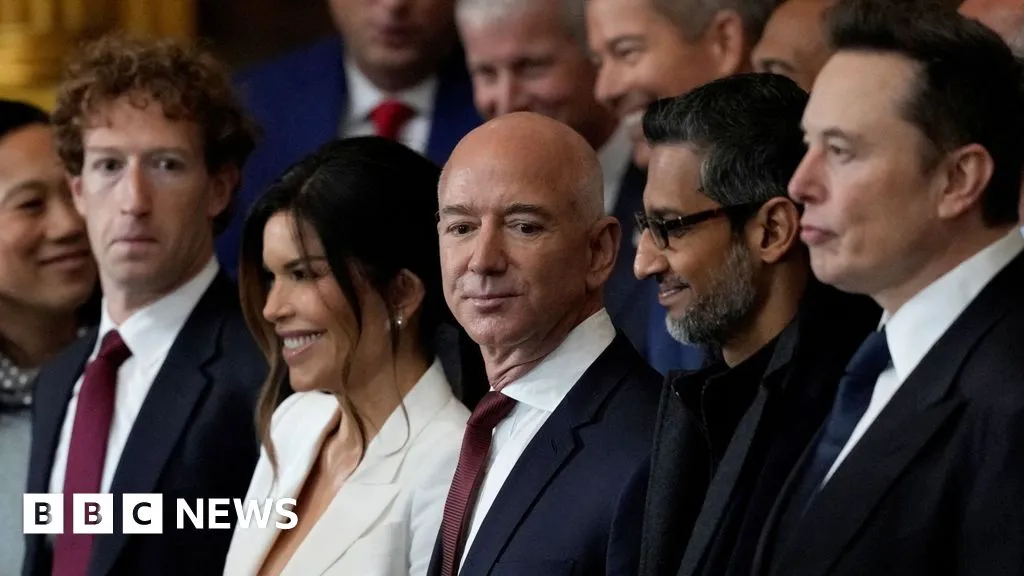
Tech CEOs suddenly love blaming AI for mass job cuts. Why?
Big Tech companies like Google, Amazon, Meta, Pinterest, and Atlassian are increasingly citing advancements in artificial intelligence (AI) as the primary reason for recent job cuts. Executives, including Meta's Mark Zuckerberg and Block's Jack Dorsey, claim AI allows their companies to achieve more with fewer employees.
BBC News - WorldFiled 2026-03-29 · 23:07 GMTLean · CenterRead · 4 min
BBC News - WorldFIG 01
Reading time
4min
Word count
843words
Sources cited
5cited
Entities identified
12entities
Quality score
100%
§ 01
Briefing Summary
AI-generatedNEWSAR · AI
Big Tech companies like Google, Amazon, Meta, Pinterest, and Atlassian are increasingly citing advancements in artificial intelligence (AI) as the primary reason for recent job cuts. Executives, including Meta's Mark Zuckerberg and Block's Jack Dorsey, claim AI allows their companies to achieve more with fewer employees. Dorsey anticipates a majority of companies will adopt this approach within the next year. While some view AI as a legitimate driver of workforce reduction, others suggest it's a more palatable explanation than cost pressures or shareholder demands. Tech investor Terrence Rohan notes that attributing job cuts to AI presents a better public image for companies.
Confidence 0.90Sources 5Claims 5Entities 12
§ 02
Article analysis
Model · rule-basedFraming
Economic Impact
Technology
Tone
Measured
AI-assessed
CalmNeutralAlarmist
Factuality
0.70 / 1.00
Factual
LowHigh
Sources cited
5
Well sourced
FewMany
§ 03
Key claims
5 extracted01
Block will be shedding almost half its workforce.
factualJack Dorsey
Confidence
1.00
02
Meta plans to nearly double spending on AI this year.
factualMeta spokesman
Confidence
1.00
03
Intelligence tools have changed what it means to build and run a company.
quoteJack Dorsey
Confidence
0.90
04
I think that 2026 is going to be the year that AI starts to dramatically change the way that we work.
predictionMark Zuckerberg
Confidence
0.80
05
Some of the companies he's backing are using code that is 25% to 75% AI-generated.
factualTerrence Rohan
Confidence
0.70
§ 04
Full report
4 min read · 843 words§ 05
Entities
12 identifiedKey playerOppositionContextPositiveNeutralNegative
People3
§ 06
Keywords & salience
9 termsartificial intelligence
1.00
job cuts
0.90
big tech
0.70
efficiency
0.60
meta
0.50
mark zuckerberg
0.50
cost pressures
0.50
technology
0.40
jack dorsey
0.40
§ 07
Topic connections
Interactive graph Network visualization showing 51 related topics
View Full Graph Person Organization Location Event|Click node to navigate|Edge numbers = shared articles