14 hours agoSaurabh Mukherjea & Nandita RajhansaGetty ImagesThe true cost of middle-class living is doubling every eight yearsIn a darkened control room in Navi Mumbai, 100 operators oversee bots monitoring 30,000 ATMs across India.Their cameras, sensors and bots do the work that 60,000 security guards once did.That control room is a small window into something much larger. Across India, the quiet machinery of automation has been reshaping - and in many cases, eliminating - the jobs that the middle class was built on. And the middle class is only now beginning to reckon with what that means.As stable incomes come under pressure, many are turning to riskier ways of making money to bridge the gap.Consider VS, a 27-year-old BTech graduate from a small town near Bhilwara city in western Rajasthan state. He earns 14,000 rupees ($151; £113) a month as a freelance salesperson. Last year, he lost 1.3m rupees - nearly his entire family's savings - trading Futures and Options (F&O) on the stock market. He is one of nine million Indians doing the same thing - and are collectively losing over $12bn a year. That figure is roughly equal to the federal government's entire annual education budget.These are not gamblers. They are educated, aspirational people with nowhere else to put their ambitions.Or consider Rahul Singh, a delivery agent with a food delivery app. Singh explained that he borrowed money not just to finance his home renovation, which is a discretionary spend, but also for "covering essential expenses, such as rent, medical bills and any other unforeseen expenses, which were critical for survival".VS and Singh come from different layers of India's vast middle class and they are socially and economically different. But their predicament is anything but different. These are not cautionary tales about individual failure. They are portraits of a class under pressure - the 40 million income taxpayers who earn between 500,000 ($5,283; £3,969) and 10m rupees annually, and who form the productive core of the Indian economy.Something is going wrong for them, as we discovered while researching our new book, and it is happening on multiple fronts at once.Getty ImagesNearly half of all Indian families have taken personal loansWhite-collar job creation - the kind of employment that an engineering or commerce degree was supposed to guarantee - has fallen from 11% growth before 2020 to just 1% today, according to Naukri Jobspeak Index.The decline didn't begin with AI. Automation had been hollowing out middle-skill work since the early 2000s, quietly eliminating the clerical roles, bookkeeping jobs and sales positions that once absorbed India's graduates.But AI has dramatically accelerated the disruption. India's IT services sector - the country's largest graduate employer with eight million workers - is in active retrenchment. The government's own planning body, Niti Aayog, estimates that by 2031, AI could eliminate close to three million IT and customer service jobs. The CEOs of India's most profitable companies speak openly to us about using AI to cut salary bills by a third. Into this contracting market, eight million new graduates arrive every year. The results are becoming hard to ignore. At IIT Bombay - one of India's top technology institutes that was once a near-guaranteed passport to prosperity - fresh graduates are leaving with lower salaries than their predecessors. Getty ImagesWith eight million workers, India's IT services sector is the country's largest graduate employerEven for those who find work, something has quietly gone wrong with the economics of middle-class life. Over the past decade, the average middle-class income taxpayer's annual income has grown by around 50,000 rupees - roughly the price of a decent smartphone. In isolation, that sounds like progress. Against the actual cost of living, it is a slow erosion.Recent research shows a vegetarian thali (an Indian meal comprising several small dishes) now costs 11% more each year, an entry-level car or motorcycle rises by 7 to 8% annually and medical costs climb at 14%. Our estimate - based on spending patterns for typical middle-class households across rent (10-13%), food (7-9%), healthcare (around 14%) and education (8-10%) - suggests that the true cost of living is doubling roughly every eight years, implying an effective inflation rate of about 9% for this group. A family that lived comfortably on 1m rupees in 2016 would now need close to 2m a year.Their salary, in most cases, has barely moved. The middle class is on a treadmill, and every year the belt speeds up.The debt is real, and it is growing.The gap between what people earn and what life costs has to be filled somehow. Increasingly, it is being filled with borrowed money. India's non-housing household debt as a share of income now exceeds that of the United States and China. Nearly half of all Indian families have taken personal loans; 67% of borrowers had their first loan before the age of 30. For those carrying debt, nearly 40% of annual income goes to servicing it.This borrowing isn't building anything. It is financing holidays, smartphones, school fees and hospital bills - consumption and survival, not investment. Getty ImagesMany youngsters take up low-paying BPO jobs when they can't find work of their choosingIn western Pune city's Hinjewadi tech park, young engineers with degrees and debt queue up each morning for walk-in interviews at BPO firms, hoping to land data entry jobs paying 18,000 rupees a month. This is what the compression looks like at ground level.The consequences are rippling outward.FMCG volume growth has dropped from 11% some 14 years ago to 3% today. Car sales are stagnant. Consumer durables growth has collapsed from 11% to 1-2%.When we speak with the leadership of India's largest consumer companies, there is a particular expression - stunned, a little lost - that keeps appearing. The Indian consumer, they are slowly realising, has stopped spending. Not as a lifestyle choice but because they can't - after a brief, post-Goods and Services Tax (GST)-cut burst of spending that now appears to be fading.This matters beyond household balance sheets. Consumption accounts for 60% of India's GDP. India's post-1991 growth model was built on a specific and elegant logic: middle-class spending creates demand, demand creates jobs, jobs create more spending. A virtuous cycle, three decades in the making. That cycle has broken.There is a cruel paradox at the heart of all this. India now produces more graduates than ever - over eight million a year. And yet, becoming a graduate actively reduces your chances of finding work. The unemployment rate for graduates stands at 29.1%, nine times higher than for those who never attended school. Education, the defining aspiration of the Indian middle class, has stopped delivering on its promise.Politically, this class has no champion. With 40 million taxpayers among 970 million voters, the middle class is large enough to bear the fiscal burden of the state but too diffuse to command its attention. Politicians court the poor for votes and the wealthy for funding. The middle class pays for both - and waits.The middle class built the post-economic reforms India. Whether modern India can now sustain its middle class is the question this decade will answer.Saurabh Mukherjea and Nandita Rajhansa are the authors of "Breakpoint: The Crisis of the Middle Class and the Future of Work".
SRCBBC News - World
LANGEN
LEANCenter
WORDS1 201
ENT9
SUN · 2026-03-29 · 21:29 GMTBRIEF NSR-2026-0329-43389
NSR-2026-0329-43389Analysis·EN·Economic Impact
Educated and employed but still struggling: India's middle class under strain
India's middle class, comprised of 40 million income taxpayers earning between 500,000 and 10 million rupees annually, is facing increasing economic strain. Automation is eliminating jobs traditionally held by this group, while white-collar job creation has slowed significantly.
BBC News - WorldFiled 2026-03-29 · 21:29 GMTLean · CenterRead · 5 min
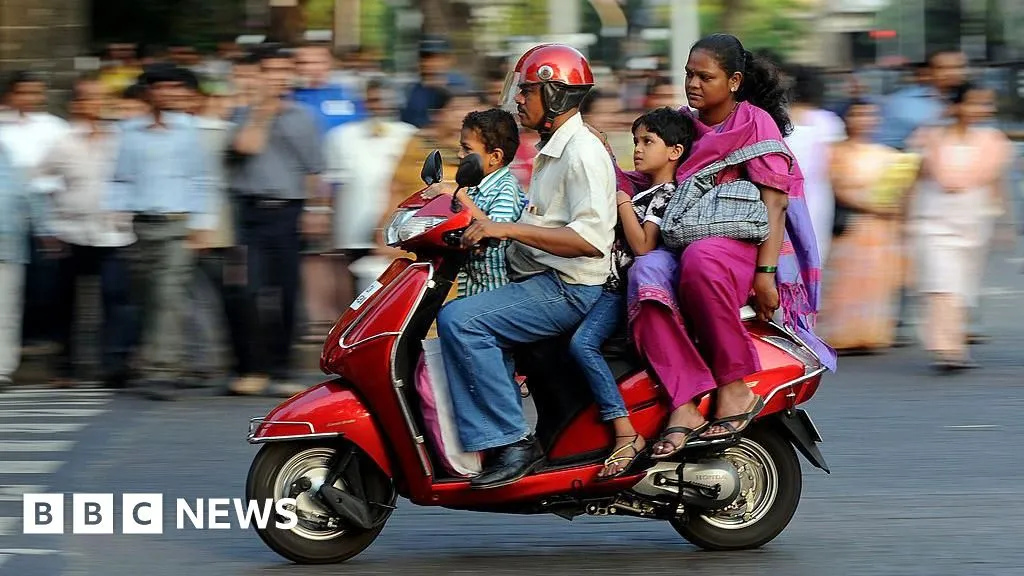
BBC News - WorldFIG 01
Reading time
5min
Word count
1 201words
Sources cited
4cited
Entities identified
9entities
Quality score
100%
§ 01
Briefing Summary
AI-generatedNEWSAR · AI
India's middle class, comprised of 40 million income taxpayers earning between 500,000 and 10 million rupees annually, is facing increasing economic strain. Automation is eliminating jobs traditionally held by this group, while white-collar job creation has slowed significantly. Consequently, many are turning to riskier financial activities, such as stock market trading, to supplement their incomes, often with detrimental results. The rising cost of living and stagnant wage growth are forcing individuals to take on debt for both discretionary and essential expenses. This pressure affects various segments of the middle class and poses a challenge to the core of the Indian economy.
Confidence 0.90Sources 4Claims 5Entities 9
§ 02
Article analysis
Model · rule-basedFraming
Economic Impact
Human Interest
Tone
Mixed Tone
AI-assessed
CalmNeutralAlarmist
Factuality
0.70 / 1.00
Factual
LowHigh
Sources cited
4
Well sourced
FewMany
§ 03
Key claims
5 extracted01
White-collar job creation has fallen from 11% growth before 2020 to just 1% today.
statisticNaukri Jobspeak Index
Confidence
0.95
02
40 million income taxpayers earn between 500,000 and 10m rupees annually.
factualSaurabh Mukherjea & Nandita Rajhansa
Confidence
0.90
03
Nine million Indians are trading Futures and Options (F&O) on the stock market and are collectively losing over $12bn a year.
statisticSaurabh Mukherjea & Nandita Rajhansa
Confidence
0.90
04
The true cost of middle-class living is doubling every eight years.
factualSaurabh Mukherjea & Nandita Rajhansa
Confidence
0.80
05
By 2031, AI could eliminate close to three million IT and customer service jobs.
predictionNiti Aayog
Confidence
0.70
§ 04
Full report
5 min read · 1 201 words§ 05
Entities
9 identifiedKey playerOppositionContextPositiveNeutralNegative
People4
Organizations1
§ 06
Keywords & salience
9 termsmiddle class
1.00
india
0.90
financial strain
0.80
automation
0.70
job creation
0.60
income taxpayers
0.50
personal loans
0.50
stock market
0.40
futures and options
0.40
§ 07
Topic connections
Interactive graph Network visualization showing 51 related topics
View Full Graph Person Organization Location Event|Click node to navigate|Edge numbers = shared articles