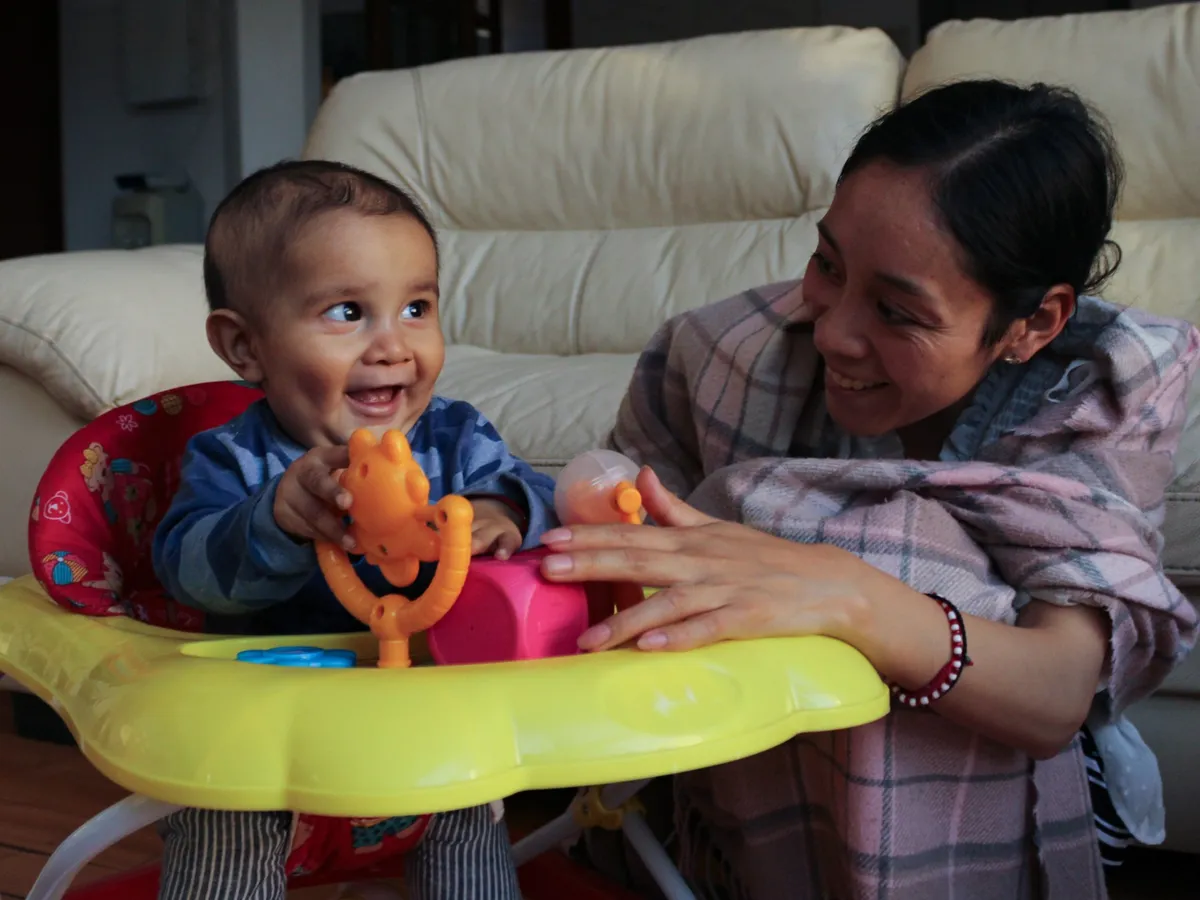
Luisa used to work in a clothing store, but now looks after Juanito full-time while her husband, Ricardo Quintín, works as a delivery driver for a local auto parts shop, earning about 2,000 pesos ($112) a week. Each journey to Mexico-city" class="entity-link entity-location" data-entity-id="1779" data-entity-type="location">Mexico City costs about 800 pesos ($45) in buses and taxis to and from the shelter, and then back home again.Much of what Ricardo earns goes towards this transport, food, nappies and anything else Juanito might need, as well as utilities, groceries and any emergencies. Though they live rent-free in a one-room house owned by Luisa’s parents, money is always tight.Although Luisa can stay at the shelter for free, longer stays bring additional costs - taxis when hospital schedules do not align with the AMANC centre’s minibus runs or when she is held up waiting for hours in overcrowded facilities, food during long visits, and necessities like nappies, baby formula and medication, all of which cost more in the capital.“I try not to spend too much so the money lasts,” she says. “I just eat simply.”When her husband accompanies her to appointments to support her, he sometimes misses work, reducing the family’s income further.“I don’t like to ask my parents for money,” Luisa says quietly. “They already help us with a place to live.”The surgery Juanito will eventually need - the removal of his right eye - will be covered by Mexico’s public health system, as is much of his ongoing care. Private treatment is far beyond the family’s means, leaving them reliant on a system marked by long waiting times and complex administrative procedures.After a paediatrician in her village urged her to seek further tests in Mexico-city" class="entity-link entity-location" data-entity-id="1779" data-entity-type="location">Mexico City, Luisa waited several months for her son’s first appointment with a specialist in the capital. During those early visits, before being admitted to the AMANC shelter - which accepts patients through doctor referrals - she and Juanito stayed in a hotel near the hospital.It was her first time in the city. Coming from a small rural village, she says she felt overwhelmed by its size - the noise, the traffic, the crowds - and was afraid to go outside. Most days, she remained in the room with her baby, leaving only when she had to buy food, supplies or make the journey to the hospital.“I felt very alone, and everything was more expensive,” she says. “I didn’t know how I was going to manage.”To make the money last, she skipped meals, focusing on what her son needed, something she and her husband still do in Mexico-city" class="entity-link entity-location" data-entity-id="1779" data-entity-type="location">Mexico City when things are tight.After learning about her financial situation, a doctor referred her to the centre. "It helped me a lot,” Luisa says. “I don't think we could manage otherwise."
SRCAl Jazeera
LANGEN
LEANCenter
WORDS456
ENT6
MON · 2026-03-30 · 13:32 GMTBRIEF NSR-2026-0330-43482
NSR-2026-0330-43482News Report·EN·Human Interest
‘I’m always watching’: A mother’s vigil in Mexico’s cancer system
Luisa, a mother from a small rural village in Mexico, dedicates her life to caring for her son, Juanito, who is battling cancer. The family relies on her husband Ricardo's income of approximately $112 a week, much of which is spent on travel, food, and necessities for Juanito's treatment in Mexico City.
Mark VialesAl JazeeraFiled 2026-03-30 · 13:32 GMTLean · CenterRead · 2 min
Al JazeeraFIG 01
Reading time
2min
Word count
456words
Sources cited
2cited
Entities identified
6entities
Quality score
100%
§ 01
Briefing Summary
AI-generatedNEWSAR · AI
Luisa, a mother from a small rural village in Mexico, dedicates her life to caring for her son, Juanito, who is battling cancer. The family relies on her husband Ricardo's income of approximately $112 a week, much of which is spent on travel, food, and necessities for Juanito's treatment in Mexico City. They live rent-free with Luisa's parents to save money. While Juanito's surgery and ongoing care are covered by Mexico's public health system, the family faces financial strain due to transportation costs, food, and other expenses associated with frequent trips to the capital. Luisa often sacrifices her own meals to ensure her son has what he needs while navigating the challenges of the public health system, including long wait times and complex procedures.
Confidence 0.90Sources 2Claims 5Entities 6
§ 02
Article analysis
Model · rule-basedFraming
Human Interest
Economic Impact
Tone
Mixed Tone
AI-assessed
CalmNeutralAlarmist
Factuality
0.80 / 1.00
Factual
LowHigh
Sources cited
2
Limited
FewMany
§ 03
Key claims
5 extracted01
Luisa waited several months for her son’s first appointment with a specialist in Mexico City.
factualArticle
Confidence
1.00
02
"It helped me a lot. I don't think we could manage otherwise."
quoteLuisa
Confidence
1.00
03
The surgery Juanito needs will be covered by Mexico’s public health system.
factualArticle
Confidence
1.00
04
Each journey to Mexico City costs about 800 pesos ($45) in buses and taxis.
factualArticle
Confidence
1.00
05
Ricardo Quintín earns about 2,000 pesos ($112) a week as a delivery driver.
factualArticle
Confidence
1.00
§ 04
Full report
2 min read · 456 words§ 05
Entities
6 identifiedKey playerOppositionContextPositiveNeutralNegative
Organizations1
§ 06
Keywords & salience
8 termschildhood cancer
0.90
financial hardship
0.80
public health system
0.80
healthcare access
0.70
medical treatment
0.60
mexico
0.60
amanc shelter
0.50
family struggle
0.50
§ 07
Topic connections
Interactive graph No topic relationship data available yet. This graph will appear once topic relationships have been computed.