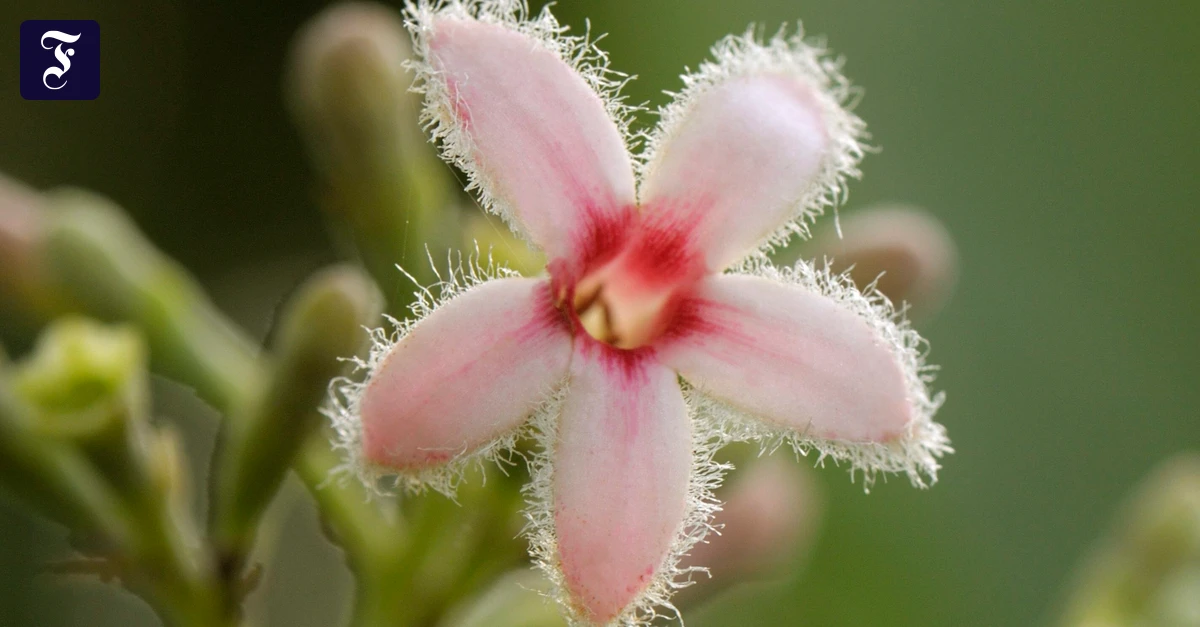
Forscher haben herausgefunden, wie das fiebersenkende Chinin entsteht. Das könnte dazu beitragen, den Wirkstoff billiger und nachhaltiger herzustellen.Chinin, ein Naturstoff aus dem Chinarindenbaum, würzt nicht nur Softdrinks wie Tonicwater oder Bitter Lemon, sondern dient auch heute noch als Mittel gegen Malaria. Nun haben Biochemiker aufgeklärt, wie der Baum den Wirkstoff produziert. Dafür haben sie auch die Gene identifiziert, die für die Chinin-Biosynthese zuständig sind, und berichten nun darüber im Wissenschaftsmagazin „Nature“.Sarah O’Connor, die am Max-Planck-Institut für chemische Ökologie in Jena die Arbeiten geleitet hat, hofft, dass es mit ihren Erkenntnissen möglich sein wird, Chinin biotechnisch herzustellen. Das gelte auch für weitere Stoffe mit pharmakologischen Eigenschaften, die bisher aus dem Baum gewonnen werden, etwa Chinidin, eine dem Chinin chemisch sehr ähnliche Substanz, die gegen Herzrhythmusstörungen wirkt.Extrakt aus der BaumrindeZwar könnte man Chinin heute synthetisch herstellen, doch das ist kompliziert. Der Prozess umfasst rund 20 Reaktionsschritte. Daher wird der Wirkstoff bisher mit Chemikalien aus der Rinde des Chinarindenbaums extrahiert, unter anderem vom Roten Chinarindenbaum (Cinchona pubescens). Der Baum, der aus den Anden im Norden Südamerikas stammt, wächst dafür auf Plantagen, vor allem in Indien, Indonesien, Malaysia und in der Demokratischen Republik Kongo. Aus einem Kilogramm Rinde lassen sich 30 bis 40 Gramm Chinin gewinnen, was für etwa 500 Liter Tonicwater ausreicht. Allerdings landen nur 20 Prozent des Chinins in Getränken, das meiste geht in die Pharmaindustrie.Der Rindenextrakt wurde von Ende des 18. Jahrhunderts an gegen Malaria eingesetzt. Chinin als Reinstoff zu isolieren, gelang im Jahr 1820. Die chemische Struktur des Chininmoleküls wurde 1908 bestimmt. Die Versuche, es im Labor nachzubauen, scheiterten zunächst. Henry Perkin, der sich Mitte des 19. Jahrhunderts darangewagt hatte, erhielt statt des Chinins den Farbstoff Mauvein. Chemienobelpreisträger Robert Burns Woodward und seine Mitarbeiter forschten Anfang der 1940er-Jahre über ein Jahr lang an der Synthese, erhielten aber eine Mischung spiegelbildlich aufgebauter Moleküle des Chinins. So, wie es im Chinarindenbaum vorkommt, stellte es ein Chemiker, Gilbert Stork, erst 2001 her. Über 100 Jahre auf der SucheWie die Natur bei der Synthese des Chinins vorgeht, war ebenfalls nicht leicht herauszufinden und wird bereits seit über 100 Jahren erforscht. Die Wissenschaftler mussten zunächst herausfinden, welche Substanzen als Zwischenprodukte auf dem Weg zum Chinin entstehen, bevor sie sich auf die Suche nach den Enzymen machen konnten, die die einzelnen Reaktionsschritte katalysieren.In früheren Studien hatten O’Connor und ihre Mitarbeiter aus der Pflanze bereits das Zwischenprodukt Corynantheal isoliert. In Experimenten mit Cinchona-Zellkulturen wurde es zu Corynantheol umgewandelt. Um zu prüfen, ob dieses auch ein Zwischenprodukt auf dem Weg zum Chinin sein könnte, stellten die Forscher es im Labor künstlich her und ersetzten einen Teil der Wasserstoffatome im Molekül durch die schwereren Deuteriumatome. Die so markierte Substanz schleusten sie in den Pflanzenstoffwechsel ein und fanden anhand des Deuteriums weitere Zwischenprodukte. Nun mussten die Forscher noch herausfinden, ob die Zwischenprodukte tatsächlich Teile des Biosynthesepfades zum Chinin sind und mit welchen Enzymen die Pflanze die Stoffe jeweils verändert. Dafür griffen sie auf Gen- und Proteindaten aus verschiedenen Teilen der Pflanze zurück sowie auf Vergleiche mit verwandten Pflanzenarten. Eine Reihe von Enzymkandidaten stellten die Wissenschaftler in der Pflanze Nicotiana benthamiana her und testeten sie an den Zwischenprodukten. N. benthamiana, eine mit dem Tabak verwandte Pflanze, sei einfach zu ziehen, wie O’Connor erklärt, und wird in biochemischen Labors genutzt, um mit ihr unter kontrollierten Bedingungen bestimmte Enzyme zu gewinnen. Um zu überprüfen, ob die einzelnen Zwischenprodukte wirklich Teil des Stoffwechselwegs zum Chinin sind, schalteten sie die entsprechenden Gene für die Bildung der betreffenden Enzyme in Cinchona-Jungpflanzen vorübergehend aus.„Wir haben aus der Cinchona-Pflanze fast alle Zwischenprodukte, die in die Chinin-Biosynthese involviert sind, isolieren können“, berichtet Sarah O’Connor, „und wir waren in der Lage, für jedes Zwischenprodukt das passende Enzym zu finden.“ Das gebe ihr ein großes Maß an Sicherheit, dass alle identifizierten Enzyme auch tatsächlich an dem Prozess beteiligt sind. gelang es auch, Mithilfe der N. benthamiana Fluor- und Chloratome in Chinin- und verwandte Wirkstoffmoleküle aus der Chinarinde einzubauen – eine Möglichkeit, um ihre Wirkung zu verändern, etwa für neue Medikamente.
SRCFAZ
LANGDE
LEANCenter-Right
WORDS659
ENT12
MON · 2026-03-30 · 11:41 GMTBRIEF NSR-2026-0330-43525
NSR-2026-0330-43525News Report·DE·Technology
Malariamittel: Wie die Natur einen berühmten Bitterstoff herstellt
Forscher haben die Biosynthese von Chinin, einem fiebersenkenden Wirkstoff aus dem Chinarindenbaum, entschlüsselt. Das Team um Sarah O’Connor am Max-Planck-Institut in Jena identifizierte die Gene, die für die Chininproduktion verantwortlich sind.
Frauke ZbikowskiFAZFiled 2026-03-30 · 11:41 GMTLean · Center-RightRead · 3 min
FAZFIG 01
Reading time
3min
Word count
659words
Sources cited
1cited
Entities identified
12entities
Quality score
100%
§ 01
Briefing Summary
AI-generatedNEWSAR · AI
Forscher haben die Biosynthese von Chinin, einem fiebersenkenden Wirkstoff aus dem Chinarindenbaum, entschlüsselt. Das Team um Sarah O’Connor am Max-Planck-Institut in Jena identifizierte die Gene, die für die Chininproduktion verantwortlich sind. Diese Entdeckung könnte die biotechnologische Herstellung von Chinin und ähnlichen Substanzen wie Chinidin ermöglichen, was eine nachhaltigere und kostengünstigere Alternative zur Extraktion aus Baumrinde darstellen würde. Chinin wird seit dem 18. Jahrhundert gegen Malaria eingesetzt und findet auch in Getränken Verwendung. Die synthetische Herstellung ist komplex, daher wird es bisher hauptsächlich aus Plantagen in Ländern wie Indien und Indonesien gewonnen. Das Verständnis der natürlichen Synthese wurde über 100 Jahre lang erforscht.
Confidence 0.90Sources 1Claims 5Entities 12
§ 02
Article analysis
Model · rule-basedFraming
Technology
Public Health
Tone
Measured
AI-assessed
CalmNeutralAlarmist
Factuality
0.80 / 1.00
Factual
LowHigh
Sources cited
1
Limited
FewMany
§ 03
Key claims
5 extracted01
From one kilogram of bark, 30 to 40 grams of quinine can be extracted.
statistic
Confidence
1.00
02
The process to synthetically produce quinine involves around 20 reaction steps.
factual
Confidence
1.00
03
Quinine, a natural substance from the cinchona tree, is still used today as a remedy against malaria.
factual
Confidence
1.00
04
Researchers have discovered how the antipyretic quinine is produced.
factual
Confidence
1.00
05
Sarah O'Connor hopes that her findings will make it possible to produce quinine biotechnologically.
predictionSarah O'Connor
Confidence
0.90
§ 04
Full report
3 min read · 659 words§ 05
Entities
12 identifiedKey playerOppositionContextPositiveNeutralNegative
People4
Organizations3
§ 06
Keywords & salience
10 termschinin
1.00
malariamittel
0.80
chinarindenbaum
0.80
biosynthese
0.70
wirkstoff
0.60
synthetische herstellung
0.50
pharmakologische eigenschaften
0.50
biotechnisch herstellen
0.50
chemische struktur
0.40
rindenextrakt
0.40
§ 07
Topic connections
Interactive graph No topic relationship data available yet. This graph will appear once topic relationships have been computed.