On March 23, Hong Kong’s government brought into force amended implementation rules for Article 43 of the National Security Law. This is not a new power grab or an expansion of authority. It is a technical, evidence-based refinement of the 2020 implementation rules that have governed national security enforcement since the law took effect.Rooted in common law principle and aligned with global legislative practice, the amendments clarify operational gaps, strengthen procedural certainty and reinforce Hong Kong’s transition from chaos to governance and prosperity, all while upholding judicial independence and the rule of law.Critics often overlook the fact that Article 43 and its implementation rules date back to 2020, not 2026. The National Security Law mandates clear, lawful procedures for searches, property freezing, evidence preservation, travel restrictions and access to digital evidence. Over nearly six years of implementation, the authorities have encountered practical ambiguities, most notably around the validity period of freezing notices and the handling of encrypted electronic devices.The 2026 update resolves these ambiguities; it does not create new powers. Official data underscores the law’s targeted effect: as of January, 98 people had been prosecuted and 78 convicted, with national security cases accounting for less than 0.2 per cent of Hong Kong’s total criminal caseload. This confirms that the regime targets only a tiny number of offenders while protecting the rights and freedoms of the majority.A key clarification concerns property freezing. The 2020 rules set a two-year cap with uncertain extension provisions during proceedings. The amended rules confirm a freezing notice remains in force until the conclusion of legal proceedings.This closes a loophole that could have allowed suspects to dispose of assets. Those affected retain full due process rights to apply to the Court of First Instance to vary or revoke such notices, consistent with common law safeguards for property and fairness.
SRCSouth China Morning Post
LANGEN
LEANCenter-Right
WORDS302
ENT3
MON · 2026-03-30 · 12:30 GMTBRIEF NSR-2026-0330-43573
NSR-2026-0330-43573Opinion·EN·National Security
Let’s be clear: national security law update is not a power grab
Hong Kong's government implemented amended rules for Article 43 of the national security law on March 23rd. These amendments are presented as technical refinements of the 2020 implementation rules, addressing operational gaps and strengthening procedural certainty.
Chen XiaofengSouth China Morning PostFiled 2026-03-30 · 12:30 GMTLean · Center-RightRead · 2 min
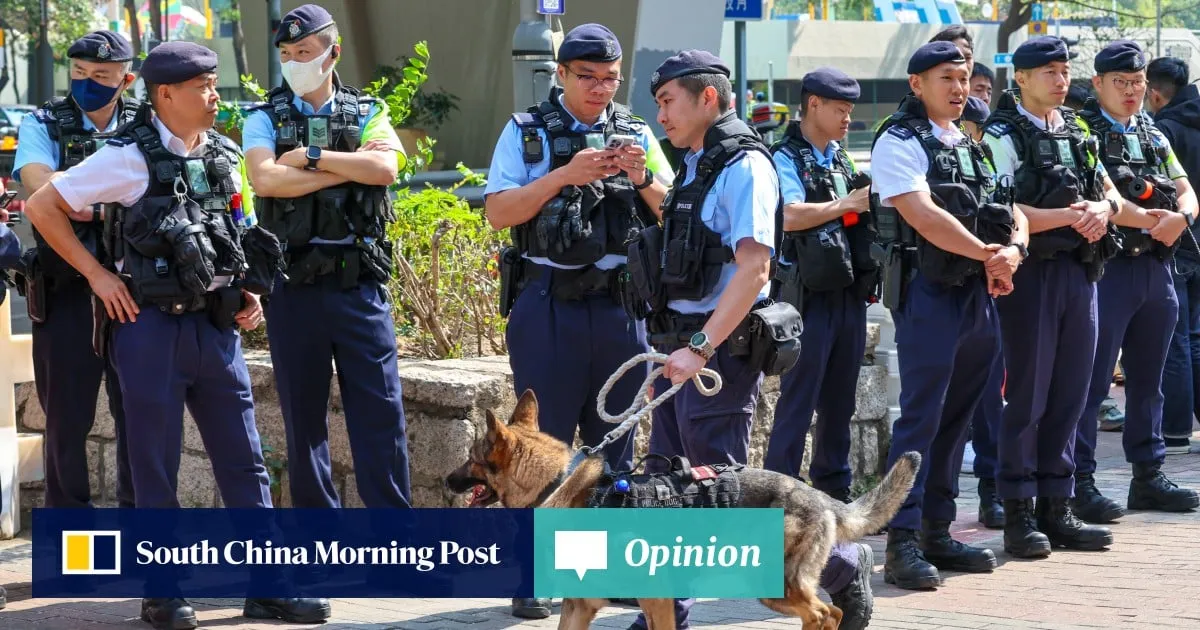
South China Morning PostFIG 01
Reading time
2min
Word count
302words
Sources cited
0cited
Entities identified
3entities
Quality score
100%
§ 01
Briefing Summary
AI-generatedNEWSAR · AI
Hong Kong's government implemented amended rules for Article 43 of the national security law on March 23rd. These amendments are presented as technical refinements of the 2020 implementation rules, addressing operational gaps and strengthening procedural certainty. The update clarifies procedures for searches, property freezing, evidence preservation, and access to digital evidence, resolving ambiguities encountered over six years of implementation. A key change concerns property freezing, extending notices until the conclusion of legal proceedings, while maintaining the right to appeal to the Court of First Instance. According to official data, the law has been targeted, with a small percentage of Hong Kong's criminal caseload involving national security cases. The government asserts the changes do not create new powers but reinforce Hong Kong's governance while upholding judicial independence.
Confidence 0.90Claims 5Entities 3
§ 02
Article analysis
Model · rule-basedFraming
National Security
Legal & Judicial
Tone
Measured
AI-assessed
CalmNeutralAlarmist
Factuality
0.40 / 1.00
Mixed
LowHigh
Sources cited
0
No named sources
FewMany
§ 03
Key claims
5 extracted01
The amended rules confirm a freezing notice remains in force until the conclusion of legal proceedings.
factualnull
Confidence
1.00
02
National security cases account for less than 0.2 per cent of Hong Kong’s total criminal caseload.
statisticnull
Confidence
1.00
03
As of January, 98 people had been prosecuted and 78 convicted under the national security law.
statisticnull
Confidence
1.00
04
Amended implementation rules for Article 43 of the national security law are a technical refinement, not a power grab.
factualnull
Confidence
0.80
05
The amendments clarify operational gaps and strengthen procedural certainty.
factualnull
Confidence
0.70
§ 04
Full report
2 min read · 302 words§ 05
Entities
3 identifiedKey playerOppositionContextPositiveNeutralNegative
Organizations1
Locations1
§ 06
Keywords & salience
8 termsnational security law
1.00
implementation rules
0.90
hong kong
0.80
property freezing
0.70
rule of law
0.60
due process
0.50
judicial independence
0.50
common law
0.40
§ 07
Topic connections
Interactive graph Network visualization showing 51 related topics
View Full Graph Person Organization Location Event|Click node to navigate|Edge numbers = shared articles