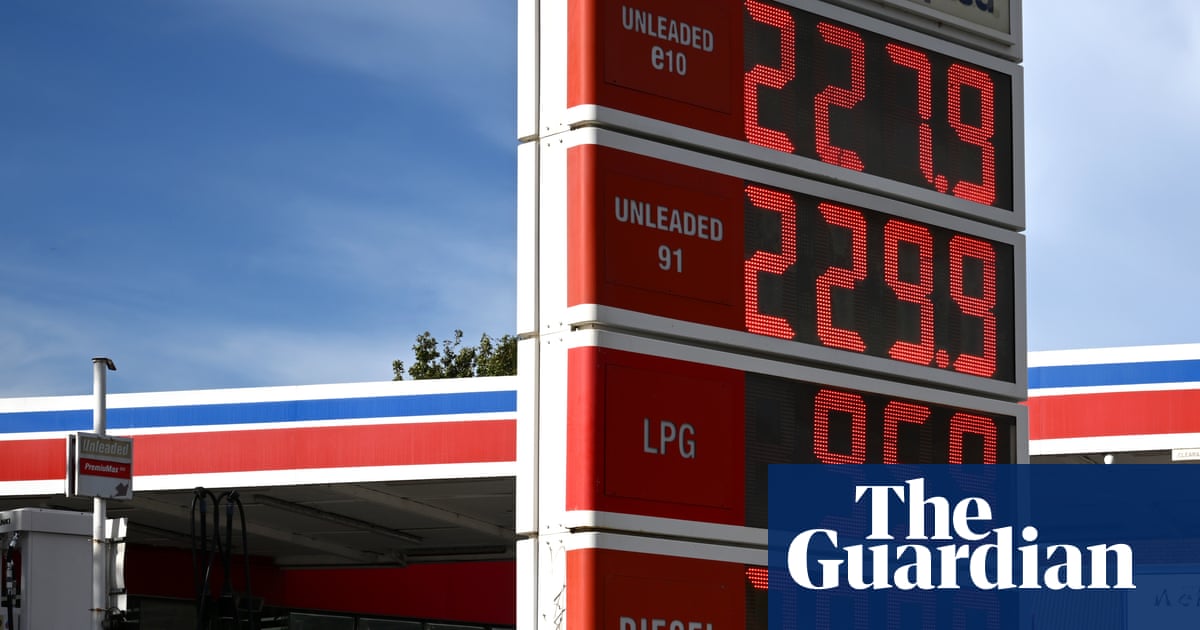
Fuel shortages also eased in New South Wales after the fuel excise cut as the increase in driver demand stepped back. Photograph: Joel Carrett/AAP View image in fullscreen Fuel shortages also eased in New South Wales after the fuel excise cut as the increase in driver demand stepped back. Photograph: Joel Carrett/AAP Petrol and diesel prices fall across Australia as Labor’s fuel excise cut takes effect Adelaide has the biggest price decline, with unleaded down 24.9 cents and diesel down 21.3 cents Follow our Australia news live blog for latest updates Get our breaking news email, free app or daily news podcast Fuel prices started to fall immediately across Australia after the government’s fuel excise cut, unexpectedly accelerating the delivery of cost-of-living relief. Prices in capital cities paused then plummeted on Wednesday, after the prime minister announced that tax on petrol and diesel would be halved to 26.3 cents a litre. Unleaded prices fell 16 cents a litre on average on Wednesday, with prices sitting between 243 and 245 cents a litre on average in Sydney, Melbourne, Brisbane and Perth, NRMA data showed. Diesel fell from 323.5 cents to 311.1 cents on average across Australia. The biggest falls were in Adelaide, with diesel down 21.3 cents and unleaded down 24.9 cents – almost equal to the entire fuel excise cut. The excise was cut on Wednesday and was expected to take days or weeks to flow through to retail prices as petrol stations would have to first sell stocks of more expensive fuel, bought prior to the cut. But service stations immediately dropped prices, on average, even for the stocks bought with the full 52.6 cent per litre charge. Ampol confirmed it had decided to pass on the full 26.3 cent reduction to some of its stations from Wednesday morning, with the rest of its stations to pass on the cut over the course of the day. Petrol prices had been rising almost every day in Australia’s capital cities since the start of March, according to Informed Sources data. Even before the excise announcement, though, the market plateaued, with prices holding steady from the weekend in Sydney and Brisbane. From Friday to Tuesday, unleaded held steady in Adelaide at about 259 cents a litre and in Darwin at 264 cents, and fell in Hobart, from 260 cents to 257.5. It fell in Perth from 258.3 cents to 251.7 from Thursday to Tuesday. Fuel shortages have also eased, with the number of service stations out of at least one fuel type falling on Wednesday, reversing a persistent rise, according to Guardian Australia analysis of state government data. In New South Wales, 30 stations were out of all types of fuel on Wednesday, while 207 had no diesel, the state premier, Chris Minns, said. There had been 75 stations out of all fuel on Monday, which had fallen to 61 by Tuesday, and 247 with no diesel on Tuesday. Minns told reporters: “My strong suspicion is that that’s as a result of consumers waiting for the excise to be cut before they fill up their tank. “It’s come at a good time in the run-up to the Easter long weekend. It says to me that there’ll be fuel available and that you shouldn’t cancel your plans.” Thousands of vehicles had disappeared from Sydney’s roads over the month of March, suggesting motorists had started to cut back on buying petrol. NSW government data shows Pennant Hills Road traffic in the last full week of March fell 2.6% from late February, before the war in Iran sent petrol prices surging, or 5% from the same week in the prior year. Compared with the previous year, traffic fell by 4.4% on Victoria Road, 2.3% on Parramatta Road and 1.8% on Military Road. On Anzac Parade in Sydney’s east, traffic had been elevated in late February, 5% higher than the year before, but by the end of March it was running 1% lower. The streets around Sydney airport have also emptied out. Traffic counts fell down 9% on Airport Drive and 5% on Qantas Drive from the last week of February to the last full week of March. Public transport usage has barely changed in NSW, with just under 2.38m average weekday Opal network trips in the last full week of March – the same as in 2025. Additional reporting by Penry Buckley and Josh Nicholas Explore more on these topics Petrol prices Consumer spending Transport Energy Oil news Share Reuse this content
SRCThe Guardian - World News
LANGEN
LEANCenter-Left
WORDS747
ENT4
WED · 2026-04-01 · 05:22 GMTBRIEF NSR-2026-0401-46407
NSR-2026-0401-46407News Report·EN·Economic Impact
Petrol and diesel prices fall across Australia as Labor’s fuel excise cut takes effect
Following the Albanese government's fuel excise cut, petrol and diesel prices have decreased across Australia. The tax on petrol and diesel was halved to 26.3 cents a litre, leading to an immediate drop in prices in capital cities on Wednesday.
Luca IttimaniThe Guardian - World NewsFiled 2026-04-01 · 05:22 GMTLean · Center-LeftRead · 3 min
The Guardian - World NewsFIG 01
Reading time
3min
Word count
747words
Sources cited
1cited
Entities identified
4entities
Quality score
100%
§ 01
Briefing Summary
AI-generatedNEWSAR · AI
Following the Albanese government's fuel excise cut, petrol and diesel prices have decreased across Australia. The tax on petrol and diesel was halved to 26.3 cents a litre, leading to an immediate drop in prices in capital cities on Wednesday. Adelaide experienced the most significant decline, with unleaded petrol prices falling by 24.9 cents and diesel prices dropping by 21.3 cents. The excise cut aims to provide cost-of-living relief to Australians.
Confidence 0.85Sources 1Claims 4Entities 4
§ 02
Article analysis
Model · rule-basedFraming
Economic Impact
Political Strategy
Tone
Measured
AI-assessed
CalmNeutralAlarmist
Factuality
0.80 / 1.00
Factual
LowHigh
Sources cited
1
Limited
FewMany
§ 03
Key claims
4 extracted01
The tax on petrol and diesel would be halved to 26.3 cents a litre.
factualprime minister
Confidence
1.00
02
Adelaide has the biggest price decline, with unleaded down 24.9 cents and diesel down 21.3 cents
statisticnull
Confidence
1.00
03
Petrol and diesel prices fall across Australia as Labor’s fuel excise cut takes effect.
factualnull
Confidence
0.90
04
Fuel prices have started falling immediately across Australia in the wake of the government’s fuel excise cut.
factualnull
Confidence
0.80
§ 04
Full report
3 min read · 747 words§ 05
Entities
4 identifiedKey playerOppositionContextPositiveNeutralNegative
§ 06
Keywords & salience
8 termsfuel prices
1.00
fuel excise cut
0.90
petrol prices
0.80
diesel prices
0.80
cost-of-living relief
0.70
tax cut
0.60
australia
0.50
government
0.40
§ 07
Topic connections
Interactive graph Network visualization showing 51 related topics
View Full Graph Person Organization Location Event|Click node to navigate|Edge numbers = shared articles