For years, China’s embattled real estate sector has been framed as a terminal drag on the economy – a deflating bubble that policymakers are unwilling to rescue but unable to ignore.That framing misses what is happening. The absence of a large bailout is not so much a sign of the leadership’s indifference as a deliberate choice. It points to something more consequential than short-term market stabilisation: a systemic effort to redesign the sector’s role in the macroeconomy.The old development model not only created a housing bubble but also perpetuated an institutional arrangement Beijing is determined to dismantle. For over two decades, land monetisation financed local government expenditure, presale revenues allowed developers to expand with minimal equity, and households absorbed leveraged exposure to residential assets that functioned more as savings instruments than homes.Policymakers have chosen a different path. It is why this year’s government work report, while acknowledging the housing market is still adjusting, promised no new demand-side stimulus. Beijing is not withholding policy firepower out of austerity, but because reviving the old model cannot be the objective. The more consequential question is what replaces it.Beijing is attempting a difficult pivot: transforming real estate from a debt-driven growth engine into a pillar of a consumption-led economy. This is a far more ambitious goal than merely inflating home prices. A key task is to shift housing from being a financial asset into a consumer good and welfare infrastructure.This begins with a move towards “good housing”. By prioritising comfort, green standards and liveability over construction volume, the 15th five-year plan signals a fundamental change in the real estate value chain. When a house is treated as a consumer good rather than a speculative hedge, the resulting economic activity becomes more service-intensive and technologically driven. Instead of a one-off burst of steel and cement, the economy gains a durable stream of high-quality property management, green energy integration and urban renewal.
SRCSouth China Morning Post
LANGEN
LEANCenter-Right
WORDS316
ENT3
WED · 2026-04-01 · 21:30 GMTBRIEF NSR-2026-0401-48146
NSR-2026-0401-48146Analysis·EN·Economic Impact
Reinflate the property sector? No, China wants an ambitious redesign
China is intentionally avoiding a large-scale bailout of its struggling real estate sector, signaling a systemic redesign rather than short-term stabilization. For over two decades, the real estate sector has been a debt-driven growth engine, but Beijing is now attempting to transform it into a pillar of a consumption-led economy.
David Tingxuan ZhangSouth China Morning PostFiled 2026-04-01 · 21:30 GMTLean · Center-RightRead · 2 min
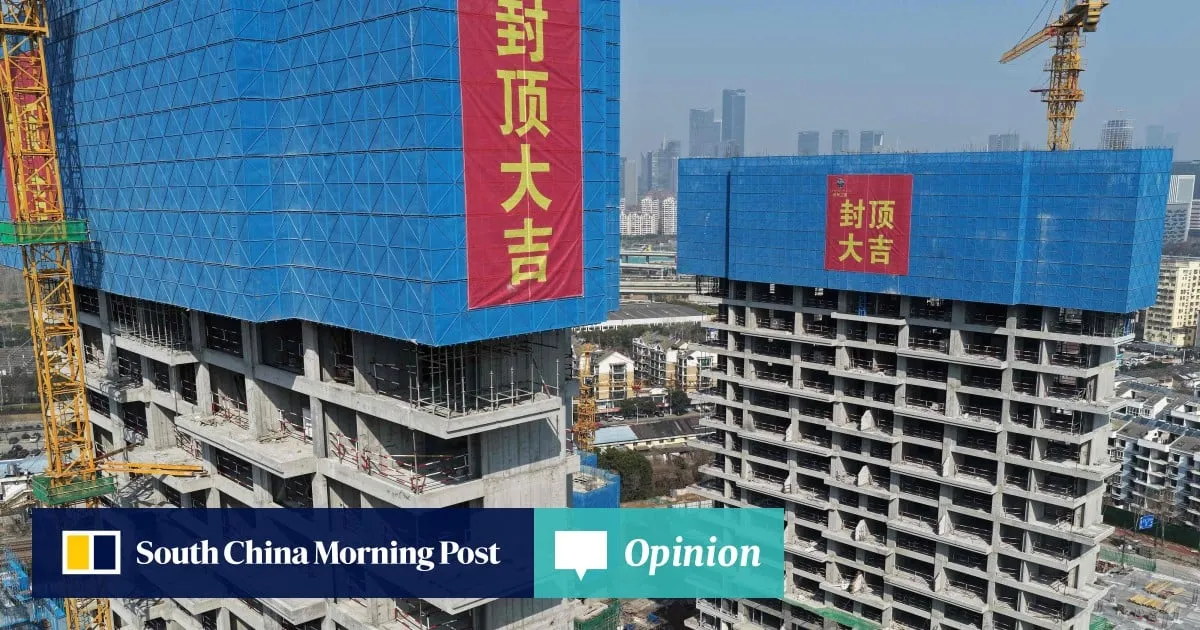
South China Morning PostFIG 01
Reading time
2min
Word count
316words
Sources cited
0cited
Entities identified
3entities
Quality score
100%
§ 01
Briefing Summary
AI-generatedNEWSAR · AI
China is intentionally avoiding a large-scale bailout of its struggling real estate sector, signaling a systemic redesign rather than short-term stabilization. For over two decades, the real estate sector has been a debt-driven growth engine, but Beijing is now attempting to transform it into a pillar of a consumption-led economy. The government aims to shift housing from a financial asset to a consumer good and welfare infrastructure. This involves prioritizing "good housing" with comfort, green standards, and liveability. The goal is to create a service-intensive and technologically driven economy with durable streams of property management, green energy integration, and urban renewal.
Confidence 0.90Claims 5Entities 3
§ 02
Article analysis
Model · rule-basedFraming
Economic Impact
Political Strategy
Tone
Measured
AI-assessed
CalmNeutralAlarmist
Factuality
0.40 / 1.00
Mixed
LowHigh
Sources cited
0
No named sources
FewMany
§ 03
Key claims
5 extracted01
For over two decades, land monetisation financed local government expenditure.
factualnull
Confidence
0.90
02
China's real estate sector has been framed as a terminal drag on the economy.
factualnull
Confidence
0.90
03
The 15th five-year plan signals a fundamental change in the real estate value chain.
factualnull
Confidence
0.80
04
The absence of a large bailout is a deliberate choice by Chinese leadership.
factualnull
Confidence
0.80
05
Beijing is attempting to transform real estate from a debt-driven growth engine into a pillar of a consumption-led economy.
predictionnull
Confidence
0.70
§ 04
Full report
2 min read · 316 words§ 05
Entities
3 identifiedKey playerOppositionContextPositiveNeutralNegative
Organizations1
§ 06
Keywords & salience
10 termsreal estate
1.00
china
0.90
economic redesign
0.80
consumption-led economy
0.70
housing market
0.70
property sector
0.60
debt-driven growth
0.60
good housing
0.50
land monetisation
0.50
urban renewal
0.40
§ 07
Topic connections
Interactive graph Network visualization showing 51 related topics
View Full Graph Person Organization Location Event|Click node to navigate|Edge numbers = shared articles