2 hours agoNadine YousifSenior Canada reporter, Montreal, QuebecBBCGun shop owner Frank Nardi says many clients are confused by the gun-buy back programme and which firearms fall under the banHeidi Rathjen has been calling for a ban on assault-style rifles since 1989, when a gunman opened fire on her classmates at Montreal's École Polytechnique.The shooting, in which 14 women were killed and more than a dozen injured, was a turning point for Canada, changing how the country viewed gun violence.More than two decades later, after another deadly mass shooting in 2020, Ottawa did roll out a ban on some 2,500 models of such "assault-style" weapons.But a scheme designed to buy back these now-prohibited guns from their owners has had a bumpy roll out, and the programme looks likely to miss the mark.Many legal gun owners are distrustful of the process, two provinces have refused to take part, and even gun control activists like Rathjen say the federal efforts, though a win for public safety, are flawed because the ban does not apply widely enough."Without a comprehensive ban on assault weapons, there is no ban… and the money will be wasted," said Rathjen, a spokesperson for gun control advocacy group PolySeSouvient."Don't ask me to explain the logic to you on this," he told a Toronto man in a secretly recorded conversation late last year, when pressed on programme's value when most gun crimes in Canada are committed with illegal weapons.Anandasangaree later said his comments were "misguided", and that he believes in the programme's importance. So why is Canada struggling with a measure that saw success in places like Australia - where 650,000 firearms were bought back and destroyed after the Port Arthur massacre in 1996, according to figures by the Australian government - and New Zealand, which collected around 56,000 firearms after the Christchurch mosque shooting in 2019?Joel Negin, a professor of public health at the University of Sydney, said Australia's measures in 1996 largely worked because they were part of a broad suite of measures implemented "very quickly" after the massacre.Australia's programme was also well-funded thanks to a short-term levy that was placed on taxpayers, he noted."The situation in Canada is that the gun buy-back has been proposed, but it's not necessarily linked closely to other interventions," Negin said, adding its roll out, along with other gun-related laws after the 2020 Nova Scotia mass shooting, has been fragmented.Supplied by PolySeSouvientGun control activist Heidi Rathjen says the gun ban excludes model like the SKS, a semi-automatic firearmCanada's plan is for gun owners is to be reimbursed by the government when they turn in their weapons, similar to measures in Australia and New Zealand. More than C$215m ($155m; £117m) has been set aside for the effort.Canada marks 30 years since Montreal MassacreFrank Nardi, a Montreal-based gun shop owner, said he believes the law unfairly targets lawful hunters and sport shooters. He argues that mass shootings in Canada are more likely linked to things like failures in the mental health system."Let's concentrate on that before slapping all these regulations and confiscations on all these legal firearm owners, who have always supported safety and followed the protocols," he said.Speaking at his shop, Nardi told the BBC he's heard from many gun owners who are confused about the programme and unsure of which guns are affected, which he blamed on poor communication from the federal government.He argues that the firearms that fall under the ban - or don't - don't always make sense. He holds up two that appear nearly identical."Same caliber, all the same type of cartridges," he explained, but one is banned while the other is not.Meanwhile, Alberta and Saskatchewan, two conservative provinces in western Canada, have refused to participate in the programme.In Alberta it won't be enforced and in Saskatchewan, owners will be shielded from criminal liability until they receive what the province says is a guarantee of fair compensation for their guns.Blaine Beaven, Saskatchewan's newly appointed firearms commissioner, told the BBC his province's law is designed to protect gun owners. But he and other Saskatchewan officials have had strong words for the firearm ban itself."At its core, it's an ideological mandate that's being put out there that has limited to no discernible benefit to public safety," Beaven said.Watch: Breaking down Canada’s gun buyback schemeA number of police forces in Canada have said they will not assist the government in the programme, calling it a "significant operational burden" and saying it may not align with their priority of focusing on illegal gun smuggling instead.The pushback is unfolding in a country that is widely supportive of gun control, and has much more stringent gun laws than the United States.Polling suggests most Canadians believe gun laws in their country are just right or not strict enough, and 82% in 2020 said they support a ban on military-style assault weapons.In Canada gun ownership is regulated by laws that require would-be gun owners to obtain a licence by passing a safety course and rigorous background checks before they can purchase a firearm.America's more lax laws have notably led to an influx of illegal guns across the US-Canada border. Data from Ontario, Canada's most populous province, shows that the majority of handguns recovered from crimes in 2024 - about 91% - originate from the US.In Canada's rare mass shootings, however, perpetrators have often used long guns, including at École Polytechnique and in Portapique, Nova Scotia in 2020, where 22 people were killed.The country's most recent deadly mass shooting, in the small town of Tumbler Ridge, British Columbia in February, at least one gun was a "modified rifle". The firearms were also not registered to the suspect, an 18-year-old who died from a self-inflicted gunshot wound in the attack.Eight people were killed, many children at a local secondary school.Getty ImagesPublic Safety Minister Gary Anandasangaree has said "assault-style" weapons don't belong in Canadian communitiesThe Canadian government has said it intends to go ahead fully with the buy-back scheme despite criticism around their policy. More than 67,000 firearms have been voluntarily declared by more than 37,000 Canadians across the country. The government had set aside money to buy back a total of 136,000 guns.Anandasangaree thanked the firearms owners who had declared their guns by the Tuesday deadline, saying in a statement that "these types of weapons do not belong in our communities".And while an amnesty period for gun owners has been extended several times, the deadline is now 30 October for the firearms to be destroyed.Whether that date will stick is another question. The Supreme Court of Canada recently agreed to hear a challenge to the gun ban by the Canadian Coalition of Firearm Rights, after two lower courts upheld it.One of the group's founders, Tracey Wilson, told the BBC they are advising those who declared their firearms to withdraw their application pending the court's decision, which likely won't come for months.Her group is considering an application to extend the amnesty date if the government does not do so itself."We're not going to wait for them to do the right thing by Canadians," Wilson said.As for Rathjen, time is running out to implement what she calls a "comprehensive ban" that would bar ownership of all assault-style rifles, in particular the SKS semi-automatic.She called the government's willingness to compensate current owners without banning new purchases of all rifle models "a nightmare scenario"."It's just unbelievable that the government has invested so much in this controversial and difficult file, so much money, so much political capital, and yet they're heading for failure," she said.
SRCBBC News - World
LANGEN
LEANCenter
WORDS1 250
ENT12
SAT · 2026-04-04 · 00:32 GMTBRIEF NSR-2026-0404-51522
NSR-2026-0404-51522News Report·EN·Political Strategy
How Canada's largest gun control effort in decades is missing the mark
Canada's buy-back program, initiated after a 2020 ban on approximately 2,500 models of "assault-style" weapons, is facing challenges and criticism. Designed to remove prohibited firearms from civilian ownership, the program has been hampered by distrust from gun owners and lack of participation from some provinces.
BBC News - WorldFiled 2026-04-04 · 00:32 GMTLean · CenterRead · 5 min
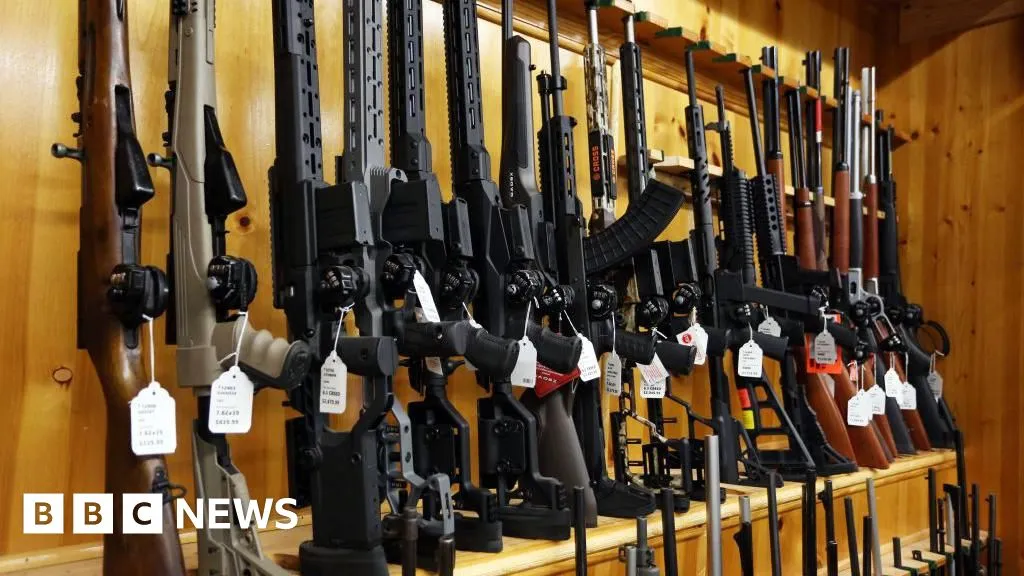
BBC News - WorldFIG 01
Reading time
5min
Word count
1 250words
Sources cited
4cited
Entities identified
12entities
Quality score
100%
§ 01
Briefing Summary
AI-generatedNEWSAR · AI
Canada's buy-back program, initiated after a 2020 ban on approximately 2,500 models of "assault-style" weapons, is facing challenges and criticism. Designed to remove prohibited firearms from civilian ownership, the program has been hampered by distrust from gun owners and lack of participation from some provinces. Even gun control advocates argue the ban is not comprehensive enough, as it doesn't encompass all assault weapons. Experts point to Australia's successful buy-back program after the 1996 Port Arthur massacre, noting its rapid implementation and connection to broader gun control measures. The Canadian program's fragmented rollout and lack of connection to other interventions are contributing to its struggles.
Confidence 0.90Sources 4Claims 5Entities 12
§ 02
Article analysis
Model · rule-basedFraming
Political Strategy
Public Health
Tone
Measured
AI-assessed
CalmNeutralAlarmist
Factuality
0.70 / 1.00
Factual
LowHigh
Sources cited
4
Well sourced
FewMany
§ 03
Key claims
5 extracted01
More than C$215m has been set aside for the gun buy-back effort.
statisticBBC
Confidence
1.00
02
Without a comprehensive ban on assault weapons, there is no ban… and the money will be wasted.
quoteHeidi Rathjen
Confidence
1.00
03
Canada has rolled out a ban on some 2,500 models of "assault-style" weapons.
factualBBC
Confidence
1.00
04
Australia bought back and destroyed 650,000 firearms after the Port Arthur massacre.
statisticJoel Negin (citing Australian government figures)
Confidence
0.90
05
The gun buy-back programme looks likely to miss the mark.
predictionBBC
Confidence
0.70
§ 04
Full report
5 min read · 1 250 words§ 05
Entities
12 identifiedKey playerOppositionContextPositiveNeutralNegative
Locations5
§ 06
Keywords & salience
10 termsgun control
1.00
gun buy-back programme
0.90
assault-style weapons
0.80
gun violence
0.70
mass shooting
0.60
firearms ban
0.60
legal gun owners
0.50
public safety
0.50
australia
0.40
new zealand
0.40
§ 07
Topic connections
Interactive graph Network visualization showing 51 related topics
View Full Graph Person Organization Location Event|Click node to navigate|Edge numbers = shared articles