STC to maintain presence, but agrees to deployment of Riyadh-backed National Shield government forces in the areas.Published On 1 Jan 2026Tensions in Yemen continue to simmer as Rashad al-Alimi, the head of the internationally recognised Presidential Leadership Council, has warned against unilateral military moves by southern separatists.Al-Alimi cautioned that further advances by the Southern Transitional Council (STC) separatists in Hadramout and al-Mahra provinces would have serious consequences.Recommended Stories list of 3 itemslist 1 of 3What is behind the Saudi-UAE rupture in Yemen?list 2 of 3Palestine was the deadliest place to be a journalist in 2025: Media unionlist 3 of 3Why are some African countries banning US citizens from entry?end of listHis warning followed a surprise offensive in December that saw STC forces seize control of the resource-rich provinces. Riyadh has accused the United Arab Emirates of egging the STC on and warned that the presence of the STC in Yemeni provinces that border Saudi Arabia poses a threat to its security. The UAE has rejected those allegations and has said it supports Saudi Arabia’s security.Meanwhile, the STC has rejected al-Alimi’s authority, insisting its fighters will remain in place in the provinces that Saudi Arabia and the official Yemeni government want them out of.On Wednesday evening, the group announced a new agreement to deploy additional separatist forces to areas it has taken in Hadramout, further entrenching its presence. Neither the Yemeni government nor Saudi Arabia has issued an official response to this announcement.Mohammed al-Naqeeb, an STC spokesperson, said in a video posted on X that the group’s units would continue operating in the seized areas. He added, however, that they would be coordinated with the “Homeland Shield” forces affiliated with the Yemeni government and the Saudi-led coalition.Limited withdrawalHadramout’s governor, Salem al-Khanbashi, said the STC’s response to official demands for a withdrawal had been limited.
SRCAl Jazeera
LANGEN
OutletState media · Qatar
WORDS303
THU · 2026-01-01 · 10:51 GMTBRIEF NSR-2026-0101-5177
NSR-2026-0101-5177News Report·EN·Conflict
Yemen’s separatist STC refuses to withdraw from provinces near Saudi Arabia
In January 2026, tensions remained high in Yemen after the Southern Transitional Council (STC) refused to fully withdraw its forces from Hadramout and al-Mahra provinces, despite warnings from the head of the Presidential Leadership Council, Rashad al-Alimi. The STC's presence in these resource-rich provinces, seized in a December offensive, has raised concerns in Saudi Arabia, which views it as a threat to its security.
Elis GjevoriAl JazeeraFiled 2026-01-01 · 10:51 GMTOutlet · State media · QatarRead · 2 min
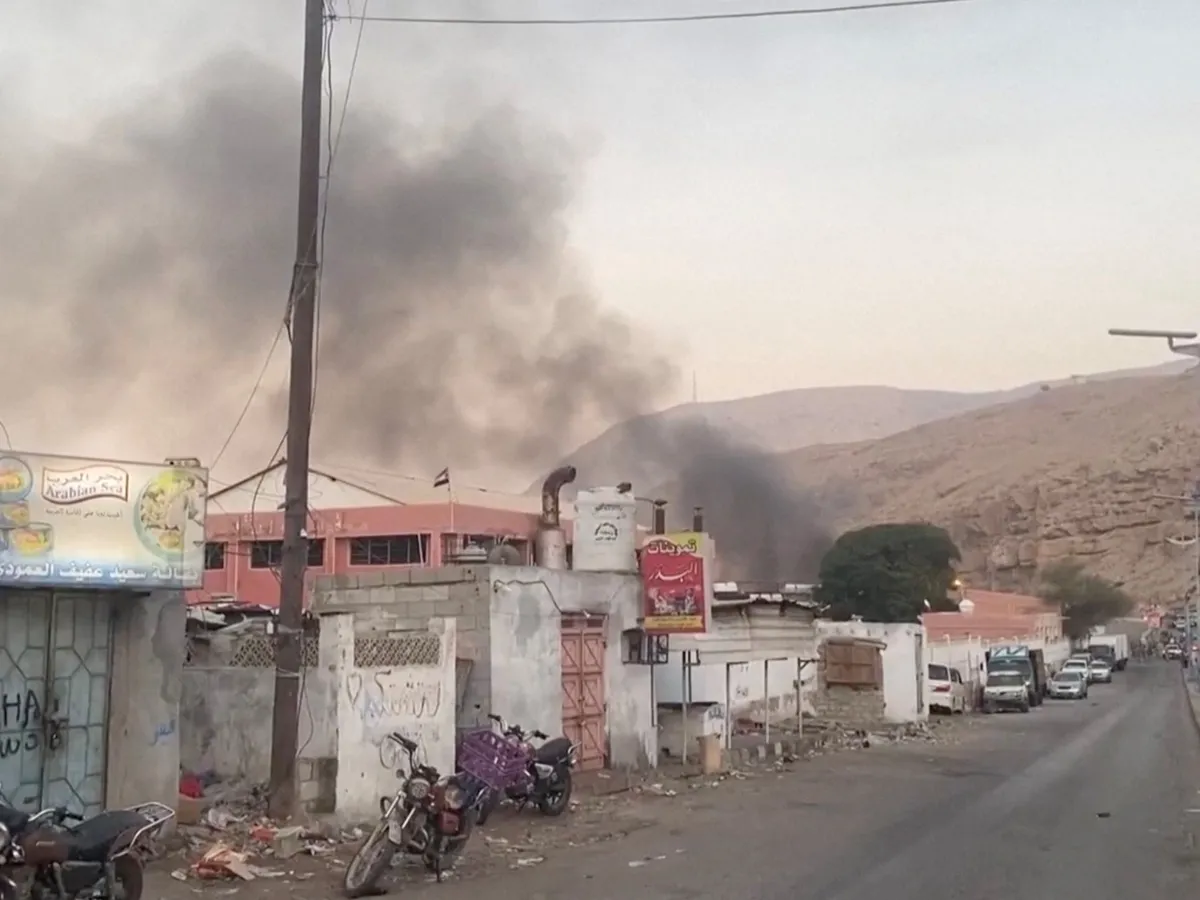
Al JazeeraFIG 01
Reading time
2min
Word count
303words
Sources cited
4cited
Entities identified
0entities
NEWSAR · AI
In January 2026, tensions remained high in Yemen after the Southern Transitional Council (STC) refused to fully withdraw its forces from Hadramout and al-Mahra provinces, despite warnings from the head of the Presidential Leadership Council, Rashad al-Alimi. The STC's presence in these resource-rich provinces, seized in a December offensive, has raised concerns in Saudi Arabia, which views it as a threat to its security. While the STC rejected al-Alimi's authority, it agreed to coordinate with the Riyadh-backed "Homeland Shield" forces in the seized areas. However, a local governor indicated that the STC's response to demands for complete withdrawal has been limited, further entrenching its presence in the region. The Yemeni government and Saudi Arabia have yet to officially respond to the STC's latest announcement.
Confidence 0.90Sources 4Claims 5
Framing
Conflict
National Security
Tone
Measured
AI-assessed
CalmNeutralAlarmist
Factuality
0.80 / 1.00
Factual
LowHigh
Sources cited
4
Well sourced
FewMany
01
Mohammed al-Naqeeb said STC units would continue operating in seized areas, coordinated with Homeland Shield forces.
quoteMohammed al-Naqeeb
Confidence
1.00
02
The UAE has rejected allegations that it is egging on the STC.
factualUAE
Confidence
1.00
03
Riyadh has accused the United Arab Emirates of egging the STC on.
factualRiyadh
Confidence
1.00
04
Rashad al-Alimi warned against unilateral military moves by southern separatists.
quoteRashad al-Alimi
Confidence
1.00
05
STC refuses to withdraw from provinces near Saudi Arabia but agrees to deployment of Riyadh-backed National Shield forces.
factualArticle
Confidence
1.00
§ 04
Full report
2 min read · 303 wordsyemen conflict
0.90
southern transitional council
0.80
stc presence
0.70
saudi arabia
0.70
separatists
0.60
hadramout
0.60
al-mahra
0.60
territorial control
0.50
riyadh-backed forces
0.50
united arab emirates
0.40