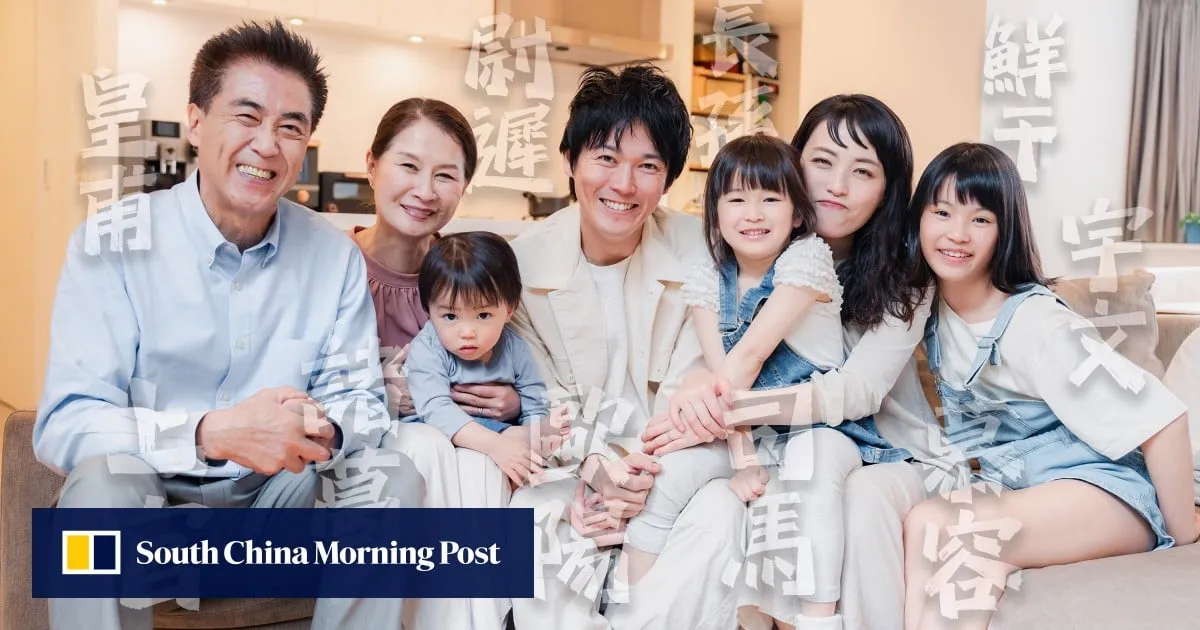
While most Chinese people’s surnames are only one character long, there are also millions of people who have compound surnames which are considered rare and precious.You might have come across some Chinese celebrities with surnames more than one character, such as Taiwan-born actress and cellist Ouyang-nana" class="entity-link entity-person" data-entity-id="94982" data-entity-type="person">Ouyang Nana, Hong Kong-American stand-up comedian and actor Jimmy O. Yang.In fact, these two celebrities have the same compound surname, Ouyang, which is currently China’s most used compound surname, with over 1.1 million people using it, according to the 2020 National Name Report by the Ministry of Public Security.Getting together: Three generations of one family pose for a happy photograph. Photo: ShutterstockChina currently has fewer than 100 compound surnames. The second most popular one is Shangguan, used by 88,000 people, followed by Huangfu, Linghu, Zhuge, Situ and Sima.There are only millions of people with compound surnames today, but in ancient times China used to have over 1,000 compound surnames.The compound surnames have various origins.Some were ancient official titles. Some came from professions. Others were hereditary names of the region, like Ouyang and Dongguo. Some were adapted from surnames of ethnic minority tribes.
SRCSouth China Morning Post
LANGEN
LEANCenter-Right
WORDS187
ENT12
SAT · 2026-04-04 · 10:00 GMTBRIEF NSR-2026-0404-52216
NSR-2026-0404-52216News Report·EN·Human Interest
Compound Chinese surnames come from historical figures, ancient states; now fewer than 100 remain
Compound Chinese surnames, consisting of more than one character, are becoming increasingly rare. Once numbering over 1,000, fewer than 100 remain in use today.
Fran LuSouth China Morning PostFiled 2026-04-04 · 10:00 GMTLean · Center-RightRead · 1 min
South China Morning PostFIG 01
Reading time
1min
Word count
187words
Sources cited
1cited
Entities identified
12entities
Quality score
100%
§ 01
Briefing Summary
AI-generatedNEWSAR · AI
Compound Chinese surnames, consisting of more than one character, are becoming increasingly rare. Once numbering over 1,000, fewer than 100 remain in use today. These surnames, held by millions of people, originated from various sources including ancient official titles, professions, regional names, and ethnic minority tribes. The most common compound surname is Ouyang, with over 1.1 million users according to a 2020 report. Other relatively common examples include Shangguan, Huangfu, Linghu, Zhuge, Situ, and Sima. While single-character surnames are the norm, compound surnames are considered precious links to Chinese history and heritage.
Confidence 0.90Sources 1Claims 4Entities 12
§ 02
Article analysis
Model · rule-basedFraming
Human Interest
Political Strategy
Tone
Measured
AI-assessed
CalmNeutralAlarmist
Factuality
0.80 / 1.00
Factual
LowHigh
Sources cited
1
Limited
FewMany
§ 03
Key claims
4 extracted01
Ouyang is China’s most used compound surname, with over 1.1 million people using it.
statistic2020 National Name Report by the Ministry of Public Security
Confidence
1.00
02
The second most popular compound surname is Shangguan, used by 88,000 people.
statistic
Confidence
0.90
03
China currently has fewer than 100 compound surnames.
factual
Confidence
0.90
04
In ancient times China used to have over 1,000 compound surnames.
factual
Confidence
0.80
§ 04
Full report
1 min read · 187 words§ 05
Entities
12 identifiedKey playerOppositionContextPositiveNeutralNegative
Organizations1
§ 06
Keywords & salience
8 termscompound surnames
1.00
chinese surnames
0.90
surname origins
0.70
ouyang
0.60
ancient china
0.60
historical figures
0.50
official titles
0.40
ethnic minority tribes
0.40
§ 07
Topic connections
Interactive graph Network visualization showing 51 related topics
View Full Graph Person Organization Location Event|Click node to navigate|Edge numbers = shared articles