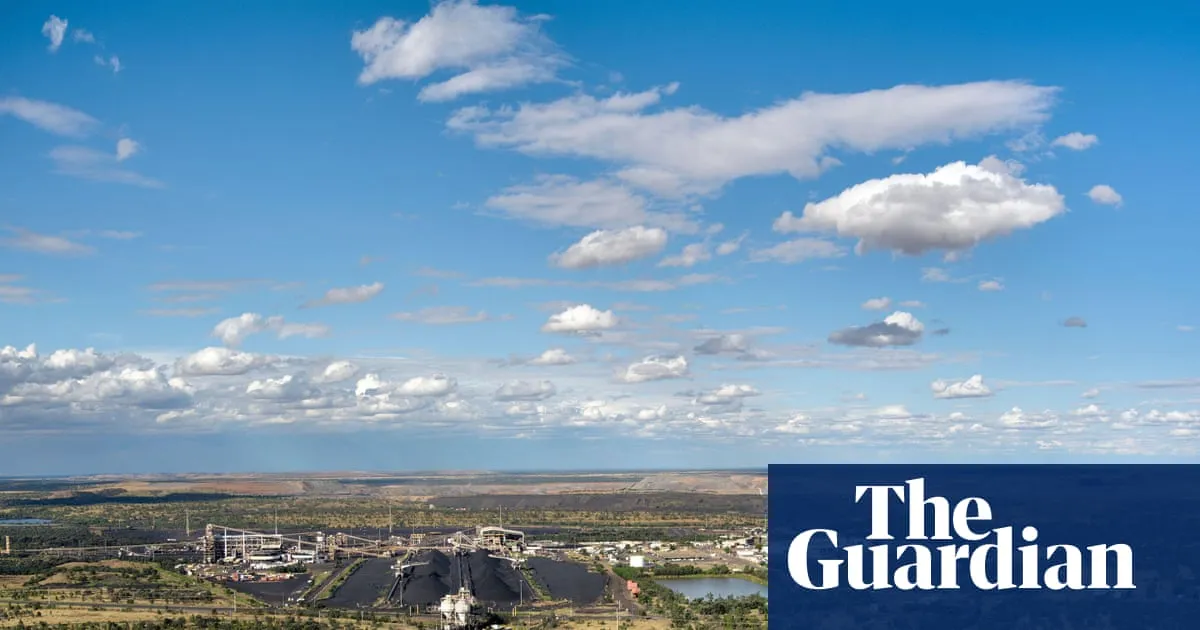
Curragh coalmine near Blackwater, Queensland. Experts say instead of using AI to speed up assessments, the government should employ more people to carry them out. Photograph: IconsAustralia/Alamy View image in fullscreen Curragh coalmine near Blackwater, Queensland. Experts say instead of using AI to speed up assessments, the government should employ more people to carry them out. Photograph: IconsAustralia/Alamy Using AI to speed up Australia’s environmental approvals risks ‘robodebt-style’ failures, scientists say Conservationists say move could push species closer to extinction and clearer environmental rules are needed instead Follow our Australia news live blog for latest updates Get our breaking news email, free app or daily news podcast Conservationists and scientists have warned a mining lobby proposal to use artificial intelligence to speed up national environmental approvals could generate “robodebt-style” failures, putting threatened species at further risk. The Australia" class="entity-link entity-organization" data-entity-id="100227" data-entity-type="organization">Minerals Council of Australia has asked the government to spend $13m to trial the use of AI to help companies prepare applications and help the federal government make decisions. But the Biodiversity Council, a group of independent experts across 11 universities, told Guardian Australia while AI could play a role in simple tasks, automating environment assessments “could lead to robodebt-style failure, where computers make flawed decisions without transparency” that could ultimately push species closer to extinction. Robodebt refers to the automated debt-recovery scheme which, between 2015 and 2019, wrongly accused hundreds of thousands of welfare recipients of overpayments. Lis Ashby, the Biodiversity Council’s lead on policy and innovation, said Australia’s cornerstone environment law – the Environment Protection and Biodiversity Conservation Act – was “full of vague language and broad ministerial discretion”. “The vague rules add to the current length of assessment processes, because they impede rules-based decision-making by human assessors. The lack of clear rules will be even more problematic for an AI tool,” she said. “Setting clear rules in the National Environmental Standards, including defining what is unacceptable, would speed up assessment times, even without AI help, and is important for any future adoption of AI.” Brendan Sydes, the national biodiversity policy adviser at the Australian Conservation Foundation, said the organisation was “sceptical” of the Minerals Council’s push. “Clearly technology has a role to play in making sure nature protection laws deliver nature protection outcomes as efficiently as possible. But while AI might be a good servant, it is a poor master,” he said. He said the federal government should instead be focusing on filling existing gaps in data around threatened species and habitats. Prof David Lindenmayer, a forest ecologist at Australian National University and a member of the Biodiversity Council, said research had shown a third of Australia’s threatened species had not been monitored while others had only patchy data. Assessors overcame these gaps, he said, by consulting experts. “AI decisions are only as good as the data they rely on, and good data is not publicly available for most of Australia’s threatened species – often not even basic location data,” he said. “AI automation risks decisions based on flawed or outdated information, failing to protect biodiversity.” The Albanese government passed reforms to environment laws last year after a 2020 review found they were failing to protect species and habitats. Prof Hugh Possingham, a leading conservation biologist at the University of Queensland, said: “AI tools generally need material to be trained against. “The past 20 years of EPBC Act approvals are clearly unsuitable material as the act has demonstrably failed to protect the environment.” To speed up assessments, he said the government should instead be employing more people to carry them out. The chief executive of the minerals council, Tania Constable, said comparisons with robodebt were “disappointing” and the proposal was innovative and could strengthen environmental protection while improving efficiency. She said: “The proposed approach would support human decision-making with AI tools for both the regulator and the project proponent, including helping to navigate the complexity and variability of assessments and approvals under the EPBC Act.” A federal government spokesperson said budget decisions would be made “in due course” but the environment department was considering how AI could make applications easier. “Decisions about whether to approve projects must, and will, always be made by assessment officers, not by AI,” a statement said. AI tools had the potential to save time, reduce uncertainty and translate technical language, the spokesperson added. Explore more on these topics Australia news Climate crisis Mining AI (artificial intelligence) Endangered species Australian law Biodiversity news Share Reuse this content
SRCThe Guardian - World News
LANGEN
LEANCenter-Left
WORDS741
ENT3
MON · 2026-04-06 · 15:00 GMTBRIEF NSR-2026-0406-55247
NSR-2026-0406-55247News Report·EN·Environmental
Using AI to speed up Australia’s environmental approvals risks ‘robodebt-style’ failures, scientists say
Conservationists and scientists are cautioning against a proposal by the Minerals Council of Australia to use artificial intelligence to accelerate Australia's national environmental approval processes. The council has requested the government invest $13 million to trial AI in application preparation and government decision-making.
Graham Readfearn Environment and climate correspondentThe Guardian - World NewsFiled 2026-04-06 · 15:00 GMTLean · Center-LeftRead · 3 min
The Guardian - World NewsFIG 01
Reading time
3min
Word count
741words
Sources cited
1cited
Entities identified
3entities
Quality score
100%
§ 01
Briefing Summary
AI-generatedNEWSAR · AI
Conservationists and scientists are cautioning against a proposal by the Minerals Council of Australia to use artificial intelligence to accelerate Australia's national environmental approval processes. The council has requested the government invest $13 million to trial AI in application preparation and government decision-making. Critics fear this approach could lead to errors similar to the "robodebt" scandal, potentially endangering threatened species. They argue that clearer environmental regulations are needed instead of relying on AI to expedite approvals. The concern is that using AI without proper oversight could push vulnerable species closer to extinction.
Confidence 0.85Sources 1Claims 3Entities 3
§ 02
Article analysis
Model · rule-basedFraming
Environmental
Technology
Tone
Mixed Tone
AI-assessed
CalmNeutralAlarmist
Factuality
0.70 / 1.00
Factual
LowHigh
Sources cited
1
Limited
FewMany
§ 03
Key claims
3 extracted01
The Minerals Council of Australia has asked the government to spend $13m to trial the use of AI.
factualnull
Confidence
1.00
02
Using AI to speed up environmental approvals risks ‘robodebt-style’ failures.
quoteConservationists and scientists
Confidence
0.80
03
Move could push species closer to extinction.
predictionConservationists
Confidence
0.60
§ 04
Full report
3 min read · 741 words§ 05
Entities
3 identifiedKey playerOppositionContextPositiveNeutralNegative
Locations1
§ 06
Keywords & salience
8 termsenvironmental approvals
0.90
artificial intelligence
0.80
threatened species
0.70
robodebt-style failures
0.70
mining lobby
0.60
environmental rules
0.50
conservation
0.50
government decisions
0.40
§ 07
Topic connections
Interactive graph Network visualization showing 51 related topics
View Full Graph Person Organization Location Event|Click node to navigate|Edge numbers = shared articles