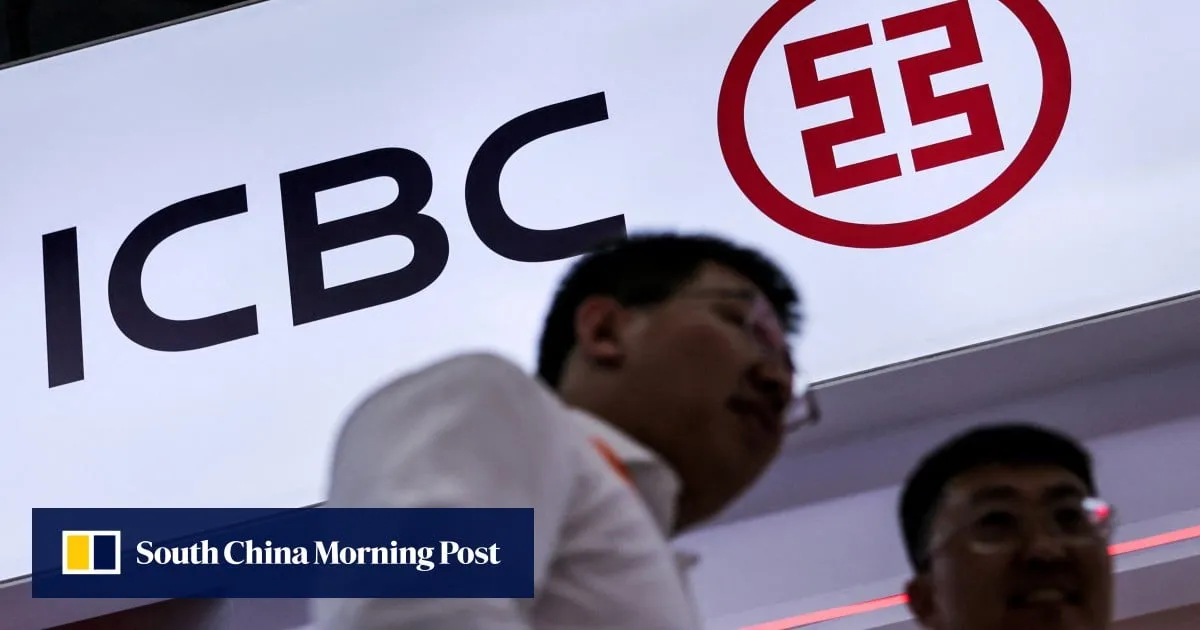
China’s six largest state-owned banks are set to distribute more than 420 billion yuan (US$61 billion) in dividends for 2025, extending record-high payouts and strengthening their appeal as a source of stable income as investors rotate into defensive assets amid low interest rates.Combined payouts from Industrial and Commercial China" class="entity-link entity-organization" data-entity-id="26029" data-entity-type="organization">Bank of China (ICBC), China Construction Bank (CCB), China" class="entity-link entity-organization" data-entity-id="45445" data-entity-type="organization">Agricultural China" class="entity-link entity-organization" data-entity-id="26029" data-entity-type="organization">Bank of China, China" class="entity-link entity-organization" data-entity-id="26029" data-entity-type="organization">Bank of China, Bank of Communications and China" class="entity-link entity-organization" data-entity-id="100427" data-entity-type="organization">Postal Savings China" class="entity-link entity-organization" data-entity-id="26029" data-entity-type="organization">Bank of China were expected to reach about 427.4 billion yuan, up 1.6 per cent from a year earlier, according to the South China Morning Post’s calculations based on their latest profit distribution plans.ICBC and CCB led the group, with each declaring annual dividends exceeding 100 billion yuan. ICBC plans to distribute about 110.6 billion yuan, equivalent to a payout ratio of 30 per cent, marking its fifth consecutive year above the 100 billion yuan threshold. CCB will pay out about 101.7 billion yuan, also a 30 per cent payout, extending its streak to three years.Liu Jun, vice-chairman and president of ICBC, said the bank would adjust its dividend policy and capital planning dynamically.“If the market calls for a higher payout ratio, ICBC, as a bellwether, will take the lead in responding, provided such adjustments support the long-term, healthy development of the capital market,” he said. “We will closely monitor market changes and investor demand, and respond accordingly.”China" class="entity-link entity-organization" data-entity-id="45445" data-entity-type="organization">Agricultural China" class="entity-link entity-organization" data-entity-id="26029" data-entity-type="organization">Bank of China and China" class="entity-link entity-organization" data-entity-id="26029" data-entity-type="organization">Bank of China will distribute 87.3 billion yuan and 72.9 billion yuan, respectively, both maintaining a payout ratio of 30 per cent. Agricultural Bank recorded the fastest growth in dividends among the six, broadly in line with its earnings expansion. Smaller peers Bank of Communications and Postal Savings Bank will pay 28.7 billion yuan and 26.2 billion yuan, respectively.The banks’ ability to sustain large payouts is underpinned by stable earnings growth and strong capital buffers. In 2025, the six lenders reported combined revenue of about 3.6 trillion yuan, up 2.3 per cent year on year, while net profit attributable to shareholders rose 1.7 per cent to 1.43 trillion yuan.
SRCSouth China Morning Post
LANGEN
LEANCenter-Right
WORDS340
ENT8
TUE · 2026-04-07 · 02:30 GMTBRIEF NSR-2026-0407-55389
NSR-2026-0407-55389News Report·EN·Economic Impact
ICBC and CCB lead China’s 6 biggest banks in US$61 billion dividend payout
China's six largest state-owned banks, including ICBC and CCB, are set to distribute over 420 billion yuan (US$61 billion) in dividends for 2025, a 1.6% increase from the previous year. This marks a continuation of record-high payouts, appealing to investors seeking stable income amid low interest rates.
Yulu AoSouth China Morning PostFiled 2026-04-07 · 02:30 GMTLean · Center-RightRead · 2 min
South China Morning PostFIG 01
Reading time
2min
Word count
340words
Sources cited
1cited
Entities identified
8entities
Quality score
100%
§ 01
Briefing Summary
AI-generatedNEWSAR · AI
China's six largest state-owned banks, including ICBC and CCB, are set to distribute over 420 billion yuan (US$61 billion) in dividends for 2025, a 1.6% increase from the previous year. This marks a continuation of record-high payouts, appealing to investors seeking stable income amid low interest rates. ICBC and CCB lead the payouts, each exceeding 100 billion yuan, with payout ratios of 30%. The banks' ability to sustain these dividends is supported by stable earnings growth and strong capital reserves, with combined revenue of 3.6 trillion yuan and net profit of 1.43 trillion yuan in 2025. ICBC indicated a willingness to adjust its dividend policy in response to market demands.
Confidence 0.90Sources 1Claims 5Entities 8
§ 02
Article analysis
Model · rule-basedFraming
Economic Impact
Tone
Measured
AI-assessed
CalmNeutralAlarmist
Factuality
0.80 / 1.00
Factual
LowHigh
Sources cited
1
Limited
FewMany
§ 03
Key claims
5 extracted01
In 2025, the six lenders reported combined revenue of about 3.6 trillion yuan, up 2.3 per cent year on year.
statistic
Confidence
1.00
02
ICBC plans to distribute about 110.6 billion yuan, equivalent to a payout ratio of 30 per cent.
factual
Confidence
1.00
03
China’s six largest state-owned banks are set to distribute more than 420 billion yuan (US$61 billion) in dividends for 2025.
factual
Confidence
1.00
04
Combined payouts from six banks were expected to reach about 427.4 billion yuan, up 1.6 per cent from a year earlier.
statisticSouth China Morning Post’s calculations
Confidence
0.90
05
If the market calls for a higher payout ratio, ICBC, as a bellwether, will take the lead in responding.
quoteLiu Jun, vice-chairman and president of ICBC
Confidence
0.70
§ 04
Full report
2 min read · 340 words§ 05
Entities
8 identifiedKey playerOppositionContextPositiveNeutralNegative
People1
Organizations6
IA
Industrial and Commercial Bank of China (ICBC)
CompanyKey Player
5x
90
CC
China Construction Bank (CCB)
organizationKey Player
4x
85
AB
Agricultural Bank of China
CompanyKey Player
3x
75
BO
Bank of China
CompanyKey Player
2x
70
BO
Bank of Communications
CompanyKey Player
2x
60
PS
Postal Savings Bank of China
CompanyKey Player
2x
60
Locations1
§ 06
Keywords & salience
7 termsdividend payout
1.00
state-owned banks
0.80
financial performance
0.70
stable income
0.60
earnings growth
0.60
capital market
0.50
investor demand
0.40
§ 07
Topic connections
Interactive graph No topic relationship data available yet. This graph will appear once topic relationships have been computed.