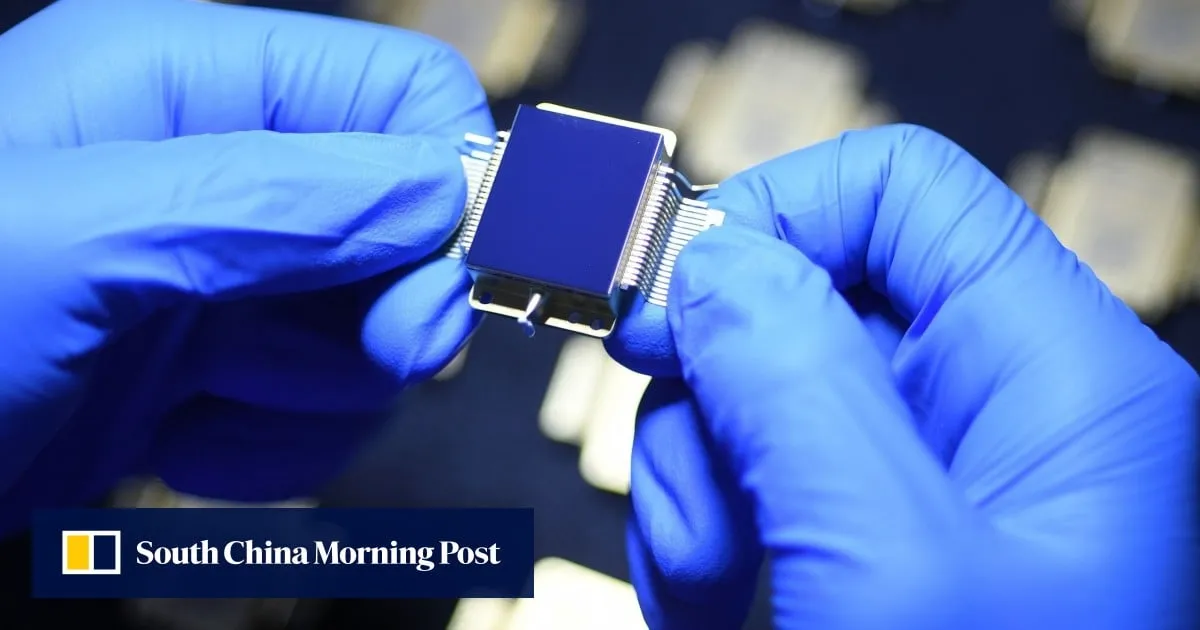
A research team at a Chinese university has developed a new way to make high-end infrared chips that could slash their cost dramatically and improve the performance of smartphone cameras and self-driving cars.The key breakthrough was finding a way to make the chips using conventional manufacturing techniques, rather than the exotic, costly materials that were relied on before.Mass production is set to begin by the end of the year, according to a press release from Xidian University.The chips detect short-wave infrared (SWIR), which is invisible to the human eye and can penetrate fog, haze and smoke. Cameras capable of detecting SWIR can take pictures in total darkness and even see through some materials.This can allow self-driving cars to see through dense fog, let factory scanners spot faulty products through their packaging and stop humanoid robots from bumping into things in the dark.But this technology carries a prohibitive price tag, which has limited its use to military applications and high-end scientific research – satellite reconnaissance, drone surveillance and missile guidance.A single chip can cost anywhere from several hundred to several thousand US dollars.
SRCSouth China Morning Post
LANGEN
LEANCenter-Right
WORDS182
ENT3
TUE · 2026-04-07 · 02:05 GMTBRIEF NSR-2026-0407-55391
NSR-2026-0407-55391News Report·EN·Technology
China cuts cost of military-grade infrared chips to as little as a few dozen USD
A Chinese research team at Xidian University has developed a new, cost-effective method for manufacturing high-end infrared chips. The breakthrough involves using conventional manufacturing techniques, significantly reducing the reliance on expensive materials.
Zhang TongSouth China Morning PostFiled 2026-04-07 · 02:05 GMTLean · Center-RightRead · 1 min
South China Morning PostFIG 01
Reading time
1min
Word count
182words
Sources cited
1cited
Entities identified
3entities
Quality score
100%
§ 01
Briefing Summary
AI-generatedNEWSAR · AI
A Chinese research team at Xidian University has developed a new, cost-effective method for manufacturing high-end infrared chips. The breakthrough involves using conventional manufacturing techniques, significantly reducing the reliance on expensive materials. This innovation is expected to drastically lower the price of short-wave infrared (SWIR) chips, potentially to a few dozen USD, from hundreds or thousands. SWIR technology, which allows cameras to see through fog, darkness, and some materials, has been limited to military and high-end applications due to its high cost. Mass production of these newly developed chips is slated to begin by the end of the year. The cheaper chips could improve smartphone cameras, self-driving car capabilities, and industrial applications.
Confidence 0.90Sources 1Claims 5Entities 3
§ 02
Article analysis
Model · rule-basedFraming
Technology
Economic Impact
Tone
Measured
AI-assessed
CalmNeutralAlarmist
Factuality
0.80 / 1.00
Factual
LowHigh
Sources cited
1
Limited
FewMany
§ 03
Key claims
5 extracted01
A single chip can cost anywhere from several hundred to several thousand US dollars.
statisticnull
Confidence
1.00
02
The chips detect short-wave infrared (SWIR), which is invisible to the human eye.
factualnull
Confidence
1.00
03
A Chinese university research team developed a new way to make high-end infrared chips.
factualnull
Confidence
1.00
04
China cuts cost of military-grade infrared chips to as little as a few dozen USD
factualnull
Confidence
0.90
05
Mass production is set to begin by the end of the year.
predictionXidian University press release
Confidence
0.90
§ 04
Full report
1 min read · 182 words§ 05
Entities
3 identifiedKey playerOppositionContextPositiveNeutralNegative
Locations1
§ 06
Keywords & salience
8 termsinfrared chips
1.00
cost reduction
0.90
swir
0.80
manufacturing techniques
0.70
self-driving cars
0.60
military applications
0.60
smartphone cameras
0.50
drone surveillance
0.40
§ 07
Topic connections
Interactive graph Network visualization showing 51 related topics
View Full Graph Person Organization Location Event|Click node to navigate|Edge numbers = shared articles