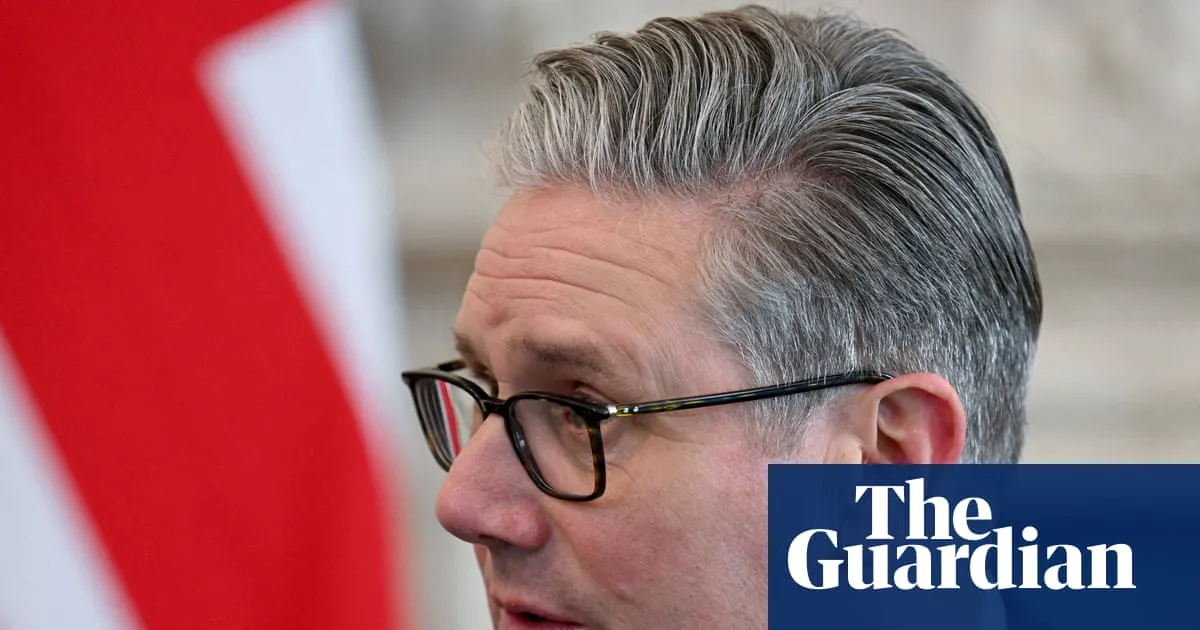
In Downing Street, Keir Starmer has been at pains to emphasise that he will only authorise the use of UK bases by the US for “defensive” strikes on Iranian military targets. In the White House, Donald Trump has threatened to bomb civilian infrastructure – and said on Monday that he was “not at all” worried about committing war crimes.So far in the war, Starmer’s position has allowed him to present the UK as a responsible actor concerned for regional security – but not a direct participant in the conflict on the US side.But while that has incurred Trump’s displeasure, it has also drawn questions about whether it is legally plausible to neatly divide defensive and offensive operations – and if US attacks do begin against targets such as bridges and power plants, scrutiny of the British position will intensify even if those attacks are not launched from UK bases.When it set out its stance on “defensive” strikes, the government took the unusual step of releasing a summary of its legal position: that it was acting “in the collective self-defence of regional allies who have requested support”. It is fair to say that many were sceptical from the start about the UK’s attempt to distinguish defensive operations involving US bombers from offensive operations in what most international law experts agreed was a conflict illegally started by the US and Israel.Susan Breau, a professor of international law and a senior associate research fellow at the Institute of Advanced Legal Studies, said: “How do you distinguish what’s defensive from what’s offensive? It will be extremely complicated for the UK to maintain that distinction given what Trump has said – his whole battle plan is changing. I mean, today, the Israelis issued a warning about trains [and for Iranians not to use them]. Trump’s whole battle plan now is to attack civilian infrastructure.”For Breau, who had concerns about the UK position from the start, allowing the US to use UK bases is the main issue. “I could see the UK still having bases and having ships there to defend its Gulf neighbours but it’s allowing the US to use their bases that’s problematic,” she said. “When the attack came on the [UK] base in Cyprus, on their allies in the Gulf, I could understand why the UK would open up their bases. But now Trump is changing the battle plan, he’s changing the rules of engagement.”However, Victor Kattan, an assistant professor of public international law at the University of Nottingham, said he thought the UK’s existing legal position could be defended, even if Trump carries out his threats.He said the British government knowingly allowing their planes, missiles or bases for such purposes would be unlawful “and the UK government should make that clear to the Americans and perhaps even stop them from using those bases in those contexts.”But he added: “They [the British] could say, ‘Look, we’re only allowing our systems, hardware, our personnel to shoot down rockets and the launchers as well that shoot those rockets that are being targeted at, say, the Qataris or the Kuwaitis or the Emiratis or the Saudis. But our bases and hardware’s not being used to punish the government of Iran, for example, or to participate in attacks on bridges, critical infrastructure, oil and gas, bunkers, that kind of thing.’ It’s a fine distinction to make, but I think it’s tenable.”Where Breau and Kattan do agree is that the UK will be keeping a close eye on its legal position to see whether it remains fit for purpose, even if they do not necessarily agree on the answer to that key question.Kattan said it was a given that the UK would be “constantly reviewing” it, while Breau said of the legal case: “They need to reconsider it. And I would be surprised if they’re not [already].
SRCThe Guardian - World News
LANGEN
LEANCenter-Left
WORDS639
ENT11
TUE · 2026-04-07 · 16:42 GMTBRIEF NSR-2026-0407-56935
NSR-2026-0407-56935Analysis·EN·Political Strategy
Can Starmer maintain ‘defensive strikes’ stance as Trump escalates threats on Iran?
Keir Starmer is attempting to maintain a position of allowing the US to use UK bases only for "defensive" strikes against Iran. This stance is being challenged by Donald Trump's threats to target Iranian civilian infrastructure, raising concerns about potential war crimes.
Haroon Siddique Legal affairs correspondentThe Guardian - World NewsFiled 2026-04-07 · 16:42 GMTLean · Center-LeftRead · 3 min
The Guardian - World NewsFIG 01
Reading time
3min
Word count
639words
Sources cited
3cited
Entities identified
11entities
Quality score
100%
§ 01
Briefing Summary
AI-generatedNEWSAR · AI
Keir Starmer is attempting to maintain a position of allowing the US to use UK bases only for "defensive" strikes against Iran. This stance is being challenged by Donald Trump's threats to target Iranian civilian infrastructure, raising concerns about potential war crimes. Experts question the legal plausibility of distinguishing between defensive and offensive operations, especially if the US attacks targets like power plants, regardless of whether the attacks are launched from UK bases. The UK government has stated its actions are in "collective self-defense" of regional allies, but critics argue that allowing the US to use UK bases is problematic, particularly given Trump's evolving battle plan. The situation raises questions about the UK's role in a conflict considered illegal by many international law experts.
Confidence 0.90Sources 3Claims 5Entities 11
§ 02
Article analysis
Model · rule-basedFraming
Political Strategy
National Security
Tone
Measured
AI-assessed
CalmNeutralAlarmist
Factuality
0.60 / 1.00
Mixed
LowHigh
Sources cited
3
Well sourced
FewMany
§ 03
Key claims
5 extracted01
Trump has threatened to bomb civilian infrastructure in Iran.
factualDonald Trump
Confidence
1.00
02
British government knowingly allowing their planes, missiles or bases for such purposes would be unlawful
quoteVictor Kattan
Confidence
0.90
03
The government took the unusual step of releasing a summary of its legal position.
factual
Confidence
0.90
04
Starmer will only authorize the use of UK bases by the US for “defensive” strikes on Iranian military targets.
factualDowning Street
Confidence
0.90
05
It will be extremely complicated for the UK to maintain that distinction given what Trump has said.
quoteSusan Breau
Confidence
0.80
§ 04
Full report
3 min read · 639 words§ 05
Entities
11 identifiedKey playerOppositionContextPositiveNeutralNegative
People4
§ 06
Keywords & salience
10 termsdefensive strikes
0.90
iran
0.80
donald trump
0.80
uk bases
0.70
keir starmer
0.60
civilian infrastructure
0.60
war crimes
0.60
international law
0.60
offensive operations
0.50
regional security
0.40
§ 07
Topic connections
Interactive graph Network visualization showing 51 related topics
View Full Graph Person Organization Location Event|Click node to navigate|Edge numbers = shared articles