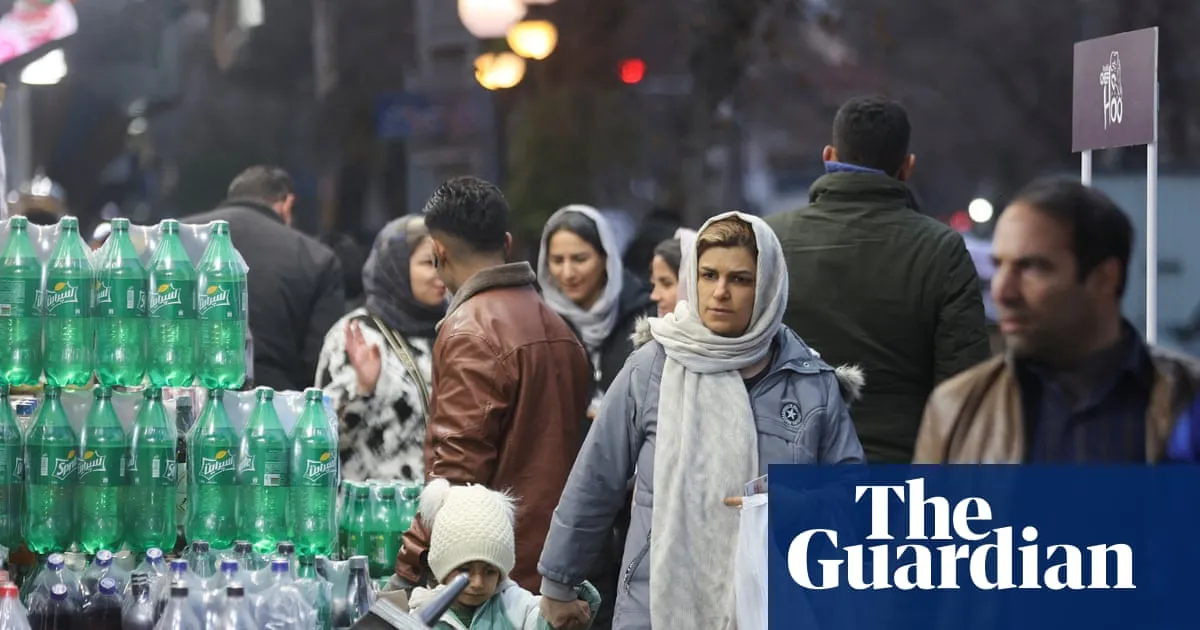
The Iranian government is attempting risky economic concessions as it tries to meet the escalating demands of protesters seeking fundamental political change, a clampdown on corruption and an easing of the squeeze on living standards of the poor.Now entering their ninth day, the protests have spread to 26 of Iran’s 31 provinces, with a US-based human rights group claiming that the death toll has passed 20 and nearly 1,000 people have been arrested.A switch in the system of foreign exchange subsidies announced by Iran’s president, Masoud Pezeshkian, may lead to a short-term rise in food prices, but is intended to be ameliorated by a new system of direct subsidies to consumers. Previously the subsidies were given to those importing products from abroad through exchange rate subsidies. But the decade-old system was wide open for corruption and leakage.Official figures released on Monday showed that inflation had reached 52.6% in December. Inflation, and a collapse in the value of the rial, led to the protests that began in Tehran’s bazaar, but have now spread to more than 100 towns and cities, including many smaller towns. Police were seen entering the University of Birjand in the south-east of Iran, arresting students inside one of the largest universities in the east of Iran.The promise of economic reforms were made as the head of Iran’s judiciary, Gholamhossein Mohseni Ejei, said the period of “concessions and appeasement” to the protesters were over. Ejei accused the United States and Israel of openly and officially supporting the “chaos” in Iran and said that because of this support, “the rioters should know that if concessions were made in previous periods, there will be no more such concessions and appeasements”.Donald Trump again vowed the US would come to the defence of the protesters if they were attacked, vowing that if Tehran “violently kills peaceful protesters” the US “will come to their rescue”. The Iranian foreign ministry accused Trump of “psychological warfare” on the Iranian people.Protesters in Tehran on 29 December. Photograph: undefined/APBut leaders of the Reform Front – the movement with which Pezeshkian is associated – demanded action against those in the security services accused of chasing and firing on protesters inside the Imam Khomeini hospital in Malekshahi, Ilam province.Azar Mansouri, writing on the X social network, described the incident as “a disaster”. She urged: “As soon as possible and with justice, address the tragedy that occurred in Malekshahi, Ilam. Identify the perpetrators, introduce them to the public, and bring them to justice so that this wound can heal a little.”According to reports on social media, security forces had opened fire on protesters.On Monday António Guterres, the secretary general of the UN, called on Iran to respect demonstrators’ right to “protest peacefully”.Guterres “underscores the need to prevent any further casualties”, his spokesperson, Stéphane Dujarric, said. “He also calls on the authorities to uphold the right of freedom of expression, association and peaceful assembly” and that “all individuals must be allowed to protest peacefully and express their grievances”.The Israeli prime minister, Benjamin Netanyahu, claimed the protests had expanded dramatically, adding: “We may well be at a defining moment, a moment when the Iranian people take their destiny in their own hands.” Many such predictions have been made in the past, only for the theocracy to survive.Iran’s future may turn on whether within the confines of continued US economic sanctions, policymakers can find enough room for manoeuvre to tackle corruption, stabilise the currency, reduce inflation and remove the levels of state intervention holding back industrial production. The frequent industrial shut downs caused by electricity and water shortages is also hampering production.In remarks on 1 January, Pezeshkian said he was abolishing the system of preferential foreign exchange rates, a complex system of distorting subsidies that he said fuelled corruption and failed to help the poor. Pezeshkian explained: “We are not removing subsidies, we are delivering them to the final consumers.”Fatemeh Mohajerani, his spokesperson, said on Monday: “It is evident that by ending or reducing subsidised and preferential official foreign currency exchange rates, the prices of some items will rise.”Revisions to the budget being examined by the parliament include pay rises of up to 43% instead of 20%, a cut in value-added tax to 10% from 12%, and the allocation of $8.8bn in subsidised foreign exchange to curb price rises for basic goods.The budget will earmark funds for guaranteed wheat purchases to supply bread and for adjusting pensioners’ salaries.
SRCThe Guardian - World News
LANGEN
LEANCenter-Left
WORDS735
ENT10
MON · 2026-01-05 · 19:20 GMTBRIEF NSR-2026-0105-5835
NSR-2026-0105-5835News Report·EN·Political Strategy
Iran to try risky economic concessions as it attempts to quell protesters’ anger
Iran is attempting economic reforms, including a shift in foreign exchange subsidies, to quell widespread protests driven by inflation, corruption, and declining living standards. The protests, now in their ninth day and spread across 26 provinces, have reportedly resulted in over 20 deaths and nearly 1,000 arrests.
Patrick Wintour Diplomatic EditorThe Guardian - World NewsFiled 2026-01-05 · 19:20 GMTLean · Center-LeftRead · 3 min
The Guardian - World NewsFIG 01
Reading time
3min
Word count
735words
Sources cited
7cited
Entities identified
10entities
Quality score
100%
§ 01
Briefing Summary
AI-generatedNEWSAR · AI
Iran is attempting economic reforms, including a shift in foreign exchange subsidies, to quell widespread protests driven by inflation, corruption, and declining living standards. The protests, now in their ninth day and spread across 26 provinces, have reportedly resulted in over 20 deaths and nearly 1,000 arrests. The government's proposed economic changes aim to provide direct subsidies to consumers, addressing issues with the previous system. Despite these efforts, the head of Iran's judiciary has stated that concessions to protesters are over, accusing the US and Israel of fueling the unrest. The US has vowed to defend protesters if attacked, while Iran accuses the US of "psychological warfare."
Confidence 0.90Sources 7Claims 5Entities 10
§ 02
Article analysis
Model · rule-basedFraming
Political Strategy
Economic Impact
Tone
Measured
AI-assessed
CalmNeutralAlarmist
Factuality
0.70 / 1.00
Factual
LowHigh
Sources cited
7
Well sourced
FewMany
§ 03
Key claims
5 extracted01
Donald Trump vowed the US would come to the defence of the protesters if they were attacked.
quoteDonald Trump
Confidence
1.00
02
The period of “concessions and appeasement” to the protesters were over.
quoteGholamhossein Mohseni Ejei
Confidence
1.00
03
Inflation had reached 52.6% in December.
statisticOfficial figures
Confidence
1.00
04
Protests have spread to 26 of Iran’s 31 provinces.
factualArticle
Confidence
1.00
05
A US-based human rights group claiming that the death toll has passed 20 and nearly 1,000 people have been arrested.
statisticUS-based human rights group
Confidence
0.90
§ 04
Full report
3 min read · 735 words§ 05
Entities
10 identifiedKey playerOppositionContextPositiveNeutralNegative
People4
Organizations1
§ 06
Keywords & salience
10 termsiran protests
1.00
economic concessions
0.90
inflation
0.80
subsidies
0.70
corruption
0.60
political change
0.60
foreign exchange
0.50
human rights
0.50
united states
0.40
living standards
0.40
§ 07
Topic connections
Interactive graph Network visualization showing 51 related topics
View Full Graph Person Organization Location Event|Click node to navigate|Edge numbers = shared articles