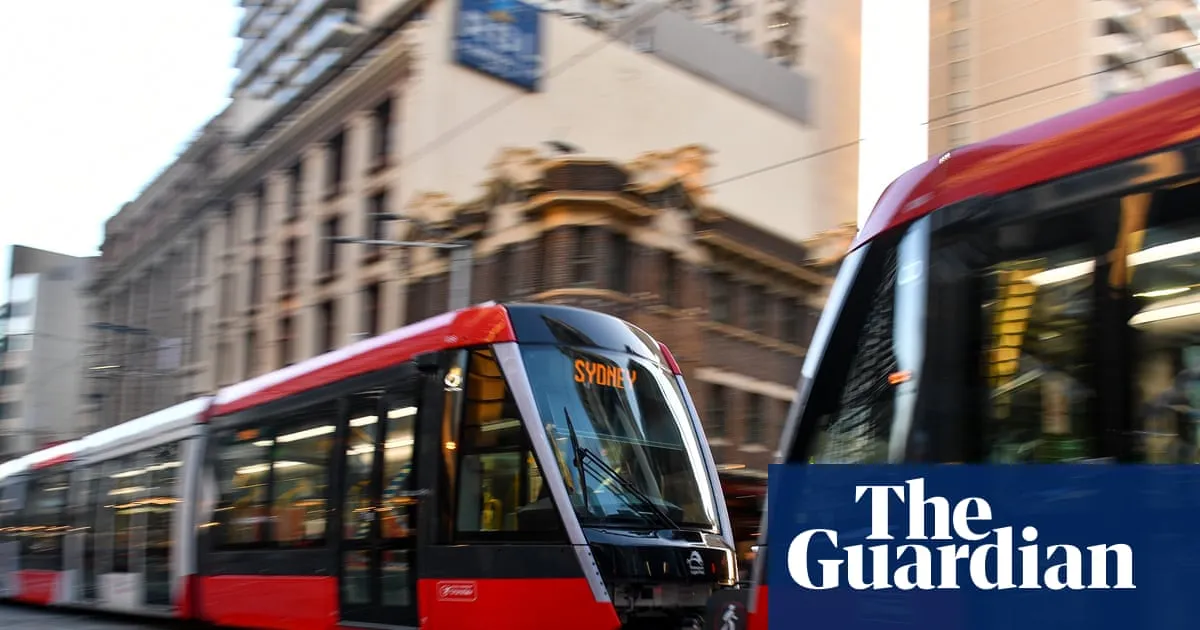
The company that operates Sydney’s light rail investigated safety upgrades after a fatal incident in 2023 but cancelled the project due to its cost before a second person died, a whistleblower alleges.After the first death, Transdev successfully trialled sensors that would detect a person entering the coupling area between two joined trams, according to the former employee who requested anonymity. But the project was stopped before another death in 2025, they said.Transdev this week rejected “any assertion that the assessment of sensor technology has at any point been ‘shelved’ or put on hold”.Kyra Loreto Dulguime, 17, died in May 2023 after she tried to cross a street in Sydney’s central business district between two “carriages” and became trapped underneath one when the tram started moving. She suffered fatal injuries.In June 2025, a man died after he became trapped under a tram at a light rail stop in Surry Hills. The New South Wales coroner’s court has identified him as German-born Osmaro Orellana.On Sydney’s L2 and L3 routes, two 33-metre-long trams are coupled together to form one 66-metre-long vehicle. The routes use Citadis X05 light rail vehicles.After Orellana’s death, Transport for NSW said the national rail safety regulator (ONRSR) would work with Transdev to establish whether any safety recommendations could be made or whether the death was “a case of really unfortunate misadventure”.‘Coupling project’ started after first fatalityThe Transdev whistleblower claimed a “coupling project” was undertaken after the 2023 death.According to the ex-employee’s account, Transdev sent an engineer to Germany to meet with the technology manufacturer Bosch to discuss adapting sensor warning systems used by cars when reversing.The light rail in Sydney’s CBD. Photograph: Paul Braven/AAPThe whistleblower said Bosch Australia was engaged, and concept trials were conducted in Australia, which demonstrated the technology worked. Bosch Australia declined to comment.The cost to produce an initial system to trial on one tram was estimated to be $500,000, the ex-employee said.“[The] working prototype would then be rolled out across the remaining 60 single units that are coupled together to make 30 coupled concertina trams,” they said.“There’s never been one technical or engineering hiccup. It’s a no-brainer; it is going to work.”A briefing note, seen by Guardian Australia, confirmed the national rail safety regulator was receiving updates on the coupling project by March 2024.Transdev’s note said there had been “ongoing discussions and activities to eliminate or minimise risk so far as is reasonably practical” after the 2023 death.The Transdev whistleblower said their employer, along with TfNSW, the national rail safety regulator and Altrac – the private consortium which manages Sydney’s light rail on behalf of the government – had been regularly briefed throughout the investigation and trial.Ultimately, Transdev and Altrac had decided they did not want to bear the cost of fully developing and implementing the technology across the entire fleet of trams and approached TfNSW, which owns the assets, to discuss cost sharing, the ex-employee said.After TfNSW declined to share the cost, Transdev and Altrac had put together a case to convince the national regulator that the expenses outweighed the safety benefits, the whistleblower alleged.TfNSW and the safety regulator ONRSR accepted the argument against proceeding with the coupling project, the whistleblower said, even though a number of staff were adamant it would prevent or reduce further deaths.“That was really painful for all of us involved,” the former Transdev employee said.“That’s the big disappointment, ONRSR has looked at it and said, ‘OK you can shelve the project.’ We were very vocal at the time, and I kind of feel even the senior management at Altrac and Transdev felt the same, that they felt the pressure of spending money outweighed this whole project.”Since the second death in 2025, the coupling project has been restarted, according to the whistleblower.“ONRSR at the NSW level who had been party to the decision to shelve the project came under massive criticism from senior ONRSR who asked them to restart the project,” they claimed.“It’s still a way off, and that’s the bugbear for all of us – that all of this could have been done already and we could have been saving lives already.”A spokesperson for ONRSR told Guardian Australia that after the 2023 death, it “was satisfied that a series of engineering controls implemented by the operator addressed SFAIRP [so far as is reasonably practicable] the risk to safety”.They said after the 2025 death, the regulator had “conducted a review of the operator’s safety management system and remains in constant dialogue with the operator as part of its remit to monitor safety performance”.“It is important to acknowledge that the contributing factors associated with these two tragic incidents were very different,” the ONRSR spokesperson said this week.They said the national rail safety regulator was continuing its investigation into the matter and could not comment further.The Transdev employee said they wanted people to know about the coupling project and the decision to cancel it because “we’re always saying every day we do things safely, we do the best thing for the public”.“Myself and others think and talk about the guy who died at Surry Hills on a regular basis,” they said. “It’s awful.”Questions about ‘feasibility’ of sensorsTransdev this week confirmed it was “now” trialling sensors in the coupling area of light rail vehicles on the Sydney network.However, a spokesperson for the company said it firmly rejected the former employee’s characterisation of the safety assessment processes undertaken after the 2023 death.“Transdev rejects any assertion that the assessment of sensor technology has at any point been ‘shelved’ or put on hold,” the spokesperson said.“It is technology that has not, to Transdev’s knowledge, been retrofitted and rolled out on any other light rail network worldwide. As such, important questions as to its feasibility and how it would integrate with other complex safety systems on our light rail vehicles needs to be tested.” Transdev did not deny that cost was a factor.Transdev said it had made several upgrades since the 2023 death, including changes to CCTV, stop line markings and updated warning signs.The company made all safety decisions in line with national rail safety laws and in “close liaison” with TfNSW and the rail safety regulator, the company spokesperson said.Transdev said light rail was “a safe and convenient mode of public transport” with 41m trips annually on Sydney’s network.A transport department spokesperson said the safety of passengers, staff and the public across the network had always been TfNSW’s “highest priority”.“Following the tragic incident in 2023, Transdev, as the operator of Sydney light rail, worked with relevant parties to consider a range of safety improvements, as is standard practice after any serious incident,” they said.“Transport for NSW was informed of investigations and safety assessments undertaken by the operator and the regulator as part of established rail safety processes.”The department said after the 2025 death, it had “continued to engage with Transdev, ONRSR and other stakeholders in respect to safety improvements where they are assessed as being reasonably practicable and effective”.In June 2025, Guardian Australia reported that drivers felt they were being silenced by Transdev after Orellana’s death.A leaked internal communique from 8 June last year warned staff not to talk among themselves about the two deaths.“Sharing content or discussing distressing details – whether through employee or unofficial channels – is disrespectful and potentially in breach of the code of conduct,” Transdev warned drivers in the note.The NSW coroner is expected to conduct a joint inquest into the 2023 and 2025 light rail deaths, although hearing dates are yet to be set.The NSW transport minister, John Graham, declined to comment. Do you know more? Contact catie.mcleod@theguardian.com
SRCThe Guardian - World News
LANGEN
LEANCenter-Left
WORDS1 258
ENT10
THU · 2026-04-09 · 00:09 GMTBRIEF NSR-2026-0409-59460
NSR-2026-0409-59460News Report·EN·Human Interest
Sydney light rail trialled sensors after death but scrapped project due to cost before second fatality, whistleblower claims
A whistleblower alleges that Transdev, the operator of Sydney's light rail, trialled safety sensors after a 2023 fatal incident where a 17-year-old girl died after becoming trapped between two tram carriages. The sensors, designed to detect people entering the coupling area, were successfully tested.
Catie McLeodThe Guardian - World NewsFiled 2026-04-09 · 00:09 GMTLean · Center-LeftRead · 6 min
The Guardian - World NewsFIG 01
Reading time
6min
Word count
1 258words
Sources cited
3cited
Entities identified
10entities
Quality score
100%
§ 01
Briefing Summary
AI-generatedNEWSAR · AI
A whistleblower alleges that Transdev, the operator of Sydney's light rail, trialled safety sensors after a 2023 fatal incident where a 17-year-old girl died after becoming trapped between two tram carriages. The sensors, designed to detect people entering the coupling area, were successfully tested. However, the project was reportedly cancelled due to cost before a second death occurred in June 2025, when a man became trapped under a tram. The "coupling project" involved adapting sensor technology used in cars and was estimated to cost $500,000 for an initial trial on one tram. Transdev denies shelving the sensor assessment. The national rail safety regulator was reportedly receiving updates on the project.
Confidence 0.90Sources 3Claims 5Entities 10
§ 02
Article analysis
Model · rule-basedFraming
Human Interest
Economic Impact
Tone
Mixed Tone
AI-assessed
CalmNeutralAlarmist
Factuality
0.80 / 1.00
Factual
LowHigh
Sources cited
3
Well sourced
FewMany
§ 03
Key claims
5 extracted01
A briefing note confirmed the national rail safety regulator was receiving updates on the coupling project by March 2024.
factualGuardian Australia
Confidence
1.00
02
Transdev rejected the assertion that the sensor technology assessment was shelved.
quoteTransdev
Confidence
1.00
03
The sensor project was stopped before a second death in 2025.
factualwhistleblower
Confidence
0.90
04
Transdev trialled sensors to detect people entering the coupling area between trams after a 2023 fatality.
factualwhistleblower
Confidence
0.90
05
The cost to produce an initial sensor system to trial on one tram was estimated to be $500,000.
factualwhistleblower
Confidence
0.80
§ 04
Full report
6 min read · 1 258 words§ 05
Entities
10 identifiedKey playerOppositionContextPositiveNeutralNegative
Organizations4
§ 06
Keywords & salience
9 termslight rail safety
0.90
sensor technology
0.80
fatal incident
0.70
coupling project
0.60
cost concerns
0.60
transdev
0.60
rail safety regulator
0.50
safety upgrades
0.50
sydney
0.40
§ 07
Topic connections
Interactive graph No topic relationship data available yet. This graph will appear once topic relationships have been computed.