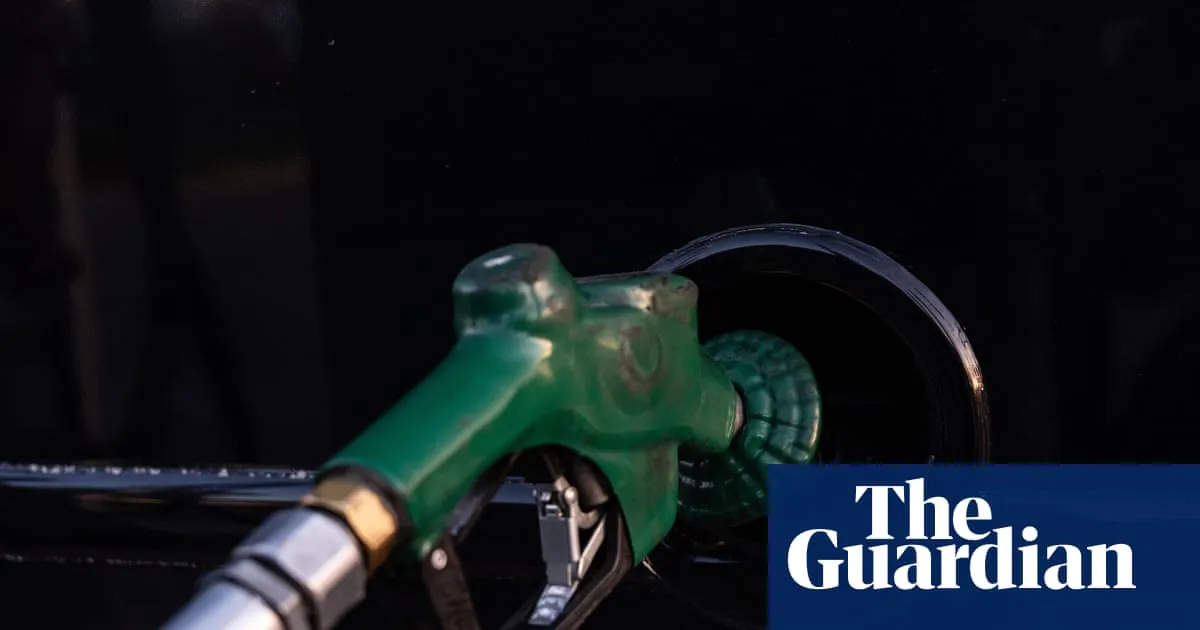
Diesel prices have risen as much as 20 cents a litre in two days to record highs of nearly 330 cents a litre around Australia. Photograph: Jae C Hong/AP View image in fullscreen Diesel prices have risen as much as 20 cents a litre in two days to record highs of nearly 330 cents a litre around Australia. Photograph: Jae C Hong/AP Australia eyes new fuel supply from US, Mexico and Asia as diesel prices spike to record high Shipments of fuel into Australia secure until at least the middle of May, energy minister says Follow our Australia news live blog for latest updates Get our breaking news email, free app or daily news podcast Australia could get more fuel from the US, Mexico or its Asian neighbours, with a new government policy helping refineries bid for oil shipments as diesel prices spike to new record highs. Anthony Albanese is flying to Singapore on Thursday to lock in ongoing petrol supplies from our biggest source of refined fuels. On his way out of Australia, the prime minister confirmed that the government had used new powers to extend assistance to Ampol and Viva refineries, with Canberra to underwrite their efforts to buy new shipments of oil on the open market. The energy minister, Chris Bowen, said contracted shipments of fuel into Australia were secure until at least the middle of May, with optimism that the Middle East ceasefire could lead to oil prices returning to normal. But oil importers fear the closure of the strait of Hormuz, and uncertainty over the ceasefire as Israel escalates its bombing of Lebanon, could mean oil prices jump again, with the government underwriting policy allowing Australian firms to bid for more expensive shipments. Bowen said such shipments could become available at short notice anywhere in the world, and would help meet Australia’s fuel needs. The government has been engaging with partners through Asia to shore up supplies but the minister said refiners could look farther afield. “Obviously the closer it is to Australia the better, the quicker it is to get here, if it’s through Singapore or Korea or Malaysia, for that matter, but there’s also opportunities in North America and Mexico in particular,” he said. Diesel prices have risen as much as 20 cents a litre in two days to record highs of nearly 330 cents a litre around Australia. Wholesale price rises have outweighed the government’s fuel tax relief, rising a further 5 cents a litre around the country on Thursday, according to the Australian Institute of Petroleum. The service station diesel price has been forced up to more than 322 cents a litre in Sydney on average, 326 in Brisbane, 328 in Melbourne and 329.3 in Canberra, according to MotorMouth. All capitals are facing record high average prices for diesel. Petrol prices rose in some cities on Wednesday but resumed falling overall in every capital on Thursday morning except for Adelaide, where unleaded prices edged up again to 223.9 cents a litre on average. But the wholesale price of unleaded has risen about 5 cents a litre around the country in the last two days, suggesting retail price rises are on the way. Jim Chalmers said the fuel crisis highlighted the need for a stronger transition to more renewable energy sources. “I find it bizarre, frankly, that in the context of what we’ve seen in the last month and a half, that anyone would conclude from that that we should continue to have all of our eggs in one basket,” the treasurer said. “We need cleaner and cheaper energy, more diverse sources and more reliable and robust supply chains … one of the conclusions of this war in the Middle East is that we need more, not less, when it comes to sovereign capacity, cleaner and cheaper energy, and more reliable, more resilient, more robust supply chains.” The US-Iran ceasefire had sent prices plummeting for crude oil, which is refined into diesel and petrol, but oil prices are still at highs and are edging back up as renewed bombing leaves markets doubting oil supply can resume. Albanese again called for an end to the Middle East conflict, urging that Lebanon – targeted on Wednesday in Israel’s largest attack since its war with Hezbollah began, killing at least 254 people and wounding 837 – must be included in the ceasefire. Asked if Israel’s escalating strikes on Lebanon were a threat to the ceasefire and the reopening of the strait of Hormuz, Albanese would only say: “We want to see a ceasefire.” But the prime minister warned that even if the strait opened again, Australia and global supply chains would continue feeling effects for some time, noting disruption to shipping transit and storage facilities in the Gulf. “If the ceasefire holds, that doesn’t mean that the world global capacity comes online in a week or a month,” he said. “It will take a considerable period of time. This will have a long tail, that is very, very clear. “What we are doing and what we have done consistently here is not to wait … we’ve looked at every possible opportunity there is to increase supply.” Albanese wouldn’t say how much financial assistance the government would provide to Ampol and Viva, claiming it would hinder negotiations. But he said the terms of the agreements meant the government could direct where that extra supply goes, adding that any new shipments would be directed to “regional Australia and areas that are under pressure in terms of supply”. The opposition leader, Angus Taylor, demanded that Albanese return from Singapore with assurances that Australian fuel supplies would continue arriving unimpeded. “We need to know what fuel is going to come from Singapore without cancellations and without delays,” he said. Explore more on these topics Australian politics Petrol prices Anthony Albanese Chris Bowen Energy Angus Taylor news Share Reuse this content
SRCThe Guardian - World News
LANGSCO
LEANCenter-Left
WORDS981
ENT12
THU · 2026-04-09 · 05:44 GMTBRIEF NSR-2026-0409-59614
NSR-2026-0409-59614News Report·SCO·Economic Impact
Australia eyes new fuel supply from US, Mexico and Asia as diesel prices spike to record high
Australia is exploring new fuel supply options from the US, Mexico, and Asia as diesel prices surge to record highs, reaching nearly 330 cents a litre. Prime Minister Anthony Albanese is traveling to Singapore to secure ongoing petrol supplies, while the government is using new powers to assist Ampol and Viva refineries in bidding for oil shipments.
Josh Butler and Luca IttimaniThe Guardian - World NewsFiled 2026-04-09 · 05:44 GMTLean · Center-LeftRead · 4 min
The Guardian - World NewsFIG 01
Reading time
4min
Word count
981words
Sources cited
3cited
Entities identified
12entities
Quality score
100%
§ 01
Briefing Summary
AI-generatedNEWSAR · AI
Australia is exploring new fuel supply options from the US, Mexico, and Asia as diesel prices surge to record highs, reaching nearly 330 cents a litre. Prime Minister Anthony Albanese is traveling to Singapore to secure ongoing petrol supplies, while the government is using new powers to assist Ampol and Viva refineries in bidding for oil shipments. Energy Minister Chris Bowen assures that contracted fuel shipments are secure until mid-May, but the government is preparing for potential disruptions due to Middle East tensions. The government is engaging with Asian partners to shore up supplies, but refiners are also considering opportunities in North America and Mexico.
Confidence 0.90Sources 3Claims 5Entities 12
§ 02
Article analysis
Model · rule-basedFraming
Economic Impact
Political Strategy
Tone
Measured
AI-assessed
CalmNeutralAlarmist
Factuality
0.80 / 1.00
Factual
LowHigh
Sources cited
3
Well sourced
FewMany
§ 03
Key claims
5 extracted01
Anthony Albanese is flying to Singapore on Thursday to lock in ongoing petrol supplies.
factual
Confidence
1.00
02
Diesel prices have risen as much as 20 cents a litre in two days to record highs of nearly 330 cents a litre around Australia.
factual
Confidence
1.00
03
Contracted shipments of fuel into Australia were secure until at least the middle of May.
factualChris Bowen, energy minister
Confidence
0.90
04
Wholesale price rises have outweighed the government’s fuel tax relief.
factual
Confidence
0.80
05
Australia could get more fuel from the US, Mexico or its Asian neighbours.
prediction
Confidence
0.70
§ 04
Full report
4 min read · 981 words§ 05
Entities
12 identifiedKey playerOppositionContextPositiveNeutralNegative
Organizations2
§ 06
Keywords & salience
8 termsdiesel prices
1.00
fuel supply
0.90
oil shipments
0.80
record high
0.70
energy minister
0.60
refineries
0.50
fuel tax relief
0.50
middle east ceasefire
0.40
§ 07
Topic connections
Interactive graph Network visualization showing 51 related topics
View Full Graph Person Organization Location Event|Click node to navigate|Edge numbers = shared articles