A E-7A Wedgetail escorted by a F/A-18F Super Hornet in 2017. The surveillance plane’s deployment to the Middle East has been extended beyond its initial four-week mission. Photograph: CPL Brenton Kwaterski/Department of Defence View image in fullscreen A E-7A Wedgetail escorted by a F/A-18F Super Hornet in 2017. The surveillance plane’s deployment to the Middle East has been extended beyond its initial four-week mission. Photograph: CPL Brenton Kwaterski/Department of Defence Australian spy plane operators in Middle East not sharing intel with US for offensive operations, defence boss says Information on drones and other threats being shared but defence chief confirms crew taking ‘active steps’ to only contribute to defensive actions Get our breaking news email, free app or daily news podcast Australian personnel operating a state-of-the-art surveillance plane are filtering information gleaned from the Middle East war to ensure intelligence is not shared with the United States for offensive purposes, the defence force chief says. As the federal government extended the deployment of the E-7 Wedgetail aircraft on Thursday, the chief of Defence, Admiral David Johnston, said the crew were taking active steps to only contribute to defensive operations. The prime minister, Anthony Albanese, confirmed the plane would stay in the Middle East beyond its initial four-week mission to the United Arab Emirates after agreement from cabinet’s national security committee. Intelligence about drones and other airborne threats is being shared with the US, but Johnston said the highly trained crew would withhold information not related to defensive activities. “That was a really important consideration of the manner by which that aircraft was deployed and the functions it’s performing,” he said at the Russell defence headquarters in Canberra. “The capabilities of the aircraft are such that it is the operators of that platform who determine what information leaves the platform. “And we’re able to apply filters to it, draw judgments on the nature of what the aircraft is detecting through all of the means, from radar to electronic systems, and then be very clear on what we are presenting out that is then picked up inside the air operation system.” Labor has faced criticism for supporting the war being led by the US president, Donald Trump, and Israel’s prime minister, Benjamin Netanyahu, but insists Australia’s role is only defensive. Ahead of the release of the next national defence strategy next week, Johnston called the E-7 Wedgetail “a gem of an aircraft”. Approximately 85 defence force members were deployed as part of Australia’s assistance package to the UAE in early March. Albanese would not confirm where in the Middle East the Wedgetail would operate going forward. “The Wedgetail will be staying in the region for a period of time,” he said, before departing for a visit to Singapore on Thursday. Asked about possible Australian efforts to help reopen the strategic strait of Hormuz, Johnston said the Royal Australian Navy was equipped to help, but such a move might not be in the country’s strategic interest. “I am very confident we could deploy a ship into that environment if the government was to make a decision to do so. I have no hesitation in our ability to work in a strait of Hormuz-type role. “But perhaps what is an at least as important question is: where do our priorities lie? “The United States has moved enormous military capacity into the Gulf region at the moment, including a lot of capacity out of the Indo-Pacific. This is an important time for us to be present in the Indo-Pacific to maintain that regional environment that we seek to maintain.” Trump this week criticised Australia for not providing assistance on reopening the strait, which usually carries about 20% of global oil supplies. Speaking about Nato countries, as well as partners including Australia, Japan and South Korea, Trump said, “they haven’t helped at all”. The opposition has previously criticised Labor for not sending a warship when former US president Joe Biden was coordinating defensive operations in the Red Sea amid attacks on commercial shipping from Iran-backed militia. Johnston said on Thursday that decision had nothing to do with maintenance or capability problems, but was rather about strategic priorities. “We were able to deploy to the Red Sea as much as we are able to deploy to the strait of Hormuz,” he said. Explore more on these topics US-Israel war on Iran Strait of Hormuz Anthony Albanese Australian military Iran United Arab Emirates Labor party news Share Reuse this content
SRCThe Guardian - World News
LANGEN
LEANCenter-Left
WORDS742
ENT10
THU · 2026-04-09 · 09:03 GMTBRIEF NSR-2026-0409-59929
NSR-2026-0409-59929News Report·EN·National Security
Australian spy plane operators in Middle East not sharing intel with US for offensive operations, defence boss says
Australia has extended the deployment of its E-7 Wedgetail surveillance plane in the Middle East beyond its initial four-week mission. The Australian Defence Force Chief, Admiral David Johnston, stated that the crew is actively filtering intelligence gathered to prevent it from being used by the United States for offensive operations.
Tom McIlroy and Josh ButlerThe Guardian - World NewsFiled 2026-04-09 · 09:03 GMTLean · Center-LeftRead · 3 min
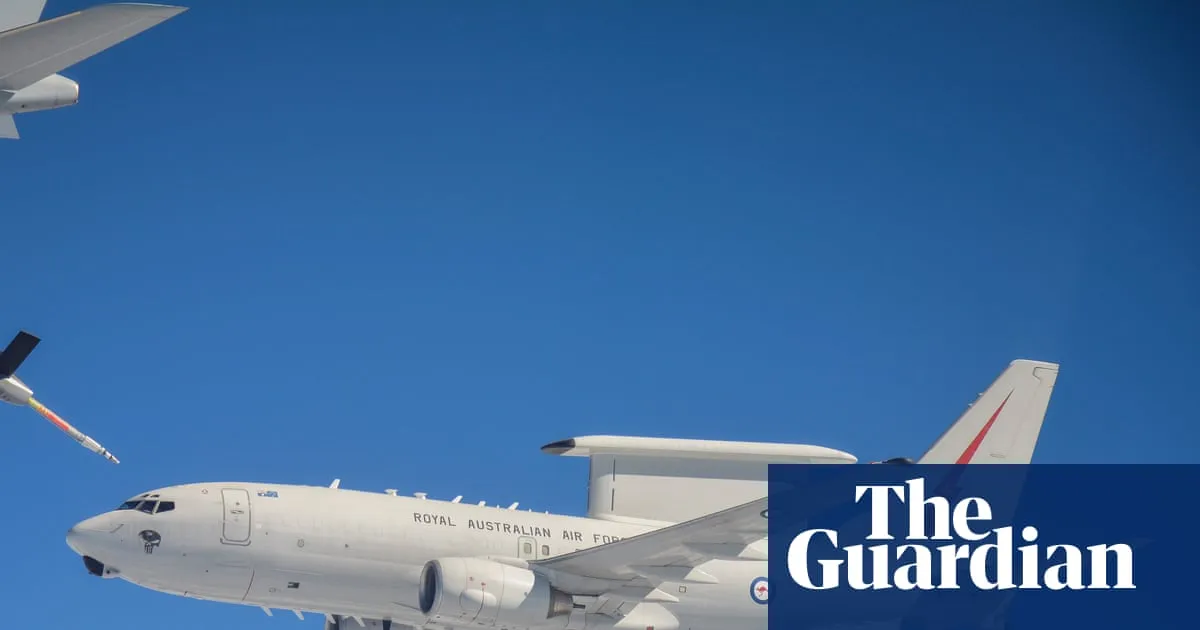
The Guardian - World NewsFIG 01
Reading time
3min
Word count
742words
Sources cited
2cited
Entities identified
10entities
Quality score
100%
§ 01
Briefing Summary
AI-generatedNEWSAR · AI
Australia has extended the deployment of its E-7 Wedgetail surveillance plane in the Middle East beyond its initial four-week mission. The Australian Defence Force Chief, Admiral David Johnston, stated that the crew is actively filtering intelligence gathered to prevent it from being used by the United States for offensive operations. While information on drones and other airborne threats is being shared, the crew is withholding data not related to defensive activities. This measure was a key consideration in the aircraft's deployment, ensuring Australia's contribution remains solely defensive. The decision to extend the mission was made by the Australian government's national security committee.
Confidence 0.90Sources 2Claims 5Entities 10
§ 02
Article analysis
Model · rule-basedFraming
National Security
Political Strategy
Tone
Measured
AI-assessed
CalmNeutralAlarmist
Factuality
0.80 / 1.00
Factual
LowHigh
Sources cited
2
Limited
FewMany
§ 03
Key claims
5 extracted01
Approximately 85 defence force members were deployed as part of Australia’s assistance package to the UAE in early March.
factualAlbanese
Confidence
1.00
02
The capabilities of the aircraft are such that it is the operators of that platform who determine what information leaves the platform.
quoteJohnston
Confidence
1.00
03
Intelligence about drones and other airborne threats is being shared with the US.
factualJohnston
Confidence
1.00
04
The deployment of the E-7 Wedgetail aircraft has been extended beyond its initial four-week mission.
factualfederal government
Confidence
1.00
05
Australian spy plane operators are filtering information to avoid sharing intel with the US for offensive purposes.
factualthe defence force chief
Confidence
0.90
§ 04
Full report
3 min read · 742 words§ 05
Entities
10 identifiedKey playerOppositionContextPositiveNeutralNegative
People4
§ 06
Keywords & salience
9 termsspy plane
0.90
intelligence sharing
0.80
offensive operations
0.70
defensive operations
0.70
e-7a wedgetail
0.60
middle east
0.60
surveillance plane
0.50
united states
0.50
defence force
0.40
§ 07
Topic connections
Interactive graph Network visualization showing 51 related topics
View Full Graph Person Organization Location Event|Click node to navigate|Edge numbers = shared articles