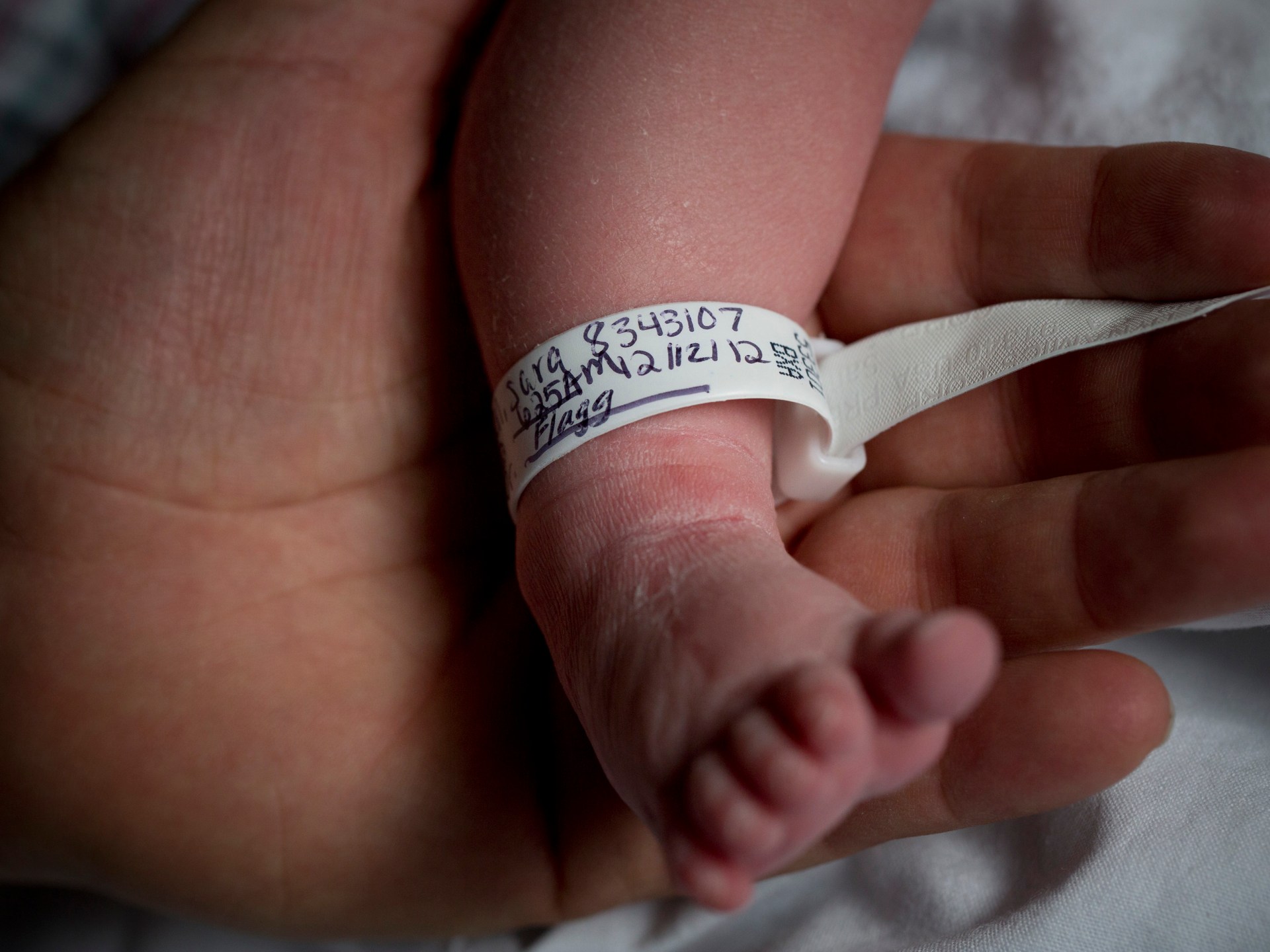
The United States fertility rate has now been in decline for two decades, dropping nearly 23 percent since 2007.The fertility rate in the United States has dropped to an all-time low, continuing a trend that has seen births in the country drop by nearly 23 percent since 2007.Data released by the US Centers for Disease Control and Prevention (CDC) on Thursday shows that the fertility rate for 2025 was 53.1 births per 1,000 women aged 15 to 44, a one percent drop compared to the year before.Recommended Stories list of 3 itemslist 1 of 3What does the falling birthrate mean for the British economy?list 2 of 3Taiwan battles low birth rate with new family subsidieslist 3 of 3‘Party of parents’: Trump touts government guidance to increase IVF accessend of listExperts attribute the change to a variety of factors, from changing priorities among younger women to socioeconomic factors such as anxiety over the cost of living and the affordability of housing and childcare.According to the Economic Policy Institute, a progressive think tank focused on economic issues, the average cost of childcare in the state of California was nearly $22,000 per year. In states with a lower cost of living such as Alabama, it was nearly $8,000.Even though Alabama’s costs were lower, the institute noted that $8,000 is the equivalent of 27 weeks of full-time work for a labourer making the minimum wage in the state.For California, it would take a minimum-wage worker 33 weeks to earn enough for childcare costs alone.Phillip Levine, an economics professor at Wellesley College, told the news agency Reuters that factors such as “greater and more demanding job market opportunities, expanded leisure options, [and] increased intensity of parenting” have made “the option to have children less desirable”.Falling birth rates have also grabbed the attention of policymakers, with some seeking to roll out tools to incentivise young couples to have children.
SRCAl Jazeera
LANGEN
LEANCenter
WORDS313
ENT11
THU · 2026-04-09 · 19:30 GMTBRIEF NSR-2026-0409-60916
NSR-2026-0409-60916News Report·EN·Economic Impact
US fertility rate drops to all-time low, continuing a two-decade decline
The US fertility rate has reached an all-time low, marking a continuation of a two-decade decline. Data from the CDC indicates a rate of 53.1 births per 1,000 women aged 15-44 in 2023, a 1% decrease from the previous year and nearly 23% lower than in 2007.
By ReutersAl JazeeraFiled 2026-04-09 · 19:30 GMTLean · CenterRead · 2 min
Al JazeeraFIG 01
Reading time
2min
Word count
313words
Sources cited
2cited
Entities identified
11entities
Quality score
100%
§ 01
Briefing Summary
AI-generatedNEWSAR · AI
The US fertility rate has reached an all-time low, marking a continuation of a two-decade decline. Data from the CDC indicates a rate of 53.1 births per 1,000 women aged 15-44 in 2023, a 1% decrease from the previous year and nearly 23% lower than in 2007. Experts attribute this trend to various factors, including shifting priorities among younger women and socioeconomic concerns like the high cost of living, housing, and childcare. For example, childcare costs can range from $8,000 to $22,000 annually depending on the state. The falling birth rate has drawn the attention of policymakers, who are considering incentives to encourage young couples to have children.
Confidence 0.90Sources 2Claims 5Entities 11
§ 02
Article analysis
Model · rule-basedFraming
Economic Impact
Public Health
Tone
Measured
AI-assessed
CalmNeutralAlarmist
Factuality
0.70 / 1.00
Factual
LowHigh
Sources cited
2
Limited
FewMany
§ 03
Key claims
5 extracted01
The average cost of childcare in Alabama was nearly $8,000 per year.
statisticEconomic Policy Institute
Confidence
1.00
02
The average cost of childcare in California was nearly $22,000 per year.
statisticEconomic Policy Institute
Confidence
1.00
03
The fertility rate for 2025 was 53.1 births per 1,000 women aged 15 to 44, a one percent drop compared to the year before.
statisticUS Centers for Disease Control and Prevention (CDC)
Confidence
1.00
04
US fertility rate has been in decline for two decades, dropping nearly 23 percent since 2007.
statistic
Confidence
1.00
05
Factors such as job market opportunities and increased intensity of parenting have made having children less desirable.
quotePhillip Levine, economics professor at Wellesley College
Confidence
0.90
§ 04
Full report
2 min read · 313 words§ 05
Entities
11 identifiedKey playerOppositionContextPositiveNeutralNegative
Organizations4
§ 06
Keywords & salience
8 termsfertility rate
1.00
birth rate
0.80
declining birthrate
0.70
cost of living
0.60
childcare costs
0.60
socioeconomic factors
0.50
economic policy
0.40
minimum wage
0.40
§ 07
Topic connections
Interactive graph Network visualization showing 51 related topics
View Full Graph Person Organization Location Event|Click node to navigate|Edge numbers = shared articles