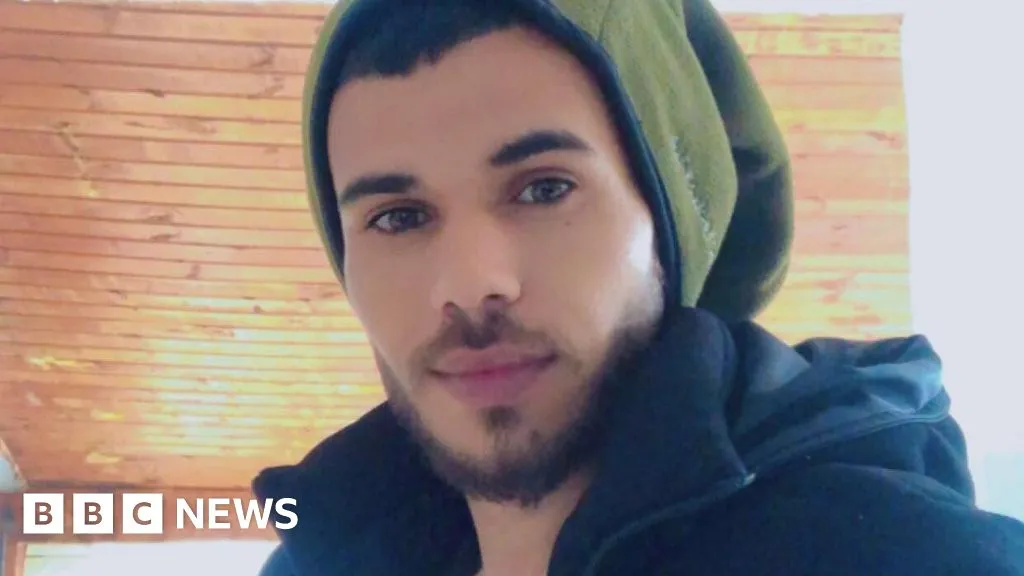
He said settlers were in the area under "army protection".On Wednesday, he said, a group of settlers "raided the village" and Alaa was "executed" after defending a plastic greenhouse that belonged to him.Saeb Subeih said Alaa's body has still not been returned to his family by the IDF.Returning it, he said, is the only thing that can ease the pain for "his mother, his father, and his family".Ajith Sunghay, from the UN Human Rights Office in occupied Palestinian territory, told the BBC that his team had gathered accounts about what occurred. He said the killing followed a day of violence in which a Palestinian man had been injured and "stone throwing between Israeli settlers and Palestinians" had taken place.Israel's government has "provided complete impunity for settlers to do whatever they want" and a "separation between settlers and state is becoming more and more difficult to draw", Sunghay said. He added that settlers were often also soldiers.The UN has recorded an increase in settler violence against Palestinians and their property this year, with 148 incidents in January, 191 in February and 206 in March. He said the war in Iran meant settlers assess that "attention is focused elsewhere".The BBC spoke to a member of a Palestinian-red-crescent" class="entity-link entity-organization" data-entity-id="44591" data-entity-type="organization">Palestinian Red Crescent ambulance crew which was dispatched to Tayasir on Wednesday night.The crew member said they were denied access to the village by IDF soldiers, who claimed no-one was injured and confiscated their phones and ID cards for seven hours until the early hours of Thursday morning.They were eventually told by a local Palestinian official that Subaih's body was being retained by the IDF, the crew member said.The IDF did not answer questions from the BBC about this account, saying "the incident is under review".In a statement issued in Hebrew after the incident in Tayasir, the IDF said the person shot dead – meaning Alaa Subaih – was a "terrorist". This language was repeated in some Israeli media coverage.But the IDF's English language statement has said he was a "civilian". The IDF has not answered the BBC's questions about why it accused him of being a "terrorist".In a statement issued to the BBC, the IDF said "soldiers were dispatched to the area of Tayasir, following a report of an incident between Palestinians and Israeli civilians, which included hurling rocks.""As a result, an Israeli and a Palestinian civilian were injured and evacuated to a hospital to receive medical treatment. From initial inquiry, it emerged that an off-duty soldier fired toward a Palestinian after he threw stones at the Israeli civilians, injuring an Israeli civilian."ReutersThe site of a new Israeli settlement near Tayasir villageThe killing comes at a time of stark criticism in Israel about the government's approach to West Bank settlers.In a letter published in the Israeli media this week, former heads of the Shin Bet and Mossad security services, and former IDF chiefs of staff, told Prime Minister Benjamin Netanyahu that "government-sponsored Jewish terrorism" was running wild in the West Bank, which they described as "not only a moral disgrace but a fatal strategic blow to Israel's national security in a time of war"."We must not allow an extremist group backed by irresponsible ministers and a silent prime minister" to sacrifice Israel's security, they said.The "ministers" was a reference to Security Minister Itamar Ben Gvir and Finance Minister Bezalel Smotrich, far-right figures who were sanctioned last year by the UK and other countries for "repeated incitements of violence against Palestinian communities".On Thursday, Smotrich spoke at the inauguration of a new illegal settlement in the West Bank, telling those present that establishing new settlements in the West Bank will "completely destroy the idea of a Palestinian state within our heartland".He also said that Israel would continue to expand its borders in Gaza, Lebanon and Syria.The Times of Israel has reported that the Israeli cabinet has quietly approved 34 new settlements in the West Bank, both new ones and retrospectively approving already existing illegal settlements. There has been no official confirmation of the news.The anti-settlement organisation Peace Now said the 34 settlements would join 68 new settlements the current government has already decided upon.
SRCBBC News - World
LANGEN
LEANCenter
WORDS687
ENT11
FRI · 2026-04-10 · 17:08 GMTBRIEF NSR-2026-0410-62378
NSR-2026-0410-62378News Report·EN·Conflict
Palestinian shot dead during Israeli settler attack on occupied West Bank village
A Palestinian man, Alaa Subaih, was shot dead in the occupied West Bank village of Tayasir during an attack by Israeli settlers, allegedly under Israeli army protection, on Wednesday. According to a local resident, Subaih was killed while defending his greenhouse.
BBC News - WorldFiled 2026-04-10 · 17:08 GMTLean · CenterRead · 3 min
BBC News - WorldFIG 01
Reading time
3min
Word count
687words
Sources cited
6cited
Entities identified
11entities
Quality score
75%
§ 01
Briefing Summary
AI-generatedNEWSAR · AI
A Palestinian man, Alaa Subaih, was shot dead in the occupied West Bank village of Tayasir during an attack by Israeli settlers, allegedly under Israeli army protection, on Wednesday. According to a local resident, Subaih was killed while defending his greenhouse. The UN Human Rights Office reports increased settler violence against Palestinians this year, exacerbated by the focus on the war in Iran. A Palestinian Red Crescent ambulance crew was allegedly denied access to the village by Israeli soldiers and had their phones and IDs confiscated. The IDF initially described Subaih as a "terrorist" in a Hebrew statement, later referring to him as a "civilian" in English, and stated that the incident is under review.
Confidence 0.90Sources 6Claims 5Entities 11
§ 02
Article analysis
Model · rule-basedFraming
Conflict
Human Rights
Tone
Mixed Tone
AI-assessed
CalmNeutralAlarmist
Factuality
0.70 / 1.00
Factual
LowHigh
Sources cited
6
Well sourced
FewMany
§ 03
Key claims
5 extracted01
The IDF said the person shot dead was a 'terrorist' in a Hebrew statement but a 'civilian' in an English statement.
factualBBC
Confidence
1.00
02
The UN has recorded an increase in settler violence against Palestinians and their property this year.
statisticAjith Sunghay, UN Human Rights Office
Confidence
1.00
03
A Palestinian was shot dead during an Israeli settler attack on the occupied West Bank village of Tayasir.
factualBBC
Confidence
1.00
04
Settlers were in the area under 'army protection'.
quoteSaeb Subeih
Confidence
0.90
05
The IDF confiscated a Palestinian Red Crescent ambulance crew's phones and ID cards for seven hours.
factualPalestinian Red Crescent ambulance crew member
Confidence
0.80
§ 04
Full report
3 min read · 687 words§ 05
Entities
11 identifiedKey playerOppositionContextPositiveNeutralNegative
Organizations5