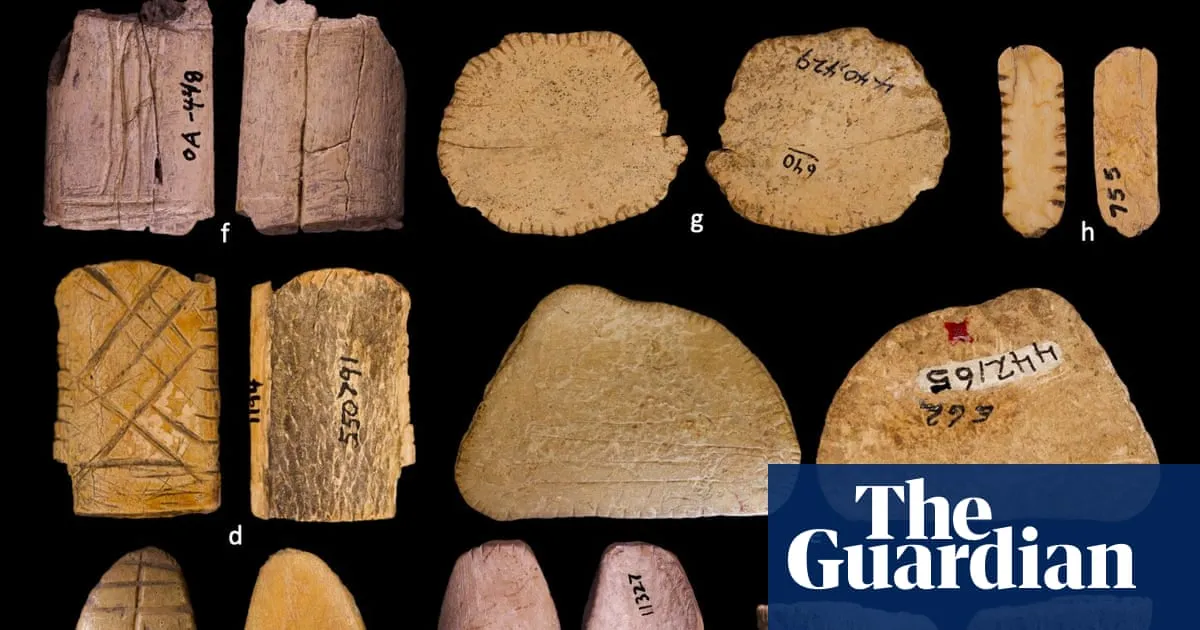
Native American hunter gatherers were using dice for gaming and gambling more than 6,000 years before the practice appeared anywhere else, a new study argues.It says dice were being made and used on the western great plains of North America at the end of the last ice age, more than 12,000 years ago.It had been thought that the earliest examples of dice were in the bronze age societies of Mesopotamia and the Indus Valley.Robert Madden, author of the study, said: “Historians have traditionally treated dice and probability as old world innovations. What the archaeological record shows is that ancient Native American groups were deliberately making objects designed to produce random outcomes and using those outcomes in structured games thousands of years earlier than previously recognised.”This suggests that ancient Native Americans possessed “a basic working knowledge of chance, randomness and probability” and consequently “were early movers in humanity’s emerging understanding and practical application of these concepts”.The study says games of chance and gambling allowed disparate groups with no relationship to “interact; exchange goods, information, and mates; and forge new social bonds”.Madden, who is a PhD student in archaeology at Colorado-state-university" class="entity-link entity-organization" data-entity-id="30107" data-entity-type="organization">Colorado State University, said: “These findings don’t claim that ice age hunter gatherers were doing formal probability theory. But they were intentionally creating, observing and relying on random outcomes in repeatable, rule-based ways that leveraged probabilistic regularities, such as the law of large numbers. That matters for how we understand the global history of probabilistic thinking.”The earliest examples identified in the study come from late pleistocene archaeological sites in Wyoming, Colorado and New Mexico.Up to 12,800 years old, the two-sided dice were crafted from wood or bone that would have been tossed in groups on to a playing surface, the study says.Madden’s research is based on re-examining artefacts in collections that were often labelled as “gaming pieces” or were overlooked altogether. He argues that these wrongly classified or ignored objects were dice.He tells CSU’s The Audit podcast that he spent a long time methodically going through online databases and libraries looking for examples of what he argues are dice.“It was like a treasure hunt and I just kept looking for examples and keeping track of them,” he said. “Finally, after about three years, I compiled the dataset that makes up this paper and tracked this practice all the way from the well-documented historical era over the last 2,000 years as far back as I could.“That’s where we see this incredible persistence of this practice going all the way back to the late pleistocene – about 12,000 years ago – which is more than 6,000 years older than the earliest dice known in the old world.”The paper uses the word gambling, although it is not gambling as we might know it today.“What we think of gambling is like at a casino where you bet against the house,” Madden said. “And as we all know, any time you play against the house, the odds are always slightly tilted in favor of the house.“These games are one on one; there’s no house. This is me against you. It’s a fair game, everybody’s got an equal opportunity, equal conditions, and it was used as a form of exchange … particularly between groups of people who did not come into frequent contact with each other.”The paper, Probability in the Pleistocene, is published in the journal American Antiquity.
SRCThe Guardian - World News
LANGEN
LEANCenter-Left
WORDS560
ENT9
SAT · 2026-04-11 · 11:00 GMTBRIEF NSR-2026-0411-63196
NSR-2026-0411-63196News Report·EN·Human Interest
Native Americans were gambling with dice 6,000 years earlier than anyone else, study says
A new study suggests Native Americans were using dice for gaming and gambling on the western Great Plains of North America as early as 12,800 years ago, at the end of the last ice age. This predates previously recognized examples of dice from Bronze Age societies in Mesopotamia and the Indus Valley by over 6,000 years.
Mark BrownThe Guardian - World NewsFiled 2026-04-11 · 11:00 GMTLean · Center-LeftRead · 3 min
The Guardian - World NewsFIG 01
Reading time
3min
Word count
560words
Sources cited
1cited
Entities identified
9entities
Quality score
100%
§ 01
Briefing Summary
AI-generatedNEWSAR · AI
A new study suggests Native Americans were using dice for gaming and gambling on the western Great Plains of North America as early as 12,800 years ago, at the end of the last ice age. This predates previously recognized examples of dice from Bronze Age societies in Mesopotamia and the Indus Valley by over 6,000 years. The research, based on re-examining artifacts from sites in Wyoming, Colorado, and New Mexico, indicates these early dice were made from wood or bone. The study argues that this demonstrates ancient Native Americans possessed an understanding of chance and probability. Games of chance and gambling may have facilitated interaction, exchange, and social bonding between disparate groups.
Confidence 0.90Sources 1Claims 5Entities 9
§ 02
Article analysis
Model · rule-basedFraming
Human Interest
Technology
Tone
Measured
AI-assessed
CalmNeutralAlarmist
Factuality
0.80 / 1.00
Factual
LowHigh
Sources cited
1
Limited
FewMany
§ 03
Key claims
5 extracted01
Ancient Native American groups were deliberately making objects designed to produce random outcomes.
quoteRobert Madden
Confidence
1.00
02
The two-sided dice were crafted from wood or bone and are up to 12,800 years old.
factualstudy
Confidence
0.90
03
The earliest examples identified in the study come from late pleistocene archaeological sites in Wyoming, Colorado and New Mexico.
factualstudy
Confidence
0.90
04
Dice were being made and used on the western great plains of North America more than 12,000 years ago.
factualstudy
Confidence
0.90
05
Native Americans used dice for gaming more than 6,000 years before the practice appeared elsewhere.
factualstudy
Confidence
0.90
§ 04
Full report
3 min read · 560 words§ 05
Entities
9 identifiedKey playerOppositionContextPositiveNeutralNegative
Organizations1
§ 06
Keywords & salience
10 termsdice
1.00
native americans
1.00
gaming
0.80
gambling
0.80
archaeology
0.70
probability
0.70
ice age
0.60
hunter gatherers
0.60
randomness
0.50
games of chance
0.50
§ 07
Topic connections
Interactive graph No topic relationship data available yet. This graph will appear once topic relationships have been computed.