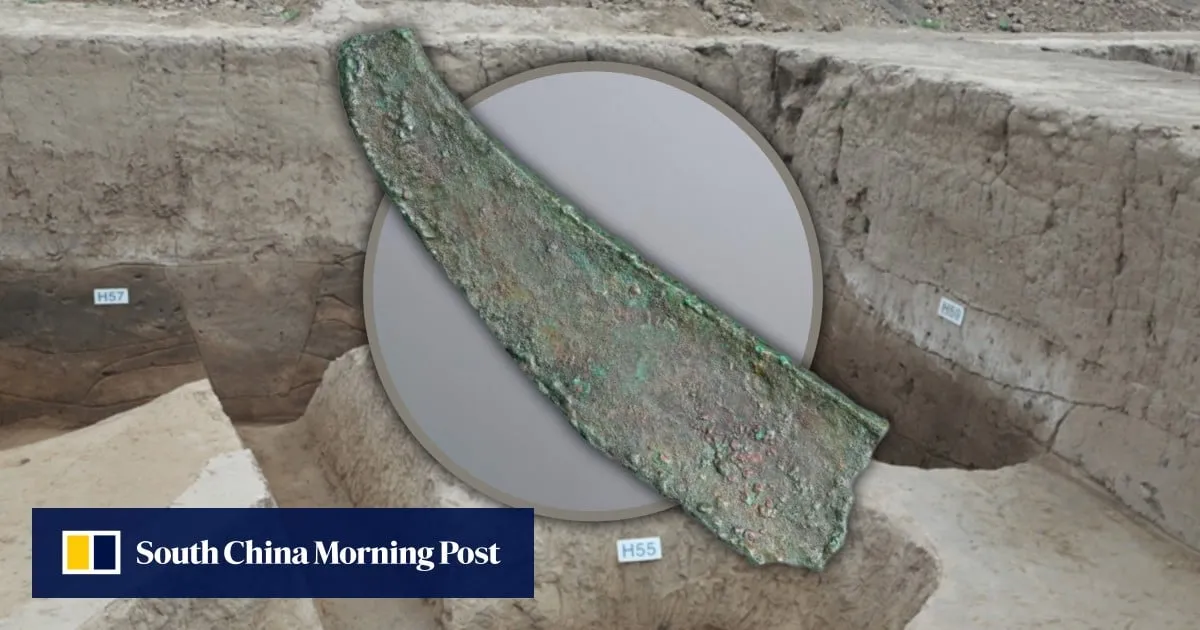
“War is hell,” as the saying goes, and it is often those most intimately acquainted with conflict who are the most eager to leave it behind.This yearning for peace was underscored by a newly uncovered archaeological site from the Western Zhou dynasty (1046–771 BC) in Shaanxi province, northwest China, revealed in 2022. Researchers announced their discoveries in mid-March.Among the findings was a gravesite featuring the remains of individuals interred with broken weapons, a custom rooted in an ancient Chinese philosophy that asserts “stopping war is true valour” (zhigeweiwu in Chinese), according to the Global Times.This phrase originates from the ancient classic Zuozhuan (circa 300 BC), which served for centuries as the primary text on ancient Chinese history. The underlying concept of the broken weapons is that although victory in war may be adorned with glory, true honour belongs to those who strive for peace.The concept behind the broken weapons suggests that while victory in war may come with glory, true honour belongs to those who pursue peace. Photo: XinhuaYu Pengfei, an archaeologist from the Shaanxi Academy of Archaeology involved in the project, shared with the Global Times that the weapons – bronze daggers and knives – were intentionally damaged during the burial process, intended as offerings to the deceased for their peaceful passage into the afterlife.The site, surrounded by a moat, contained multiple ash pits and tombs, with a total of 13 graves excavated. Interestingly, the gravesite exhibits no distinct layout. Among the artefacts found were tripod jars, basins, and various pots.This discovery occurred on the outskirts of Xian, the capital city of the Western Zhou dynasty.The Western Zhou period was transformative in Chinese history and is known as the source of the “mandate of heaven,” which leaders employed to justify the overthrow of the Shang dynasty (1600–1050 BC).Following the death of its first leader, King Wu, in 1043, the early Western Zhou empire plunged into civil war as King Wu’s brothers vied for control. After the conflict and subsequent consolidation of power, China was fragmented into colonies, as recorded in the Zuozhuan and corroborated by archaeological findings.Ancient Chinese weaponry encompassed a diverse and evolving array of arrows, which were fundamental to military strategy for thousands of years. Photo: ShutterstockThis era also marks the first instance where archaeological evidence could be cross-referenced with written histories. The zhigeweiwu site serves as a prime example, as archaeologists draw on the histories documented in Zuozhuan to interpret the artefacts they have unearthed.Further ReadingThe Zuozhuan is a narrative history that chronicles the political, military, and social dynamics of the Spring and Autumn period (770–476 BC). While primarily a commentary on that era, it also reflects on the preceding Western Zhou period for context.Furthermore, the Zuozhuan is a major repository of Chinese sayings and idioms, making it unsurprising that it would give rise to the philosophy of “stopping war is true valour.” This text frequently includes moral commentaries aimed at the ruling elite of its time.In addition to its significance as a premier example of ancient Chinese prose, the Zuozhuan is one of the few surviving texts from the era of Confucius and his contemporaries. Its exceptional quality and relevance render it an invaluable resource for understanding the historical backdrop that shaped one of the most pivotal figures in Chinese history.
SRCSouth China Morning Post
LANGEN
LEANCenter-Right
WORDS546
ENT9
SAT · 2026-04-11 · 10:00 GMTBRIEF NSR-2026-0411-63210
NSR-2026-0411-63210News Report·EN·Human Interest
Unearthing peace: ancient China gravesite reveals significance of broken weapons
A recently uncovered gravesite from the Western Zhou dynasty (1046–771 BC) in Shaanxi province, China, reveals insights into ancient Chinese attitudes towards war and peace. Archaeologists discovered individuals buried with intentionally broken bronze weapons, including daggers and knives.
Kevin McSpaddenSouth China Morning PostFiled 2026-04-11 · 10:00 GMTLean · Center-RightRead · 3 min
South China Morning PostFIG 01
Reading time
3min
Word count
546words
Sources cited
1cited
Entities identified
9entities
Quality score
100%
§ 01
Briefing Summary
AI-generatedNEWSAR · AI
A recently uncovered gravesite from the Western Zhou dynasty (1046–771 BC) in Shaanxi province, China, reveals insights into ancient Chinese attitudes towards war and peace. Archaeologists discovered individuals buried with intentionally broken bronze weapons, including daggers and knives. This practice, according to researchers, reflects the ancient Chinese philosophy of "stopping war is true valor," aiming to ensure the deceased's peaceful transition to the afterlife. The site, located near the Western Zhou capital of Xian, contains 13 graves with no distinct layout, along with ash pits and artifacts like tripod jars and basins. The discovery provides archaeological evidence supporting historical texts like the Zuozhuan, offering a tangible glimpse into the Western Zhou period and its values.
Confidence 0.90Sources 1Claims 5Entities 9
§ 02
Article analysis
Model · rule-basedFraming
Human Interest
Political Strategy
Tone
Measured
AI-assessed
CalmNeutralAlarmist
Factuality
0.80 / 1.00
Factual
LowHigh
Sources cited
1
Limited
FewMany
§ 03
Key claims
5 extracted01
The Western Zhou period is known as the source of the “mandate of heaven”.
factualnull
Confidence
1.00
02
A gravesite featuring individuals interred with broken weapons was found in Shaanxi province from the Western Zhou dynasty.
factualResearchers
Confidence
1.00
03
The weapons were intentionally damaged during burial as offerings for the deceased's peaceful passage.
factualYu Pengfei, archaeologist
Confidence
0.90
04
The broken weapons custom is rooted in the ancient Chinese philosophy that “stopping war is true valour”.
factualGlobal Times
Confidence
0.90
05
The zhigeweiwu site serves as an example where archaeological evidence can be cross-referenced with written histories.
factualnull
Confidence
0.80
§ 04
Full report
3 min read · 546 words§ 05
Entities
9 identifiedKey playerOppositionContextPositiveNeutralNegative
Organizations3
§ 06
Keywords & salience
10 termsbroken weapons
1.00
western zhou dynasty
0.90
peace
0.90
ancient china
0.90
gravesite
0.80
archaeology
0.70
burial rituals
0.60
zuozhuan
0.60
shaanxi province
0.50
mandate of heaven
0.40
§ 07
Topic connections
Interactive graph Network visualization showing 51 related topics
View Full Graph Person Organization Location Event|Click node to navigate|Edge numbers = shared articles