EDITOR'S ANALYSISSecessionist STC had de facto control over most of southern Yemen, but then squandered it by going too far.Supporters of the Southern Transitional Council (STC), a coalition of separatist groups seeking to restore the state of Yemen" class="entity-link entity-location" data-entity-id="7438" data-entity-type="location">South Yemen, hold Yemen" class="entity-link entity-location" data-entity-id="7438" data-entity-type="location">South Yemen flags during a rally, in Aden, Yemen, Friday, January 2, 2026 [AP Photo]Published On 8 Jan 2026Landing at Aden International Airport on a trip in late 2017, the plane had two flags visible as it moved along the tarmac. One was the flag of the former Yemen" class="entity-link entity-location" data-entity-id="7438" data-entity-type="location">South Yemen, resurrected as a symbol of Yemen’s secessionist southern movement. The other was of the United Arab Emirates (UAE), the movement’s primary backer.Passing one checkpoint after another on the road out of Aden, the flag of the actual Republic of Yemen wasn’t visible, and only made an appearance towards the city of Taiz, to the north.Recommended Stories list of 3 itemslist 1 of 3Saudi-led coalition targets Yemen separatists after leader skips talkslist 2 of 3Who is Aidarous al-Zubaidi? Yemen’s ‘traitor’ chieflist 3 of 3Saudi-backed forces move on Aden as Yemen secessionist leader vanishesend of listThe UAE-backed secessionist Southern Transitional Council (STC) had been formed a few months earlier, in May 2017. Headed by Aidarous al-Zubaidi, it made clear that its ultimate goal was separation from the rest of Yemen, even if it found itself on the same side as the Yemeni government in the fight against the Houthi rebels occupying the Yemeni capital Sanaa.By 2019, the STC and the Yemeni government fought in Aden and other areas of the south. The STC emerged on top, forcing the government out of Aden – the former capital of Yemen" class="entity-link entity-location" data-entity-id="7438" data-entity-type="location">South Yemen and the city the government had designated as a temporary capital during the conflict against the Houthis.Momentum continued to be on the STC’s side for the next few years, as it seized more territory. Even after al-Zubaidi joined the Saudi-backed Presidential Leadership Council (PLC) as a vice-president, officially making him a member of the Yemeni government, it was clear that on the ground, the STC had de facto control over much of the former Yemen" class="entity-link entity-location" data-entity-id="7438" data-entity-type="location">South Yemen.Al-Zubaidi must have felt close to achieving his goals when he found himself at the United Nations General Assembly in September. Speaking to the international media, he said that the “best solution for Yemen” was a “two-state solution”.But then he went too far. His move last month to push STC forces into the eastern governorates of Hadhramout and al-Mahra, effectively securing control over all of the former Yemen" class="entity-link entity-location" data-entity-id="7438" data-entity-type="location">South Yemen, was a red line for Saudi Arabia.The STC leader is on the run, forces now loyal to the Yemeni government are in control of the majority of southern Yemen, and many of his allies have changed sides.The UAE, meanwhile, appears to have accepted that Saudi Arabia is the primary foreign actor in Yemen, and has taken a step back – for now.What now for Yemen" class="entity-link entity-location" data-entity-id="7438" data-entity-type="location">South Yemen?In a matter of weeks, secession has gone from a de facto reality to seemingly further away than it has been since the early days of Yemen’s war in the mid-2010s.It was only last Friday that al-Zubaidi announced a two-year transitional period before a referendum on the independence of southern Yemen and the declaration of the state of “South Arabia”.A week later, the STC looked divided – with Abdul Rahman al-Mahrami, a PLC member also known as Abu Zaraa, now in Riyadh, appearing to position himself in the Saudi camp.The Yemeni government, with Saudi support, is attempting to reorganise the anti-Houthi military forces, with the aim of moving them away from being a divided band of groups under different commands to a force unified under the umbrella of the government.Nods to the “southern issue” – the disenfranchisement of southern Yemen since the country’s brief 1994 north-south civil war – continues, with plans for a conference on the issue in Riyadh.But the ultimate goal of hardline southerners – secession – is off the table under current circumstances, with consensus instead forming around the idea of a federal republic allowing for strong regional representation.The Yemeni government also sees an opportunity to now use the momentum gained in the recent successes against the STC to advance against the Houthis, who control Yemen’s populous northwest – even if that remains an ambitious goal.Of course, this is Yemen, and the winds can always change once again.Support for the secession of southern Yemen remains strong in governorates like Al-Dhale, where al-Zubaidi is from. Hardcore STC supporters, those who have not been coopted, will be unlikely to simply give up, sowing the seeds for a potential insurgency.And President Rashad al-Alimi will have to show that his power does not simply rest on Saudi Arabia’s military strength. One of the major tests of his legitimacy is whether he will be able to return with his government to Aden, and finally be based in Yemen for the first time in years.That will be the ultimate challenge for the Yemeni government. Is it truly capable of being in control once again? Or are current events just a temporary setback for the STC and the cause of southern secession, waiting for the opportunity to rise up again?
SRCAl Jazeera
LANGEN
LEANCenter
WORDS862
ENT8
THU · 2026-01-08 · 05:07 GMTBRIEF NSR-2026-0108-6329
NSR-2026-0108-6329Analysis·EN·Political Strategy
After STC hubris, dream of South Yemen looks further away
The Southern Transitional Council (STC), a UAE-backed secessionist movement aiming to restore South Yemen, gained de facto control over much of southern Yemen after its formation in 2017. By 2019, the STC ousted the Yemeni government from Aden, the former South Yemeni capital.
Abubakr Al-ShamahiAl JazeeraFiled 2026-01-08 · 05:07 GMTLean · CenterRead · 4 min
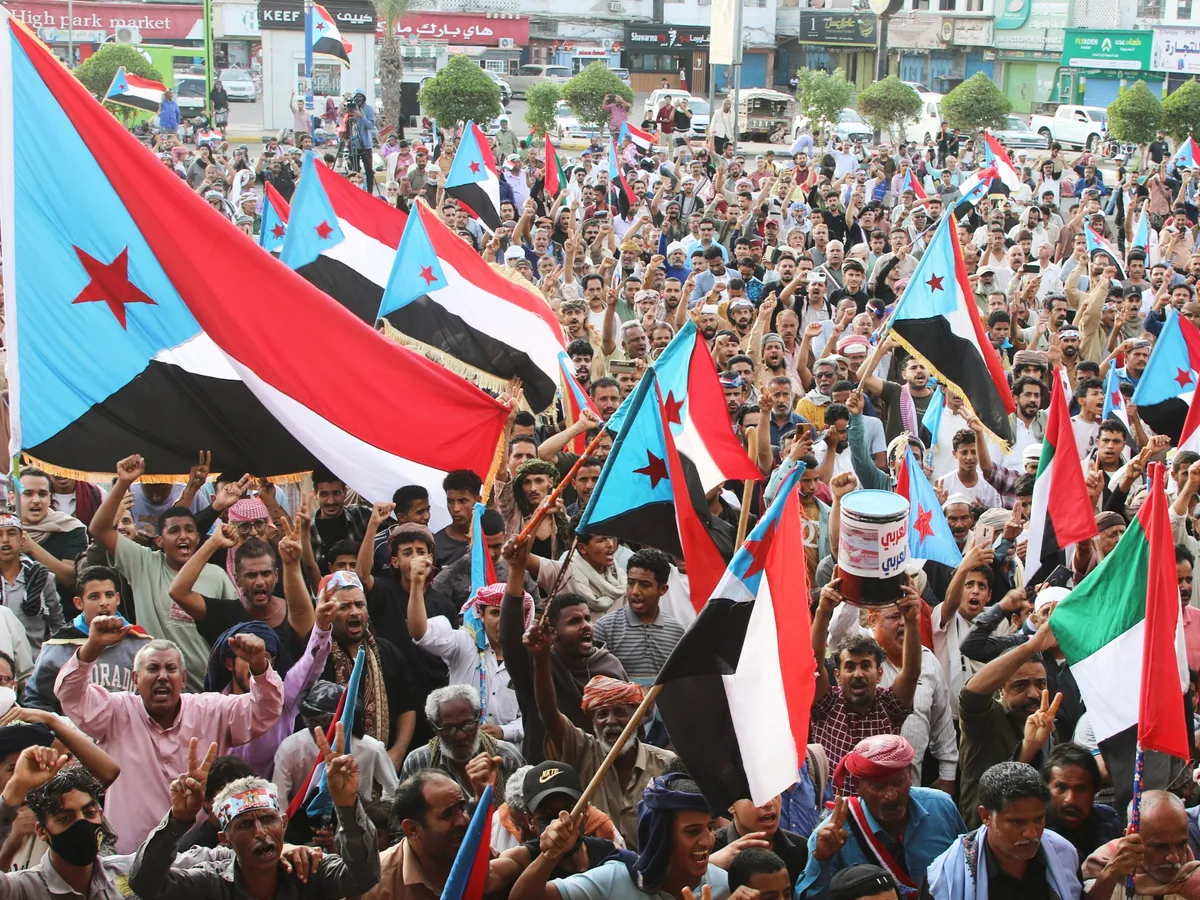
Al JazeeraFIG 01
Reading time
4min
Word count
862words
Sources cited
1cited
Entities identified
8entities
Quality score
100%
§ 01
Briefing Summary
AI-generatedNEWSAR · AI
The Southern Transitional Council (STC), a UAE-backed secessionist movement aiming to restore South Yemen, gained de facto control over much of southern Yemen after its formation in 2017. By 2019, the STC ousted the Yemeni government from Aden, the former South Yemeni capital. Despite STC leader Aidarous al-Zubaidi joining the Saudi-backed Presidential Leadership Council, the STC maintained control on the ground, and al-Zubaidi advocated for a two-state solution at the UN. However, the STC's recent push into the eastern governorates of Hadhramout and al-Mahrah is now threatening the progress towards their goal of secession.
Confidence 0.90Sources 1Claims 5Entities 8
§ 02
Article analysis
Model · rule-basedFraming
Political Strategy
Conflict
Tone
Measured
AI-assessed
CalmNeutralAlarmist
Factuality
0.60 / 1.00
Mixed
LowHigh
Sources cited
1
Limited
FewMany
§ 03
Key claims
5 extracted01
STC forces pushed into Hadhramout and al-Mahra.
factualnull
Confidence
1.00
02
The best solution for Yemen is a two-state solution.
quoteAidarous al-Zubaidi
Confidence
1.00
03
By 2019, the STC and the Yemeni government fought in Aden.
factualnull
Confidence
1.00
04
The UAE is the primary backer of the STC.
factualnull
Confidence
1.00
05
The STC seeks to restore the state of South Yemen.
factualnull
Confidence
1.00
§ 04
Full report
4 min read · 862 words§ 05
Entities
8 identifiedKey playerOppositionContextPositiveNeutralNegative
Organizations2
§ 06
Keywords & salience
8 termssouth yemen
1.00
southern transitional council
0.90
secessionist movement
0.80
yemen
0.70
aden
0.60
aidarous al-zubaidi
0.50
two-state solution
0.50
uae
0.40
§ 07
Topic connections
Interactive graph No topic relationship data available yet. This graph will appear once topic relationships have been computed.