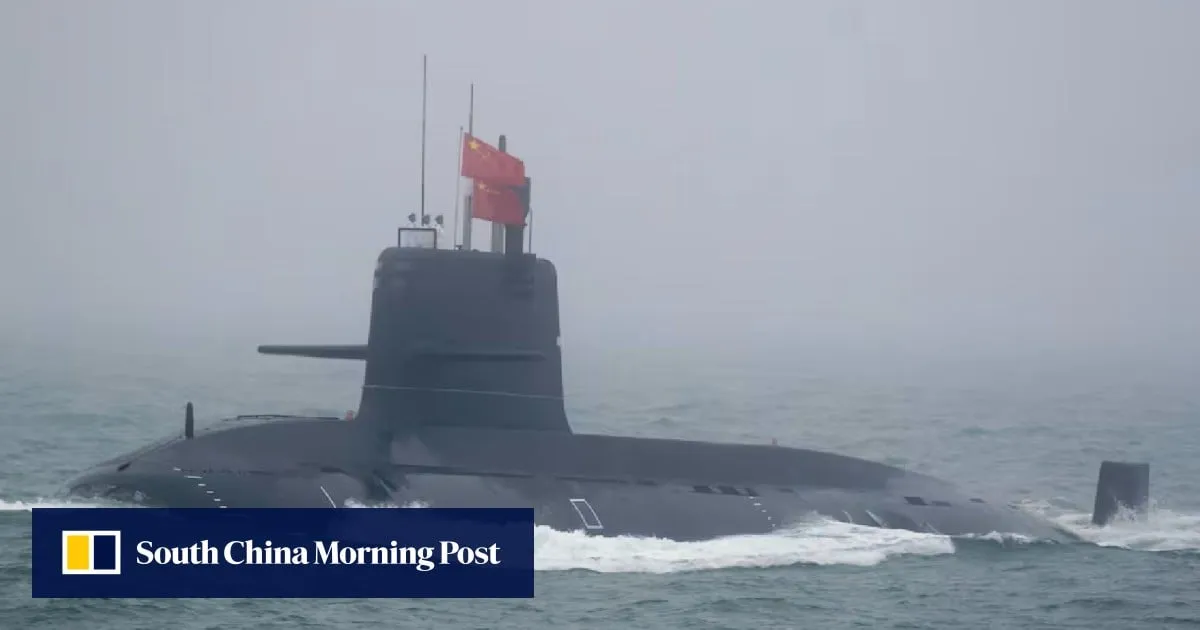
Scientists in Xinjiang have created the world’s first crystal that can produce the ultraviolet light needed for future thorium nuclear clocks, which could one day guide submarines and deep-space probes without GPS.The fluorinated borate compound could push laser light to a record 145.2 nanometres (nm) – a wavelength short enough to meet a key requirement for these ultra-precise, portable clocks being developed in the United States, China and elsewhere, the team reported in Advanced Materials in January.The result surpassed previous benchmarks set by potassium beryllium fluoroborate, a crystal developed in China in the 1990s that has long dominated the field but can only reach about 150nm – just short of the 148.3nm target needed for such clocks.
SRCSouth China Morning Post
LANGEN
LEANCenter-Right
WORDS117
ENT4
SAT · 2026-04-11 · 14:00 GMTBRIEF NSR-2026-0411-63505
NSR-2026-0411-63505News Report·EN·Technology
Chinese crystal ‘paves way’ for GPS-free thorium clock navigation
Scientists in Xinjiang, China, have developed a novel crystal that produces ultraviolet light at a record-breaking 145.2 nanometres. This fluorinated borate compound surpasses previous benchmarks and meets a critical requirement for developing portable thorium nuclear clocks.
Ling XinSouth China Morning PostFiled 2026-04-11 · 14:00 GMTLean · Center-RightRead · 1 min
South China Morning PostFIG 01
Reading time
1min
Word count
117words
Sources cited
0cited
Entities identified
4entities
Quality score
100%
§ 01
Briefing Summary
AI-generatedNEWSAR · AI
Scientists in Xinjiang, China, have developed a novel crystal that produces ultraviolet light at a record-breaking 145.2 nanometres. This fluorinated borate compound surpasses previous benchmarks and meets a critical requirement for developing portable thorium nuclear clocks. These clocks, currently being developed in the United States, China, and other locations, could potentially enable GPS-free navigation for submarines and deep-space probes. The new crystal overcomes limitations of existing materials, like potassium beryllium fluoroborate, which could only reach 150nm. This achievement, reported in January in Advanced Materials, represents a significant step towards creating ultra-precise and independent navigation systems.
Confidence 0.85Claims 4Entities 4
§ 02
Article analysis
Model · rule-basedFraming
Technology
National Security
Tone
Measured
AI-assessed
CalmNeutralAlarmist
Factuality
0.80 / 1.00
Factual
LowHigh
Sources cited
0
No named sources
FewMany
§ 03
Key claims
4 extracted01
Ultra-precise, portable clocks are being developed in the United States, China and elsewhere.
factual
Confidence
0.90
02
Potassium beryllium fluoroborate can only reach about 150nm.
factual
Confidence
0.90
03
Scientists in Xinjiang created a crystal for thorium nuclear clocks, potentially guiding submarines without GPS.
factual
Confidence
0.90
04
The fluorinated borate compound could push laser light to 145.2 nm.
factual
Confidence
0.80
§ 04
Full report
1 min read · 117 words§ 05
Entities
4 identifiedKey playerOppositionContextPositiveNeutralNegative
Organizations1
§ 06
Keywords & salience
8 termsthorium nuclear clocks
1.00
gps-free navigation
0.90
ultraviolet light
0.80
crystal
0.70
fluorinated borate compound
0.60
wavelength
0.50
deep-space probes
0.40
submarines
0.40
§ 07
Topic connections
Interactive graph Network visualization showing 51 related topics
View Full Graph Person Organization Location Event|Click node to navigate|Edge numbers = shared articles