His family has trawled for their livelihoods here since 1918, and Koman's company still keeps live eels for smoking - a traditional Dutch delicacy - and supplying high-end restaurants across the country.He guides me inside a warehouse full of vast, bubbling water tanks and heaves out a haul of the squirming, long, thin black fish. "Be careful they can jump," he says, laughing at my squeamishness.The industry, Koman says, much like his latest catch, is thriving. Yet the deep water and open land that sustain his livelihood are part of what make Moerdijk so attractive to planners."You go to bed with it and you wake up with it," he says of the threat that his village could be cleared to make way for new energy infrastructure. "Are they really saying that you have to go with your village?"When residents first heard the news, Koman remembers "everybody was shocked". His voice cracks, "It was really, really terrible".The prospect now is that not just his business, but his home on the other side of the dyke that protects the village from the water, could be lost.Koman does not deny that the Netherlands needs more clean power, but questions why the burden should fall here.Offshore wind farms, he and many other villagers argue, could be connected further out at sea, with converter stations built away from existing communities rather than smack bang on top of them.The unease and sense of limbo is palpable on Moerdijk's streets. For sale signs punctuate gravel driveways.Yet few buyers are willing to invest in a place that may be completely uprooted. Flags hang limply at half mast in what residents describe as an act of mourning for the death of a village which technically still exists.Inside the local grocery shop, owner Andrea explains why the stakes feel so personal. Her husband built their home with his own hands, and all three of their children were born there."I'm scared I'll lose my house," she says. "There's so much life here. But in 10 year's time it may be nothing."And Andrea's grandparents, and in-laws are buried in the peaceful village cemetery. One of the questions that weighs on her is what would happen to the graves if the area is redeveloped.Fishmonger Jaco Koman says that the possible loss of the village is always on his mindThe arguments playing out in Moerdijk echo wider dilemmas across the Netherlands. The country is densely populated, and has long struggled to balance competing demands on a finite area of land - housing, farming, nature, transport, industry, and now the infrastructure needed to support large-scale renewable energy projects.In parts of the country, the electricity grid is already so congested that companies and housing projects have been told they may have to wait years for a connection.At the same time, the Dutch state has ambitious plans for more offshore wind in the North Sea. There is enough potential capacity to cover most of the national electricity demand – if the power can be brought ashore and moved across the country.Geerten Boogaard, professor of local government at Leiden University, says Moerdijk highlights the way political power is distributed in the Dutch system. "In the end we are a centralist state," he explains."When the national government says, 'This is vital national interest', there are instruments to effectively implement that."Local councils can object, and residents can challenge decisions, but ultimately the central government has legal tools to take control. Doing so, however, carries political and financial costs.To Boogaard, the clash in Moerdijk is about more than pylons and planning procedures. It is a collision between two ways of life - that of a local, tightly knit community, and that of a country trying to transform its energy system in response to climate change, security concerns and pressure to phase out fossil fuels.Andrea wonders what will happen to the village graveyardJacques, a 71-year-old retired engineer, stands outside his eco-friendly home on the edge of Moerdijk, built in the mid 1990s on what was once farmland. When he moved in, he says there were no wind turbines on the horizon, no distribution warehouses, and no forests of pylons.Today, the view takes in one of Europe's largest logistics hubs and key transport routes between Rotterdam and Belgium, the rumble of passing trucks drowns out the birdsong. "This village will be demolished. That I know for sure," he says.The Dutch government has already postponed a decision on Moerdijk's future, but it is now expected later this year. Ministers declined to be interviewed for this article.The mayor of Moerdijk municipality, Aart Jan Moerkerke, says the pressure is immense. He points out that the central government wants roughly 450 hectares of land (1,100 acres), the equivalent of around 700 football pitches.In addition to building the vast power facility on the site, there are plans for several hydrogen production factories. And huge tubes for the transport of ammonia and hydrogen from the port of Rotterdam to the south eastern part of the Netherlands are also due to run through Moerdijk.In principle, Moerkerke says, the council decided that Moerdijk must move to make room, preferring to sacrifice one local village to avoid major disruption and significant deterioration in the quality of life of four, including Moerdijk.Though ultimately the government could save Moerdijk, and opt for the alternative of squeezing the substations and their cabling around and in between the four villages.The idea is to sacrifice Moerdijk so that three other villages are not also affectedThe municipality is seeking guarantees on timing, compensation and conditions before agreeing to anything.
SRCBBC News - World
LANGEN
LEANCenter
WORDS921
ENT4
SUN · 2026-04-12 · 23:20 GMTBRIEF NSR-2026-0413-65135
NSR-2026-0413-65135News Report·EN·Human Interest
The Dutch village at risk of being demolished
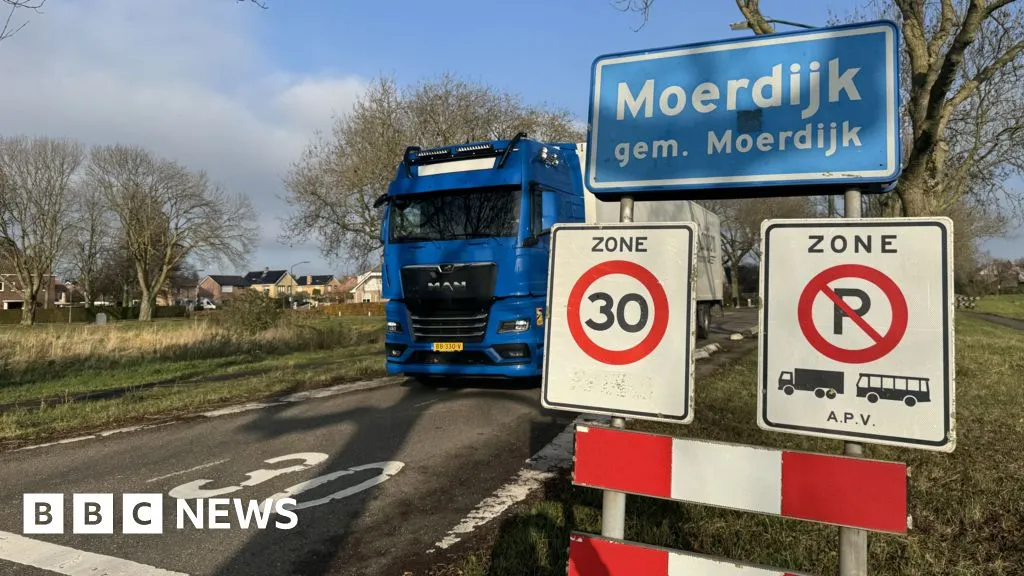
The Dutch village of Moerdijk faces potential demolition to make way for new energy infrastructure. Residents, including fishmonger Jaco Koman, whose family has lived and worked there for generations, are resisting the plans.
BBC News - WorldFiled 2026-04-12 · 23:20 GMTLean · CenterRead · 4 min
BBC News - WorldFIG 01
Reading time
4min
Word count
921words
Sources cited
3cited
Entities identified
4entities
Quality score
100%
§ 01
Briefing Summary
AI-generatedNEWSAR · AI
The Dutch village of Moerdijk faces potential demolition to make way for new energy infrastructure. Residents, including fishmonger Jaco Koman, whose family has lived and worked there for generations, are resisting the plans. The proposed development threatens homes, businesses, and even the village cemetery. Villagers question why the energy infrastructure can't be built offshore instead of displacing their community. The uncertainty has stalled the local housing market and created a sense of mourning in Moerdijk. This situation highlights the challenges the Netherlands faces in balancing energy needs with the preservation of existing communities in a densely populated country.
Confidence 0.90Sources 3Claims 5Entities 4
§ 02
Article analysis
Model · rule-basedFraming
Human Interest
Economic Impact
Tone
Mixed Tone
AI-assessed
CalmNeutralAlarmist
Factuality
0.70 / 1.00
Factual
LowHigh
Sources cited
3
Well sourced
FewMany
§ 03
Key claims
5 extracted01
Koman's company has been trawling for eels in Moerdijk since 1918.
factual
Confidence
1.00
02
The Dutch state has ambitious plans for more offshore wind in the North Sea.
factual
Confidence
0.90
03
The Netherlands needs more clean power.
factualKoman
Confidence
0.90
04
The village of Moerdijk is at risk of being demolished to make way for new energy infrastructure.
factual
Confidence
0.90
05
Offshore wind farms could be connected further out at sea.
quotevillagers
Confidence
0.70
§ 04
Full report
4 min read · 921 words§ 05
Entities
4 identifiedKey playerOppositionContextPositiveNeutralNegative
§ 06
Keywords & salience
9 termsvillage demolition
0.90
moerdijk
0.80
energy infrastructure
0.70
community displacement
0.70
clean power
0.60
netherlands
0.60
land use
0.50
offshore wind farms
0.50
traditional dutch delicacy
0.40
§ 07
Topic connections
Interactive graph No topic relationship data available yet. This graph will appear once topic relationships have been computed.