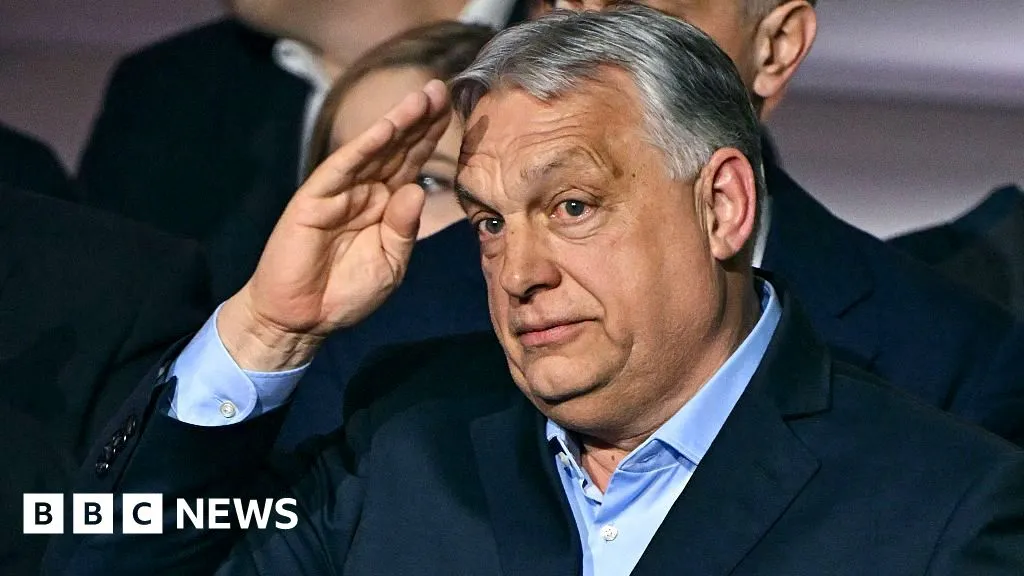
He poured money into encouraging couples to have more children, but by 2025, the fertility rate had fallen back to 1.31 - the same number he inherited from the Socialists in 2010.The way he swiftly conceded defeat on Sunday night showed him with a strong eye on his image. He acted as a "majoritarian" democrat, meaning that he believed that "the winner takes all" - and that's how he acted in government.One year after winning a two-thirds majority in 2010, he wrote a new constitution. He reshaped Hungary in his own image, to suit his own party.With his two-thirds majority in parliament he pushed through one law after another, to change the structure of the courts, the electoral system, and the economy.But finally, on Sunday, the Hungarians decisively told him "we don't want to be experimented on any longer". Péter Magyar defeated him because he carried a Hungarian flag to every rally, because he proclaimed an inclusive, less exclusive national message, and perhaps above all because Hungarians felt exhausted by being constantly in conflict.And they disliked the way the rich got richer, the poor got poorer, and the middle classes shrank.Orbán often won his fights, but his people wanted peace and quiet. A normal country, but one with a voice.
SRCBBC News - World
LANGEN
LEANCenter
WORDS210
ENT5
MON · 2026-04-13 · 01:58 GMTBRIEF NSR-2026-0413-65136
NSR-2026-0413-65136Analysis·EN·Political Strategy
Viktor Orbán's Hungarian experiment runs out of steam
Viktor Orbán's political influence in Hungary has waned after a recent electoral defeat. Despite efforts, including financial incentives, to raise the country's fertility rate since 2010, it remains unchanged.
BBC News - WorldFiled 2026-04-13 · 01:58 GMTLean · CenterRead · 1 min
BBC News - WorldFIG 01
Reading time
1min
Word count
210words
Sources cited
0cited
Entities identified
5entities
Quality score
100%
§ 01
Briefing Summary
AI-generatedNEWSAR · AI
Viktor Orbán's political influence in Hungary has waned after a recent electoral defeat. Despite efforts, including financial incentives, to raise the country's fertility rate since 2010, it remains unchanged. Orbán, who previously held a two-thirds majority, used his power to reshape Hungary's constitution, courts, electoral system, and economy. However, growing discontent among Hungarians, stemming from economic inequality and constant political conflict, led to his defeat by Péter Magyar. Magyar's inclusive national message resonated with voters who desired stability and a more equitable society. The election signals a rejection of Orbán's policies and a desire for a more unified and peaceful Hungary.
Confidence 0.90Claims 5Entities 5
§ 02
Article analysis
Model · rule-basedFraming
Political Strategy
Economic Impact
Tone
Mixed Tone
AI-assessed
CalmNeutralAlarmist
Factuality
0.60 / 1.00
Mixed
LowHigh
Sources cited
0
No named sources
FewMany
§ 03
Key claims
5 extracted01
One year after winning a two-thirds majority in 2010, he wrote a new constitution.
factual
Confidence
1.00
02
Orbán inherited a fertility rate of 1.31 from the Socialists in 2010.
statistic
Confidence
1.00
03
By 2025, Hungary's fertility rate had fallen back to 1.31.
statistic
Confidence
1.00
04
With his two-thirds majority in parliament he pushed through one law after another, to change the structure of the courts, the electoral system, and the economy.
factual
Confidence
0.90
05
He acted as a 'majoritarian' democrat, meaning that he believed that 'the winner takes all'.
quote
Confidence
0.80
§ 04
Full report
1 min read · 210 words§ 05
Entities
5 identifiedKey playerOppositionContextPositiveNeutralNegative
Organizations1
§ 06
Keywords & salience
9 termshungarian politics
0.90
viktor orbán
0.80
political defeat
0.70
political experiment
0.70
economic inequality
0.60
péter magyar
0.60
fertility rate
0.60
majoritarian democrat
0.50
new constitution
0.50
§ 07
Topic connections
Interactive graph Network visualization showing 14 related topics
View Full Graph Person Organization Location Event|Click node to navigate|Edge numbers = shared articles