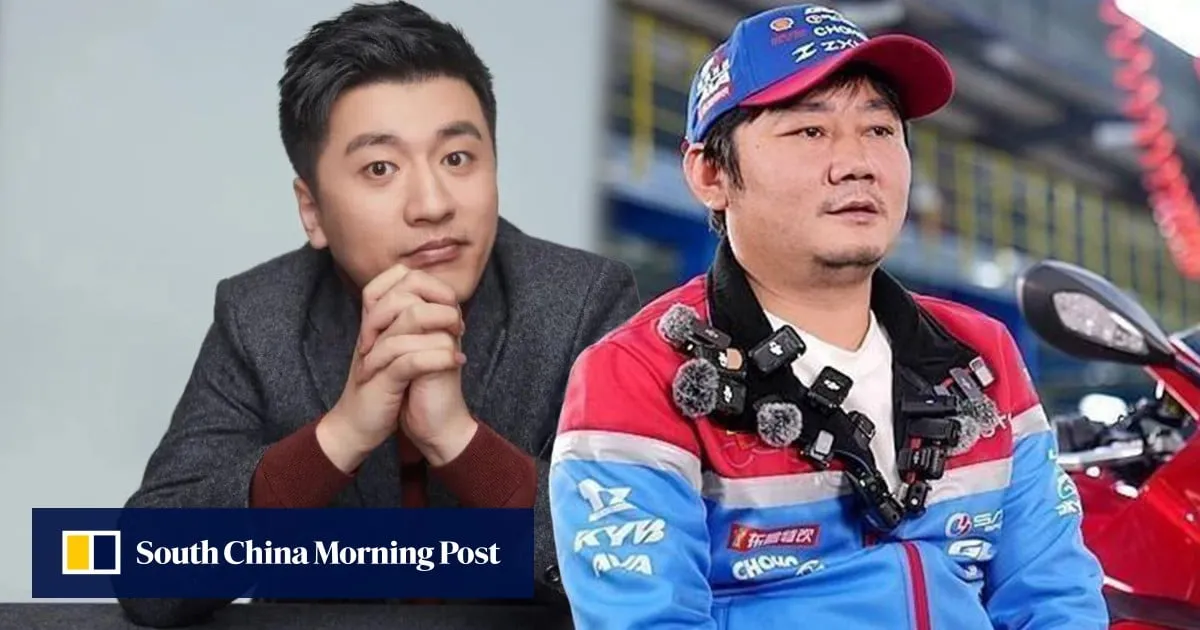
Mainland social media was engulfed by sorrow following the passing of Zhang Xuefeng, an esteemed education guru with over 30 million followers, in late March.Meanwhile, another influential figure was capturing attention online. ZXMOTO founder Zhang Xue had just achieved a remarkable victory for his motorcycle brand on the world stage.Though these two self-made icons treaded vastly different paths, they simultaneously resonated with the public mood.Their stories reveal a deeper unease in China regarding ambition, success, and social mobility, while simultaneously upholding the enduring belief that one’s starting point in life does not dictate their ultimate destination.Hero riderBorn into a humble family in rural Hunan province, southern China, Zhang Xue was raised alongside his younger sister following his parents’ divorce.Born into a humble family in rural Hunan province, Zhang Xue’s mother gifted him a bicycle, sparking his passion for two-wheeled vehicles and leading him to apprentice at a motorcycle shop. Photo: XinhuaA bicycle gifted by his mother ignited his passion for two-wheeled vehicles.After completing secondary school, he apprenticed at a motorcycle shop. At just 19, he chased a local television crew for 100 kilometres in hopes of being interviewed, believing it would attract the attention of a professional racing team.His gamble paid off. After the segment aired, he was hired as a stunt rider and mechanic, later advancing to an engineering position at a motorcycle company.In that TV interview, he famously declared: “If you have a dream, chase it,” transforming that idealism into a thriving business empire.Further ReadingIn 2013, armed with only 20,000 yuan (US$2,800), Zhang relocated to Chongqing in southwest China to pursue his motorcycle dreams, eventually launching his own brand, ZXMOTO, in 2024.He structured the company around a straightforward principle: racing fuels research and development (R&D), and R&D drives production.Recognised for its innovative engines, competitive pricing and exceptional customer service, ZXMOTO quickly gained traction.Last year, sales soared beyond 25,000 units, with an output value reaching 745 million yuan (US$109 million).Zhang had long harboured aspirations of building a world-class Chinese motorcycle brand.That ambition edged closer to reality in late March, when French rider Valentin Debise triumphed in two WorldSSP races in the Superbike World Championship aboard a ZXMOTO 820RR-RS, breaking the long-standing dominance of international giants like Ducati and Yamaha.Zhang Xue, centre, poses for a photo with his son and French rider Valentin Debise, who helped bring Zhang’s dream of creating a world-class Chinese motorcycle brand closer to reality. Photos: Courtesy of the Evan Bros teamIt marked the first time a Chinese motorcycle manufacturer secured the top spot in the series, revitalising aspirations for manufacturing and product development in the country.Education innovatorIn contrast to Zhang Xue’s idealistic journey, Zhang Xuefeng carved out his influence grounded in stark realism.Born into a struggling family in Heilongjiang, China’s northernmost province, Zhang’s family once survived on a mere 600 yuan (US$87) a month.He eventually earned a place at Zhengzhou University and, after graduating, became a tutor. Early in his career, Zhang’s base salary was just 2,500 yuan, and he commuted on overcrowded undergrounds and worked without health insurance.Reflecting on those challenging times, he noted: “If children from poor families want what people call a good life, they must bear this kind of pressure.”Zhang gained fame in 2016 with a viral video dissecting the majors, locations and job prospects of 34 Chinese universities.Hailing from a struggling family in Heilongjiang, the northernmost province in China, Zhang Xuefeng’s family once survived on just 600 yuan (US$87) a month. Photo: HandoutHe subsequently established a lucrative consultancy guiding families through the gaokao application process, with his candid insights distinguishing him from others. The gaokao is China’s rigorous national college entrance exam.Zhang often cautioned students from less affluent backgrounds against pursuing finance, as he believed the industry heavily relied on familial connections and resources.He warned aspiring diplomats that they were “dreaming” and argued that for most ordinary children, aspirations like “I want” were unattainable.Interests and ideals, he emphasised, were “luxuries for the privileged,” while for others, “survival and security came first.”To countless average families, Zhang’s live-streams offered a rare form of educational equity, transforming opaque information about admissions and employment into something public, accessible, and actionable.Mourners laid bouquets at the Suzhou Funeral Home during the public memorial service for Zhang Xuefeng on March 28. Photo: Instagram/johnny_1987226While some critics accused him of promoting a grim realism that stifled young idealism, his following continued to grow. During one live-stream, he sold over 20,000 consultation packages, generating nearly 200 million yuan (US$29 million) in revenue.Reports indicated Zhang owned three companies, with one valued between 500 million and 800 million yuan, and that his lecturing alone brought him millions annually.For years, he maintained a gruelling work schedule and had been hospitalised due to overwork. Even from his hospital bed, he was reviewing 6,000 university application plans.On March 24, Zhang fell ill after a run and was rushed to the hospital, where he died at the age of 41. He is survived by his wife and 11-year-old daughter. Doctors attributed his death to cardiac arrest.Just days later, at a memorial service in Suzhou, a city near Shanghai, thousands gathered with flowers to honour him, with mourners queuing for nearly 2 kilometres outside the funeral home.During a memorial service in Suzhou, thousands gathered with flowers to honour Zhang Xuefeng, with mourners queuing for nearly two kilometres outside the funeral home. Photo: Instagram/johnny_1987226The narratives of these two figures illuminate what may be the most viable routes to upward mobility in China today.From school dropout to motorcycle mogul, Zhang Xue showed that passion can still fuel reinvention, challenging the notion that academic success is the only way to a better life.Conversely, Zhang Xuefeng embodied a reality shaped by scarcity. His empathy for ordinary people and ability to articulate the concerns of average families granted him a nearly mythical influence.In their unique ways, both men came to epitomise larger questions in China about mobility, merit and the true cost of success.
SRCSouth China Morning Post
LANGEN
LEANCenter-Right
WORDS982
ENT9
MON · 2026-04-13 · 10:00 GMTBRIEF NSR-2026-0413-65607
NSR-2026-0413-65607News Report·EN·Human Interest
Bikes, books and ambitions: how Zhang Xue and Zhang Xuefeng inspire a generation in China
In China, the recent death of education guru Zhang Xuefeng coincided with the success of ZXMOTO founder Zhang Xue, highlighting contrasting paths to success and sparking reflection on ambition and social mobility. Zhang Xue, from a humble background, pursued his passion for motorcycles, starting as an apprentice and eventually founding ZXMOTO in Chongqing in 2024.
Zoey ZhangSouth China Morning PostFiled 2026-04-13 · 10:00 GMTLean · Center-RightRead · 4 min
South China Morning PostFIG 01
Reading time
4min
Word count
982words
Sources cited
1cited
Entities identified
9entities
Quality score
100%
§ 01
Briefing Summary
AI-generatedNEWSAR · AI
In China, the recent death of education guru Zhang Xuefeng coincided with the success of ZXMOTO founder Zhang Xue, highlighting contrasting paths to success and sparking reflection on ambition and social mobility. Zhang Xue, from a humble background, pursued his passion for motorcycles, starting as an apprentice and eventually founding ZXMOTO in Chongqing in 2024. His company, focused on racing-driven R&D, achieved significant sales and recognition for its innovative engines and customer service. In late March, ZXMOTO gained international acclaim when a French rider won two WorldSSP races on a ZXMOTO motorcycle, marking a significant achievement for the brand and Chinese manufacturing. These figures resonate with the public, embodying the idea that one's origins do not limit their potential.
Confidence 0.90Sources 1Claims 5Entities 9
§ 02
Article analysis
Model · rule-basedFraming
Human Interest
Economic Impact
Tone
Measured
AI-assessed
CalmNeutralAlarmist
Factuality
0.80 / 1.00
Factual
LowHigh
Sources cited
1
Limited
FewMany
§ 03
Key claims
5 extracted01
Last year, ZXMOTO sales soared beyond 25,000 units, with an output value reaching 745 million yuan (US$109 million).
statisticnull
Confidence
1.00
02
In late March, French rider Valentin Debise triumphed in two WorldSSP races aboard a ZXMOTO 820RR-RS.
factualnull
Confidence
1.00
03
In 2024 Zhang Xue launched his own motorcycle brand, ZXMOTO.
factualnull
Confidence
1.00
04
ZXMOTO founder Zhang Xue achieved a victory for his motorcycle brand in the Superbike World Championship.
factualnull
Confidence
1.00
05
Zhang Xuefeng, an education guru with over 30 million followers, passed away in late March.
factualnull
Confidence
1.00
§ 04
Full report
4 min read · 982 words§ 05
Entities
9 identifiedKey playerOppositionContextPositiveNeutralNegative
People3
Organizations1
Locations4
§ 06
Keywords & salience
10 termszhang xue
0.90
motorcycle brand
0.80
zxmoto
0.80
motorcycle
0.70
ambition
0.70
social mobility
0.70
success
0.60
racing
0.60
r&d
0.50
china
0.50
§ 07
Topic connections
Interactive graph No topic relationship data available yet. This graph will appear once topic relationships have been computed.