A former Transdev employee has alleged potentially life-saving upgrades to Sydney’s light rail were cancelled in order to save money. Photograph: Blake Sharp-Wiggins/The Guardian View image in fullscreen A former Transdev employee has alleged potentially life-saving upgrades to Sydney’s light rail were cancelled in order to save money. Photograph: Blake Sharp-Wiggins/The Guardian Cancelled safety upgrades on Sydney light rail would have only cost $2.2m, whistleblower claims after fatal incidents NSW government urged to investigate if transport department refused to share cost of sensors that would detect a person entering coupling area Follow our Australia news live blog for latest updates Get our breaking news email, free app or daily news podcast The potentially life-saving safety upgrades to Sydney’s light rail, which a former Transdev employee has alleged were cancelled in order to save money, would have only cost about $2.2m, according to the whistleblower. The New South Wales government has been urged to investigate whether its transport department declined to share the cost of installing sensors that would detect a person entering the coupling area between two joined trams after a fatal incident in 2023. Transdev, the private company that operates Sydney’s light rail on behalf of the government, successfully trialled the sensors after the 2023 death, according to the former employee who requested anonymity. But the company stopped the project before another death in 2025, the whistleblower said, after Transport for New South Wales declined Transdev’s request to share the cost of installing the technology. Transdev has confirmed it is now trialling sensors in the coupling area of light rail vehicles on the Sydney network. As Guardian Australia reported on Thursday, the cost to produce an initial system to trial on one tram was estimated to be $500,000, according to the whistleblower. On Sydney’s L2 and L3 routes, two 33-metre-long trams are coupled together to form one 66-metre-long vehicle. The routes use Citadis X05 light rail vehicles. The remainder of the sensors to install on the rest of the trams would have been significantly cheaper than the prototype, at as little as $30,000 each, meaning the total cost would have been about $2.2m, the ex-employee said. “Even if you double that for overrun or unexpected costs then you are still only looking at $5m,” they said. By comparison, the light rail project – a 12km network that runs from the CBD through to Sydney’s south-east – cost $3.1bn to deliver, the NSW auditor general found in 2020. A Transport for NSW spokesperson on Friday said the department “has not rejected the principle of cost sharing for safety measures on the Sydney light rail network”. “Any consideration of future safety initiatives would be assessed on their merits and in line with established governance and contractual arrangements, including where responsibilities sit under the operating contract,” they said. They said Transport for NSW took any allegations relating to safety extremely seriously and “safety outcomes, not commercial considerations, are the fundamental driver of safety decisions on the NSW public transport network”. Transdev did not respond before publication to Guardian Australia’s request for comment. Earlier this week, the company rejected “any assertion that the assessment of sensor technology has at any point been ‘shelved’ or put on hold” and said it had not, to its knowledge, been rolled out on any other light rail system in the world. “As such, important questions as to its feasibility and how it would integrate with other complex safety systems on our light rail vehicles needs to be tested,” they said. The whistleblower alleged that, after Transport for NSW declined to share the cost of the sensors, Transdev and Altrac – the private consortium which manages Sydney’s light rail on behalf of the government – put together a case to convince the national rail regulator that the expenses outweighed the safety benefits. Transport for NSW and the regulator accepted the argument against proceeding with the project, the whistleblower said, even though a number of staff were adamant it would prevent or reduce further deaths. The Minns government has come under pressure to explain what happened especially in light of the whistleblower’s claim that the sensors would have been relatively inexpensive. A spokesperson for the transport minister, John Graham, said Transport for NSW was due to brief him on the issue. The opposition’s transport spokesperson, Natalie Ward, said it was “extraordinary” that – according to the whistleblower – Transport for NSW had declined Transdev’s request to cost-share. “This would be a relatively modest investment to improve safety across the board,” Ward said. “The workforce are actually the people who suffer the most from these incidents, so you’d think it would be a priority.” The NSW Greens transport spokesperson, Cate Faehrmann, said the matter highlighted the “dangers” of privatising essential public services but ultimately the government should accept responsibility. The president of the Rail, Tram and Bus Union’s NSW division, Peter Grech, said the whistleblower’s allegations suggested “cost-cutting was prioritised over the safety of workers and the travelling public”. Dr Geoffrey Clinton, a senior lecturer in transport management at the University of Sydney, said there were very few deaths on public transport but anything which would improve safety was “obviously worth looking into”. Clinton said cost-sharing the sensor technology would probably be the easiest option for both the government and the operator. “In the end, it doesn’t really matter who pays for it as long as it gets done,” he said. Explore more on these topics Sydney news Share Reuse this content
SRCThe Guardian - World News
LANGEN
LEANCenter-Left
WORDS912
ENT5
MON · 2026-04-13 · 15:00 GMTBRIEF NSR-2026-0413-66103
NSR-2026-0413-66103News Report·EN·Human Interest
Cancelled safety upgrades on Sydney light rail would have only cost $2.2m, whistleblower claims after fatal incidents
A whistleblower, a former Transdev employee, alleges that potentially life-saving safety upgrades to Sydney's light rail were cancelled to save money. These upgrades, involving sensors to detect people entering the coupling area between trams, would have cost approximately $2.2 million.
Catie McLeodThe Guardian - World NewsFiled 2026-04-13 · 15:00 GMTLean · Center-LeftRead · 4 min
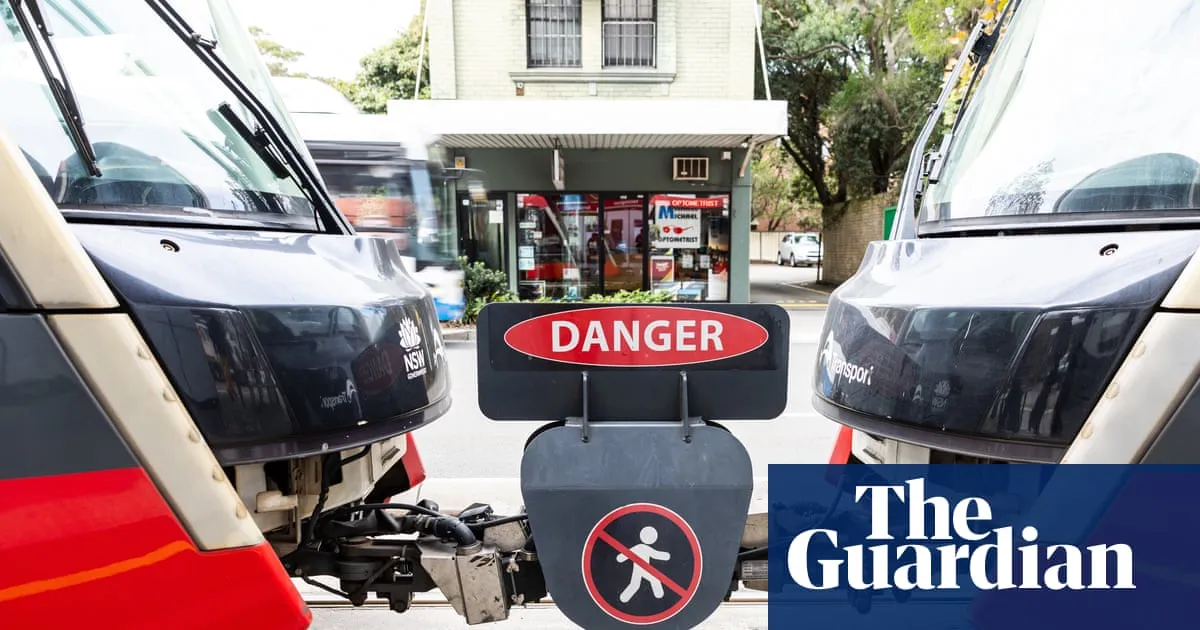
The Guardian - World NewsFIG 01
Reading time
4min
Word count
912words
Sources cited
2cited
Entities identified
5entities
Quality score
100%
§ 01
Briefing Summary
AI-generatedNEWSAR · AI
A whistleblower, a former Transdev employee, alleges that potentially life-saving safety upgrades to Sydney's light rail were cancelled to save money. These upgrades, involving sensors to detect people entering the coupling area between trams, would have cost approximately $2.2 million. Transdev, the light rail operator, successfully trialled the sensors after a fatal incident in 2023 but halted the project when Transport for New South Wales allegedly declined to share the cost. The NSW government is now urged to investigate the matter, especially after another death in 2025. Transdev has confirmed it is now trialling sensors in the coupling area of light rail vehicles on the Sydney network.
Confidence 0.90Sources 2Claims 5Entities 5
§ 02
Article analysis
Model · rule-basedFraming
Human Interest
Economic Impact
Tone
Mixed Tone
AI-assessed
CalmNeutralAlarmist
Factuality
0.70 / 1.00
Factual
LowHigh
Sources cited
2
Limited
FewMany
§ 03
Key claims
5 extracted01
Transport for NSW has not rejected the principle of cost sharing for safety measures.
quoteTransport for NSW spokesperson
Confidence
1.00
02
The light rail project cost $3.1bn to deliver.
statisticNSW auditor general
Confidence
1.00
03
The cancelled safety upgrades would have cost about $2.2m.
statisticwhistleblower
Confidence
0.90
04
Safety upgrades to Sydney’s light rail were cancelled to save money, according to a former Transdev employee.
quotewhistleblower
Confidence
0.90
05
Transdev trialled sensors after a fatal incident in 2023 but stopped the project before another death in 2025.
factualwhistleblower
Confidence
0.80
§ 04
Full report
4 min read · 912 words§ 05
Entities
5 identifiedKey playerOppositionContextPositiveNeutralNegative
Organizations4
Locations1
§ 06
Keywords & salience
9 termssydney light rail
1.00
safety upgrades
0.90
sensors
0.80
coupling area
0.70
fatal incidents
0.70
cost savings
0.60
whistleblower
0.60
transdev
0.60
transport for new south wales
0.50
§ 07
Topic connections
Interactive graph No topic relationship data available yet. This graph will appear once topic relationships have been computed.