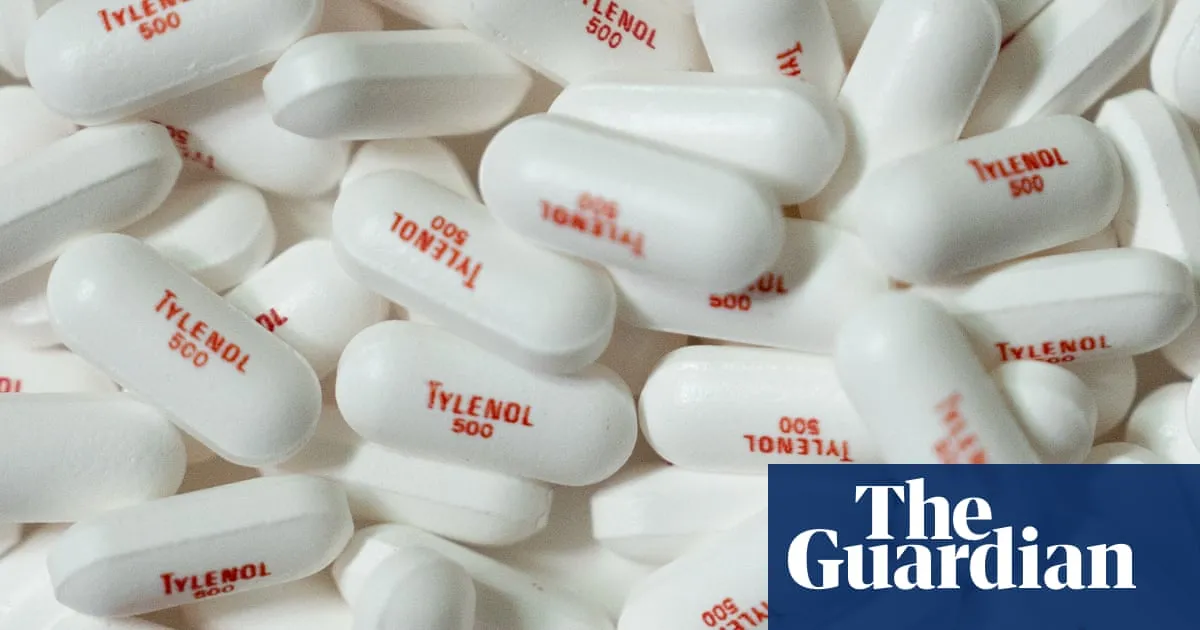
Taking Acetaminophen – known in the US by the brand name Tylenol – during pregnancy has no effect on later autism diagnoses, according to a sweeping new study from Denmark published Monday.The Trump administration has targeted Tylenol use in pregnancy as a major cause of autism in children, which appears to have led to a drop in pregnant people taking the pain reliever.Through Denmark’s robust national healthcare system, researchers were able to track more than 1.5 million children born between 1997 and 2022 in the national health registry, including 31,098 children who were exposed to Tylenol in utero.Autism was diagnosed in 1.8% of children who were exposed to Tylenol and 3% of those who weren’t, according to the study, which was published in Jama Pediatrics. A similar 2024 study in Sweden found a marginal link that disappeared after taking siblings into account, suggesting that autism is strongly genetic, which has already been demonstrated in other studies.A US review of existing studies in 2025 found a potential relationship, but it wasn’t clear whether confounders were at play. For instance, if pregnant autistic people take Tylenol more often than neurotypical pregnant people because of higher pain levels.Health officials announced in September 2025 that the US Food and Drug Administration (FDA) would initiate a label change for Acetaminophen, warning of a potential link to autism. Trump cautioned several times against taking the pain reliever during pregnancy.“If you’re pregnant, don’t take Tylenol,” Trump said at a press conference at the time. “Don’t take Tylenol. Don’t have your baby take Tylenol.” He said the medication is “not good” and taking Tylenol during pregnancy is associated with “a very increased risk of autism”.Trump added that in some “medically necessary” cases, Acetaminophen might still be recommended in pregnancy. “That’s, for instance, in cases of extremely high fever that you feel you can’t tough it out,” he said.At the same September press conference, officials announced that leucovorin, a B vitamin, could be used to treat autism. That claim was quietly walked back earlier this year.Tylenol is safe to take during pregnancy and can play a key role in relieving pain and bringing down fevers. Yet after the September announcement, Tylenol use among pregnant women in emergency rooms dropped by 10%, according to a Lancet study published last month.
SRCThe Guardian - World News
LANGEN
LEANCenter-Left
WORDS380
ENT9
MON · 2026-04-13 · 19:46 GMTBRIEF NSR-2026-0413-66357
NSR-2026-0413-66357News Report·EN·Public Health
Taking Tylenol during pregnancy has no link to autism, new study finds
A new study from Denmark, tracking over 1.5 million children born between 1997 and 2022, found no link between acetaminophen (Tylenol) use during pregnancy and autism diagnoses. The research, published in JAMA Pediatrics, showed a lower rate of autism in children exposed to Tylenol in utero compared to those who were not.
Melody SchreiberThe Guardian - World NewsFiled 2026-04-13 · 19:46 GMTLean · Center-LeftRead · 2 min
The Guardian - World NewsFIG 01
Reading time
2min
Word count
380words
Sources cited
0cited
Entities identified
9entities
Quality score
100%
§ 01
Briefing Summary
AI-generatedNEWSAR · AI
A new study from Denmark, tracking over 1.5 million children born between 1997 and 2022, found no link between acetaminophen (Tylenol) use during pregnancy and autism diagnoses. The research, published in JAMA Pediatrics, showed a lower rate of autism in children exposed to Tylenol in utero compared to those who were not. This contradicts a previous US review suggesting a potential relationship and warnings from the Trump administration, which led to a drop in Tylenol use among pregnant women. Despite these concerns and a planned FDA label change, the study supports the safety of Tylenol during pregnancy for pain and fever relief. Similar findings were reported in a 2024 Swedish study, suggesting a strong genetic component to autism.
Confidence 0.90Claims 5Entities 9
§ 02
Article analysis
Model · rule-basedFraming
Public Health
Political Strategy
Tone
Measured
AI-assessed
CalmNeutralAlarmist
Factuality
0.80 / 1.00
Factual
LowHigh
Sources cited
0
No named sources
FewMany
§ 03
Key claims
5 extracted01
Tylenol use among pregnant women in emergency rooms dropped by 10% after the September announcement.
statisticLancet study
Confidence
1.00
02
Trump cautioned several times against taking the pain reliever during pregnancy.
factualnull
Confidence
1.00
03
Autism was diagnosed in 1.8% of children who were exposed to Tylenol and 3% of those who weren’t.
statisticJama Pediatrics study
Confidence
1.00
04
Taking acetaminophen during pregnancy has no effect on later autism diagnoses, according to a new study from Denmark.
factualnull
Confidence
0.90
05
A US review of existing studies in 2025 found a potential relationship, but it wasn’t clear whether confounders were at play.
factualnull
Confidence
0.80
§ 04
Full report
2 min read · 380 words§ 05
Entities
9 identifiedKey playerOppositionContextPositiveNeutralNegative
Organizations5
§ 06
Keywords & salience
9 termstylenol
0.90
acetaminophen
0.90
pregnancy
0.80
autism
0.80
study
0.70
link
0.60
fda
0.50
health
0.40
genetic
0.40
§ 07