Whether Trump or Rodriguez, running Venezuela will need the help of its military, which has incentives to agree to a deal.Military personnel attend the funeral of fellow soldiers killed in the US capture of Venezuelan President Nicolas Maduro and his wife in Caracas, Venezuela, Wednesday, January 7, 2026 [Ariana Cubillos/AP Photo]Published On 10 Jan 2026For almost 27 years, the Venezuelan military – formally known as the National Bolivarian Armed Forces (FANB) – was a firm ally to presidents Hugo Chavez and Nicolas Maduro, as they systematically drifted from seeking an alternative to Western liberal democracy, and towards authoritarianism.The FANB helped the Venezuelan government dismantle the institutions of the previous political establishment and persecute its most fervent opponents. In exchange, the governments of Chavez and Maduro, respectively, gave more and more power to the military within Venezuelan politics, offering them ministerial positions, governorships, embassies and other leadership roles such as mayoralties or the administration of state-run enterprises.Now, with the abduction of Maduro by United States special forces last Saturday, the military’s image as a protector of the Venezuelan state has taken a hit: The deposed president was kidnapped from the largest Venezuelan military complex, Fuerte Tiuna, in an operation that exposed the deficiencies in the FANB’s military technology and defence protocols.The military faces a crucial dilemma – make changes and serve as the guarantor of the deals fronted by the Donald Trump administration in the US and interim president Delcy Rodriguez in Caracas, or risk further US attacks and erosion of its power and status.The rise before the fallOver the years, the FANB’s influence has grown significantly, including in law enforcement – supplanting, in many cases, the roles of the state and local police.This phenomenon accelerated after the presidential elections of July 28, 2024, when the then-government of Maduro faced an unprecedented legitimacy crisis amid strong accusations of widespread vote-counting fraud.A police state was established in Venezuela, in which mass surveillance of opponents moved to a new level.The government, back then and until now, came to depend on the FANB to remain standing. In part, this was done by incorporating into the military elements of the ruling United Socialist Party of Venezuela (PSUV), paramilitary groups (also called “colectivos”), and the political, judicial and military police. This entire security framework has been described by the Venezuelan government as a “civic-military-police union.”The post-Maduro eraThat power means that the military retains a critical role in any political transition in Venezuela. Many analysts believe that any government established in Venezuela, whether via democratic means or through force, needs the support of the military to be able to govern.The case of Delcy Rodriguez’s administration is no exception to this rule. Despite counting on Trump’s acquiescence to take the reins of a post-Maduro political transition, the president in charge of Venezuela needs the support of the Venezuelan military to avoid a possible aggravation of political and social tensions in Venezuela. Rodriguez’s acceptance among military ranks is the weightiest reason why the US president has trusted her – rather than opposition leader Maria Corina Machado – to lead the political transition in the country.But the abduction of Maduro has, at the same time, shown up the weaknesses of the FANB. Its insurmountable asymmetry of power in relation to the US military’s might leaves Venezuela vulnerable to possible new attacks coming from the US, even though Trump has, for the moment, said he has no such plans.That threat is the biggest incentive for the FANB to itself make compromises, and is the reason why the military leadership might be open to being a part of the political transition led by Rodriguez.What’s next for the military?The Venezuelan military will want, as much as possible, to maintain its status within Venezuelan politics.To achieve this objective, the FANB leadership will likely need to comply with a series of steps, some of which were – until recently – unthinkable in Venezuelan politics.First, military leaders must dissociate themselves from all accusations linking them to drug trafficking activities, the official argument used by the US for its military campaign against Venezuela.Second, the military leadership must accept the new oil agreement between Venezuela and the US, which will very likely grant US companies significant control over Venezuelan crude reserves and production.Third, it is possible that, at some point in the Venezuelan political transition, the FANB will need to reduce its repressive activities against the Venezuelan civilian population. This means, in practice, the reduction of its role in the current police state, or the so-called “Civic-Military-Police Union”.Finally, the Venezuelan military leadership must close ranks with the interim president, Rodriguez, because she represents the only – and perhaps the last – direct channel of communication with the Trump administration. The military could argue domestically that it needs to do this in order to shore up the country’s stability amid the chaos generated by Maduro’s exit.Fundamentally, adopting these changes would mean that the military underwrites the agreements reached between Rodriguez and Trump, and plays the role of a stabilising agent in the country’s post-Maduro era. It’s a format the US is used to, as well, with Washington relying on military-led establishments in multiple countries over the decades, from Egypt to Pakistan to Thailand to many more.For the Venezuelan military, the options today are few. Failing to adapt and work with Trump and Rodriguez could invite a new US armed attack. Were this to occur, it would destroy the credibility of the military and current political leadership, further amplifying the country’s political and social instability.
SRCAl Jazeera
LANGEN
LEANCenter
WORDS915
ENT7
SAT · 2026-01-10 · 05:27 GMTBRIEF NSR-2026-0110-6717
NSR-2026-0110-6717Analysis·EN·Political Strategy
Analysis: Why Venezuela’s military holds the key to country’s future
Following the US abduction of President Maduro in January 2026, the Venezuelan military (FANB) faces a critical juncture. For nearly 27 years, the FANB has been a key ally to Chavez and Maduro, gaining significant power and influence within the government in exchange for dismantling political opposition.
Carlos Eduardo PinaAl JazeeraFiled 2026-01-10 · 05:27 GMTLean · CenterRead · 4 min
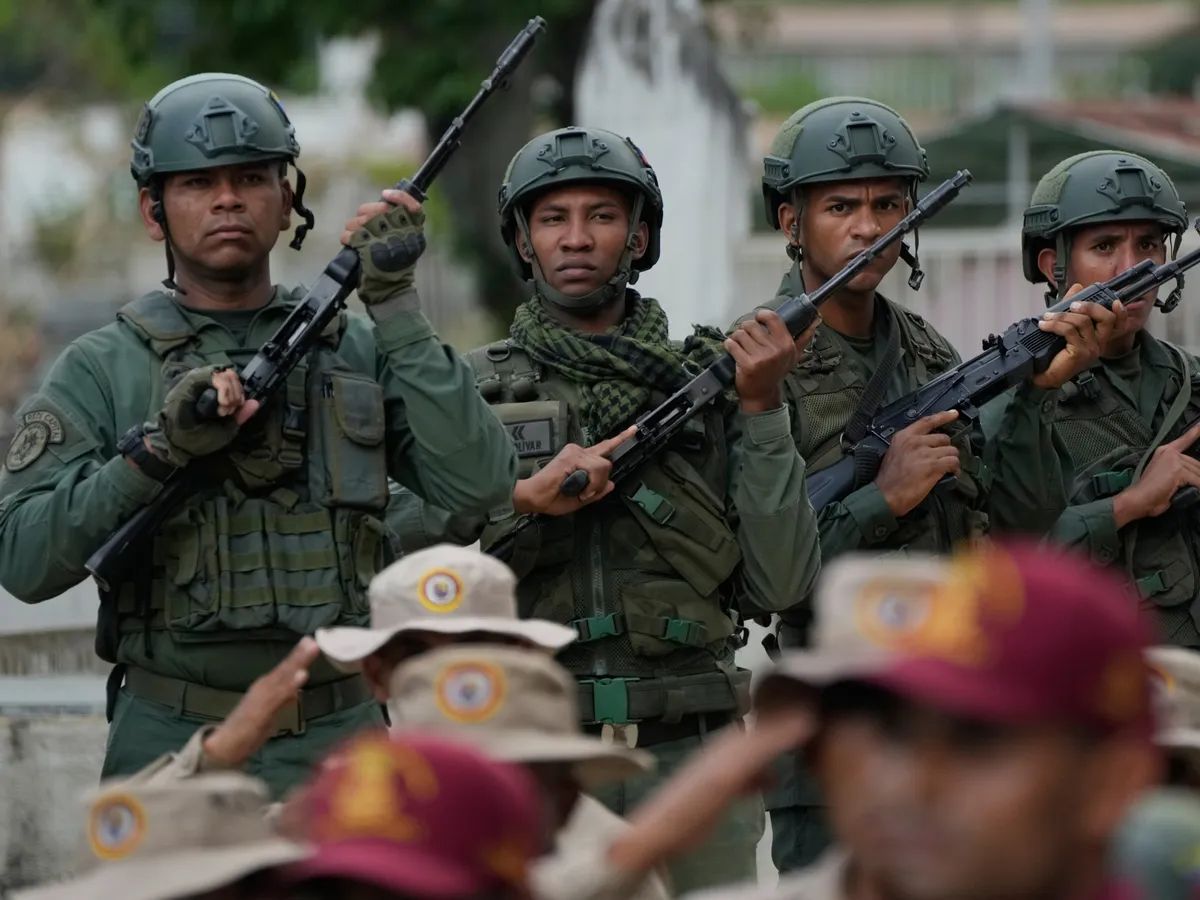
Al JazeeraFIG 01
Reading time
4min
Word count
915words
Sources cited
0cited
Entities identified
7entities
Quality score
100%
§ 01
Briefing Summary
AI-generatedNEWSAR · AI
Following the US abduction of President Maduro in January 2026, the Venezuelan military (FANB) faces a critical juncture. For nearly 27 years, the FANB has been a key ally to Chavez and Maduro, gaining significant power and influence within the government in exchange for dismantling political opposition. However, Maduro's capture from a military complex has damaged the FANB's image and exposed vulnerabilities. The military must now decide whether to support deals brokered by the US and interim President Rodriguez, or risk further US attacks and a decline in their power. The FANB's decision will be crucial in determining Venezuela's future, given its expanded role in law enforcement and its importance in maintaining government stability amid legitimacy crises.
Confidence 0.90Claims 5Entities 7
§ 02
Article analysis
Model · rule-basedFraming
Political Strategy
National Security
Tone
Mixed Tone
AI-assessed
CalmNeutralAlarmist
Factuality
0.60 / 1.00
Mixed
LowHigh
Sources cited
0
No named sources
FewMany
§ 03
Key claims
5 extracted01
Maduro was abducted by United States special forces last Saturday from Fuerte Tiuna.
factual
Confidence
1.00
02
Chavez and Maduro gave more power to the military within Venezuelan politics.
factual
Confidence
1.00
03
The Venezuelan military was a firm ally to presidents Hugo Chavez and Nicolas Maduro for almost 27 years.
factual
Confidence
1.00
04
The military faces a crucial dilemma regarding its role in a political transition.
prediction
Confidence
0.80
05
Any government established in Venezuela needs the support of the military to be able to govern.
predictionMany analysts
Confidence
0.70
§ 04
Full report
4 min read · 915 words§ 05
Entities
7 identifiedKey playerOppositionContextPositiveNeutralNegative
People4
§ 06
Keywords & salience
9 termsvenezuelan military
1.00
nicolas maduro
0.80
political power
0.70
united states
0.60
authoritarianism
0.60
delcy rodriguez
0.50
donald trump
0.50
political crisis
0.50
law enforcement
0.40
§ 07
Topic connections
Interactive graph Network visualization showing 51 related topics
View Full Graph Person Organization Location Event|Click node to navigate|Edge numbers = shared articles