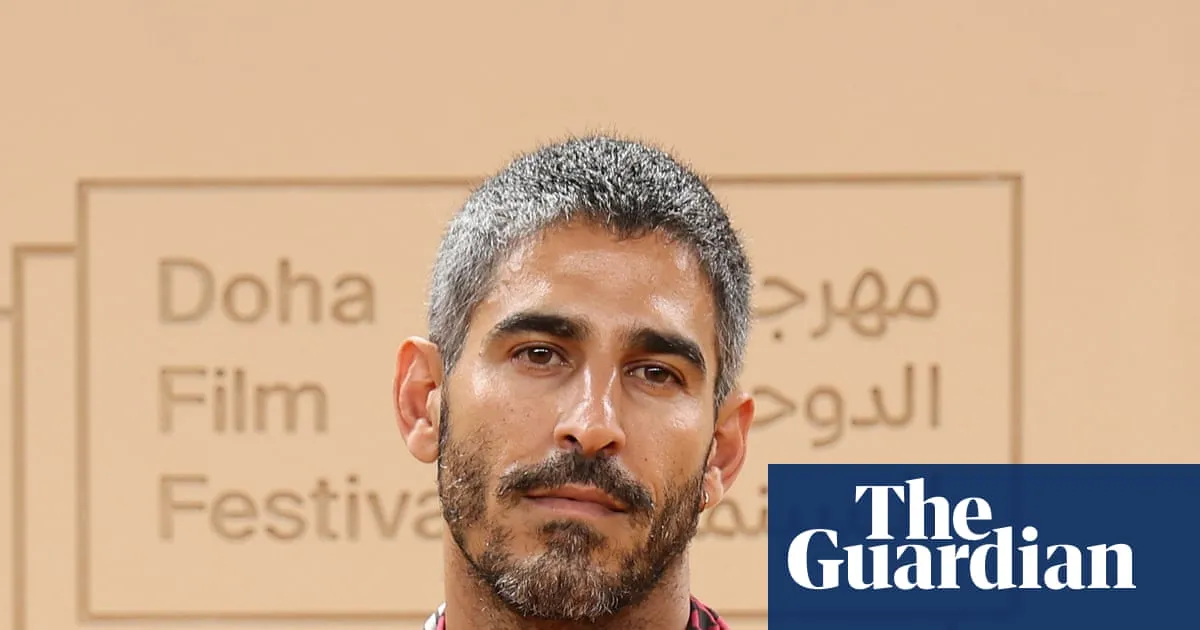
The detention of a prize-winning international journalist over his reporting of a friendly fire incident in Kuwait is raising questions about the crackdown on freedom of speech across the Middle East as a result of the US-Israel war with Iran, the Committee to Protect Journalists has warned.Ahmed Shihab-Eldin, born in the US and a Kuwaiti national, was arrested on 3 March during a brief visit to Kuwait. He published footage of a US air force F- 15 E Strike Eagle crashing in al Jahra west of Kuwait city. On his Substack he said the pilot and weapons officer had successfully ejected and survived. He added that video circulating online showed local residents assisting one of the crew in a civilian truck.Three US planes were shot down by Kuwait air defences on 2 March in a friendly fire incident, and none of the pilots were killed.Campaigners fear he is about to be charged under new security laws being introduced in Kuwait, and possibly in a new security court.Many Gulf states, fearing the erosion of internal national unity, are using anti-terror laws to restrict publicity about attacks on its infrastructure.Campaigners are not certain what social media posting has led to Shihab-Eldin’s detention. He had published other social media footage of damage being inflicted in the Gulf and inside Iran itself.Shihab-Eldin has had a distinguished career working for PBS, HuffPost, and Al Jazeera English, winning a prize from Amnesty International and a British Journalism award. He has also served as an adjunct lecturer at the Columbia University Graduate School of Journalism. He has been a staunch defender of Palestinians in Gaza and fierce critic of the Israeli government. In the Iran war he claimed Israel was “pushing harder than ever for a wider war to distract from its genocide and reshaping of the regional balance of power”.Kuwaiti government policy also opposes the Israeli war in Gaza.Sara Qudah, the CPJ’s Middle East regional director, said: “We are seeing escalating censorship of journalists and news outlets across the world in relation to the Iran war, including in the Gulf. National security is being used as a pretext to crack down on freedom of speech and Shihab-Eldin’s detention is emblematic of that. He must be freed immediately.”A former adviser to the Middle East peace envoy, Ashish Prashar, said: “To imprison a journalist arbitrarily and label their work as terrorism or endangering national security is a grave misstep. The state department and the UK Foreign Office need to demand the release of all media workers from their allies in the Gulf. Anything less would an abandonment of their ethical obligations and endorsement of authoritarian practices”.The Gulf Centre for Human Rights said dozens of arbitrary arrests of citizens had occurred as part of a systematic pattern of repression adopted by the Kuwait authorities. These policies have “transformed Kuwait, once relatively free in terms of public freedoms compared to its neighbours, into a police state, that suppresses dissenting opinions, imprisons those who express them and uses citizenship as a weapon to punish public opponents”, it said.Damage to the Kuwaiti oil tanker Al-Salmi after it was struck by Iran. Photograph: Kuwait Petroleum Corporation/ReutersKuwait has passed two new laws, including one defining terrorism as spreading terror among the people by endangering the safety of and security of society.Article 36 of the Kuwait constitution states: “freedom of opinion and scientific research is guaranteed. Every person has the right to express their opinion and publish it orally in writing or otherwise.”A new law also proposes significant fines and sentences on anyone that “publishes statements or spreads false rumours in relation to military entities with the intent to weaken confidence in these entities, diminishing their prestige, casting doubt on their existence or undermining their morale”.In late 2015, Amnesty International issued a report covering events in Kuwait dating back to 2011-12, and argued the country was at risk of sliding into deeper forms of repression. The precise proportion of Kuwait’s population that is Shia is not known but estimates range from 20 to 35%.Kuwait has been using citizenship laws to expel alleged dissidents, or what it describes as terror cells, a move that reflects in part the desire of the rulers of Kuwait to protect itself from Iranian accusations that it has allowed the US to use its bases on its soil to mount attacks on Iran.On 9 March, Sheikh Meshal al-Ahmad al-Jaber Al Sabah, the Emir of Kuwait, said: “We have not allowed our land, our skies, or our shores to be used for any military activity against [Iran].”Yet video of Himars missiles allegedly being fired from Kuwait into Iran have been widely published, including by reputable news outlets such as France 24.On 30 March, Iran struck the Kuwaiti crude oil tanker Al-Salmi, as well as a power and water desalination plant. It targeted Kuwait’s main port of Shuwaikh on 27 March, and fuel storage tanks at Kuwait international airport on 25 March.Kuwait’s Ali Al-Salem airbase and Camp Buehring were also heavily targeted by Iranian strikes. With no permanent freshwater sources and minimal annual rainfall, Kuwait relies on seawater desalination for about 90% of its potable water supply.Kuwait earlier this month announced it was withdrawing citizenship from 2,182 individuals including their families. On Monday the government also published a decree radically reforming its nationality law to restrict those who can claim Kuwait citizenship.Visas to Iraqi citizens were withdrawn after Iraqis in Basra stormed the Kuwait consulate on 7 April in protest at a missile being fired from Kuwait to Iraq that killed three people. The source of the missile is not known, but the attacks on the diplomatic premises has been widely condemned.
SRCThe Guardian - World News
LANGEN
LEANCenter-Left
WORDS939
ENT12
TUE · 2026-04-14 · 10:45 GMTBRIEF NSR-2026-0414-67315
NSR-2026-0414-67315News Report·EN·Human Rights
Detention of journalist in Kuwait raises questions about crackdown on freedom of speech
Journalist Ahmed Shihab-Eldin was detained in Kuwait on March 3rd for reporting on a friendly fire incident where Kuwaiti air defenses shot down three US planes. The Committee to Protect Journalists (CPJ) has expressed concern that his detention is part of a broader crackdown on freedom of speech in the Middle East, fueled by fears of instability related to the US-Israel conflict with Iran.
Patrick WintourThe Guardian - World NewsFiled 2026-04-14 · 10:45 GMTLean · Center-LeftRead · 4 min
The Guardian - World NewsFIG 01
Reading time
4min
Word count
939words
Sources cited
4cited
Entities identified
12entities
Quality score
75%
§ 01
Briefing Summary
AI-generatedNEWSAR · AI
Journalist Ahmed Shihab-Eldin was detained in Kuwait on March 3rd for reporting on a friendly fire incident where Kuwaiti air defenses shot down three US planes. The Committee to Protect Journalists (CPJ) has expressed concern that his detention is part of a broader crackdown on freedom of speech in the Middle East, fueled by fears of instability related to the US-Israel conflict with Iran. Shihab-Eldin, a US-Kuwaiti national with a distinguished career, published footage of a downed US Air Force plane on his Substack. Campaigners fear he may be charged under new security laws restricting publicity about attacks on infrastructure. The CPJ and others are calling for his immediate release, citing escalating censorship of journalists under the guise of national security.
Confidence 0.90Sources 4Claims 5Entities 12
§ 02
Article analysis
Model · rule-basedFraming
Human Rights
National Security
Tone
Mixed Tone
AI-assessed
CalmNeutralAlarmist
Factuality
0.70 / 1.00
Factual
LowHigh
Sources cited
4
Well sourced
FewMany
§ 03
Key claims
5 extracted01
We are seeing escalating censorship of journalists and news outlets across the world in relation to the Iran war.
quoteSara Qudah, the CPJ’s Middle East regional director
Confidence
1.00
02
Three US planes were shot down by Kuwait air defenses on March 2 in a friendly fire incident.
factualArticle
Confidence
1.00
03
Ahmed Shihab-Eldin was arrested on March 3 during a visit to Kuwait after publishing footage of a US air force F-15E crash.
factualArticle
Confidence
1.00
04
Dozens of arbitrary arrests of citizens had occurred as part of a systematic pattern of repression adopted by the Kuwait authorities.
factualThe Gulf Centre for Human Rights
Confidence
0.90
05
Many Gulf states are using anti-terror laws to restrict publicity about attacks on its infrastructure.
factualArticle
Confidence
0.80
§ 04
Full report
4 min read · 939 words§ 05
Entities
12 identifiedKey playerOppositionContextPositiveNeutralNegative
Organizations3