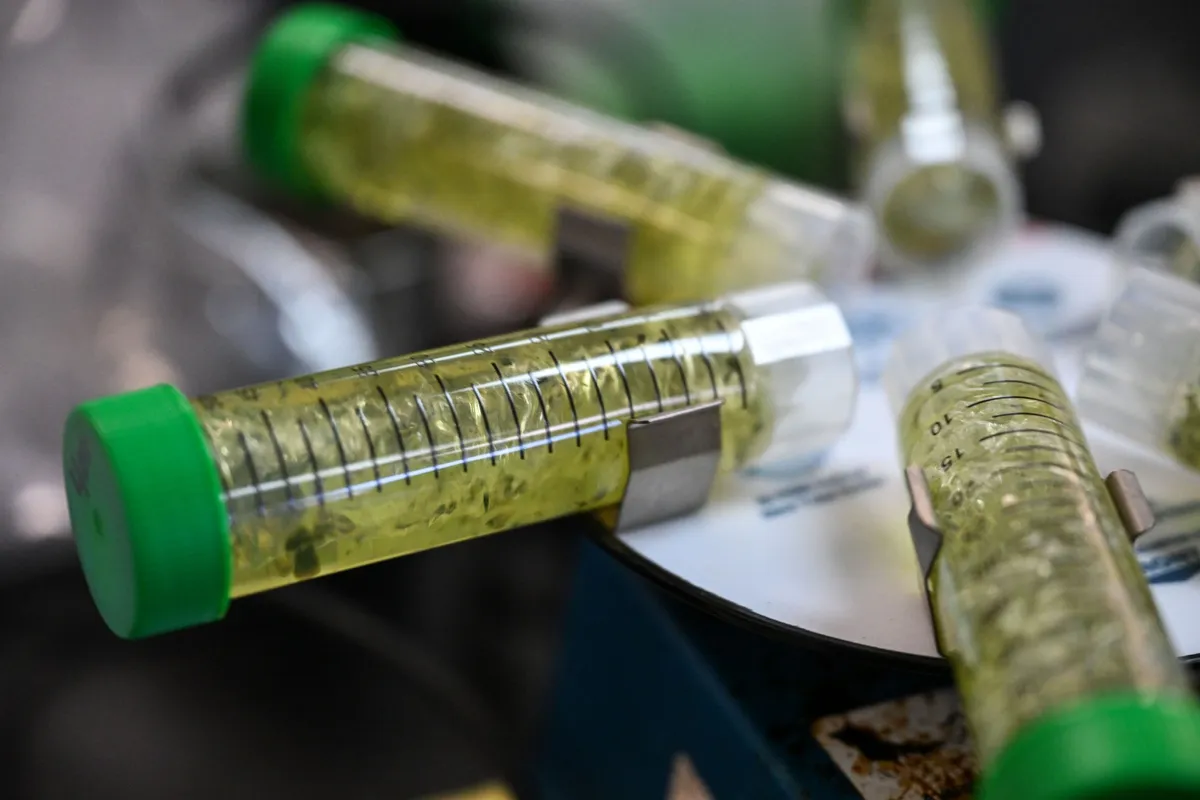
Colorado regulators announced on Monday that they plan to crack down on companies that illegally sell cheaper and potentially hazardous hemp products as marijuana. The state’s Marijuana Enforcement Division said it had detected “regulatory compliance issues” that threaten to unravel the marijuana industry in the nation’s first legal retail market. These issues “present serious risks to public safety, market integrity and the tax revenue framework that supports Colorado’s regulated cannabis industry,” the agency stated in an industry bulletin. A Denver Gazette and ProPublica investigation in January reported that, despite Colorado being one of the first states to ban the sale of intoxicating hemp products, the legislature and regulators failed to adopt many regulations that other states have employed to keep hemp products off marijuana dispensary shelves. Creating the liquid distillate for vapes and edibles from hemp is much cheaper than using marijuana, giving companies a competitive advantage. But regulators say they’re worried because manufacturers rely on toxic and potentially hazardous chemicals to convert the nonintoxicating compound CBD that is prevalent in hemp into THC, the psychoactive compound that makes people feel high. Regulators have banned such chemical synthesis because they say they fear chemical residues could remain in finished products, imperiling consumers. Colorado manufacturers have exploited gaps in the state’s testing and enforcement system to continue using hemp to make products marketed as marijuana, even though doing so is against state law, according to regulatory investigations, previous agency bulletins and testimony and lab results contained in several lawsuits. In 2024, state investigators found that one popular brand of marijuana vapes sold in dispensaries was not only derived from hemp, but also contaminated with methylene chloride, a chemical often used to convert CBD from hemp into THC. It is prohibited by Colorado’s marijuana regulators and banned for most uses by the U.S. Environmental Protection Agency because it can cause liver and lung cancer and damage the nervous, immune and reproductive systems. Ware Hause, the company that manufactured those vapes, surrendered its marijuana license in response to the investigation. Ware Hause’s owner, Thanh Hau, and the company’s lawyer have declined to comment. Congress passed a law last November banning nearly all intoxicating hemp products throughout the country starting this fall, but it’s unclear how the government will implement that ban, and hemp manufacturers are pushing to overturn it. In December, President Donald Trump issued an executive order telling his aides to work with Congress on developing regulations that could allow some hemp products. Colorado’s Marijuana Enforcement Division announced in the Monday bulletin that agency officials had “identified and investigated evidence” indicating marijuana businesses are using illicit practices and banned methods to manufacture products instead of relying on marijuana, which is supposed to be tracked for safety. The Colorado Hemp Association and the Colorado Hemp Education Association did not immediately respond to requests for comment. Beyond the safety issues, the bulletin also noted that some marijuana manufacturers and cultivators are avoiding marijuana tax obligations through “a pattern of noncompliance” in the sales transactions they report to the state’s “seed-to-sale” tracking system, which follows marijuana from initial planting to the sale of pot, vapes and other products in dispensaries. Companies are misreporting their bulk marijuana sales at nominal prices, in some cases as low as $1 a pound for unprocessed marijuana material, the bulletin stated. Those products typically fetch as much as $600 a pound on the open market, depending on the category of marijuana, according to industry insiders. Such fraudulent reporting has robbed the state and local governments of millions of dollars in marijuana tax revenue, industry insiders say, though there’s no official estimate. The agency said it would pursue emergency rules to address such problems. Suspicious and anomalous transactions and inventories the state detects will prompt investigations, the bulletin stressed. Companies caught using hemp or other illicit material they pass off as marijuana face “immediate product embargo, license suspension or revocation, significant monetary penalties and referral to law enforcement,” the regulators warned. The Denver Gazette and ProPublica have attempted to track anomalous transactions, but the Marijuana Enforcement Division has maintained that the sales transaction records, even those that don’t identify companies, are not public. Marijuana industry representatives met with division regulators late last month to press for a more aggressive response to hemp substitution from the agency, even though it could affect some companies in the industry. The representatives argued that bad actors are unfairly driving down prices and shifting the tax burden to manufacturers and cultivators who are trying to follow the rules. The bulletin was released a couple of weeks after that meeting. “The division is also exploring additional modifications to its testing and screening protocols to detect” illicit products and banned methods, and it may require additional lab testing “of products throughout the supply chain as needed,” the agency’s bulletin stated. We will continue to share our areas of interest as the news develops. I cover health and the environment and the agencies that govern them, including the Environmental Protection Agency. Contact me I cover justice and the rule of law, including the Justice Department, U.S. attorneys and the courts. Contact me I report on immigration and labor, and I am based in Chicago. Contact me I cover housing and transportation, including the companies working in those fields and the regulators overseeing them. Contact me to stay in touch. Slide 2 Slide 3 Slide 4 Slide 5 Slide 6
SRCProPublica
LANGEN
LEANCenter-Left
WORDS900
ENT8
TUE · 2026-04-14 · 19:00 GMTBRIEF NSR-2026-0414-68094
NSR-2026-0414-68094News Report·EN·Public Health
Colorado Marijuana Regulators Pledge Crackdown on Intoxicating Hemp
Colorado marijuana regulators announced a crackdown on companies illegally selling intoxicating hemp products as marijuana. The Marijuana Enforcement Division cited concerns about public safety, market integrity, and tax revenue due to regulatory compliance issues.
Christopher OsherProPublicaFiled 2026-04-14 · 19:00 GMTLean · Center-LeftRead · 4 min
ProPublicaFIG 01
Reading time
4min
Word count
900words
Sources cited
3cited
Entities identified
8entities
Quality score
100%
§ 01
Briefing Summary
AI-generatedNEWSAR · AI
Colorado marijuana regulators announced a crackdown on companies illegally selling intoxicating hemp products as marijuana. The Marijuana Enforcement Division cited concerns about public safety, market integrity, and tax revenue due to regulatory compliance issues. Manufacturers are exploiting loopholes by using cheaper hemp-derived THC, which involves potentially hazardous chemicals, to create vapes and edibles. A recent investigation revealed some products contained harmful chemicals like methylene chloride, leading to at least one company surrendering its license. The crackdown aims to address these violations and ensure consumer safety within Colorado's regulated cannabis industry, especially given a recent federal ban on intoxicating hemp products.
Confidence 0.90Sources 3Claims 5Entities 8
§ 02
Article analysis
Model · rule-basedFraming
Public Health
Economic Impact
Tone
Mixed Tone
AI-assessed
CalmNeutralAlarmist
Factuality
0.80 / 1.00
Factual
LowHigh
Sources cited
3
Well sourced
FewMany
§ 03
Key claims
5 extracted01
Ware Hause surrendered its marijuana license in response to the investigation.
factual
Confidence
1.00
02
Methylene chloride can cause liver and lung cancer and damage the nervous, immune and reproductive systems.
factualU.S. Environmental Protection Agency
Confidence
1.00
03
One popular brand of marijuana vapes sold in dispensaries was derived from hemp and contaminated with methylene chloride.
factualstate investigators
Confidence
1.00
04
Colorado regulators plan to crack down on companies illegally selling cheaper and potentially hazardous hemp products as marijuana.
factualColorado regulators
Confidence
1.00
05
Manufacturers rely on toxic and potentially hazardous chemicals to convert CBD into THC.
factualregulators
Confidence
0.90
§ 04
Full report
4 min read · 900 words§ 05
Entities
8 identifiedKey playerOppositionContextPositiveNeutralNegative
Organizations5
Locations1
Events1
§ 06
Keywords & salience
10 termsintoxicating hemp
0.90
marijuana regulation
0.80
chemical synthesis
0.70
regulatory compliance
0.70
methylene chloride
0.70
toxic chemicals
0.60
thc
0.60
public safety
0.60
vape contamination
0.60
cbd
0.50
§ 07
Topic connections
Interactive graph Network visualization showing 37 related topics
View Full Graph Person Organization Location Event|Click node to navigate|Edge numbers = shared articles