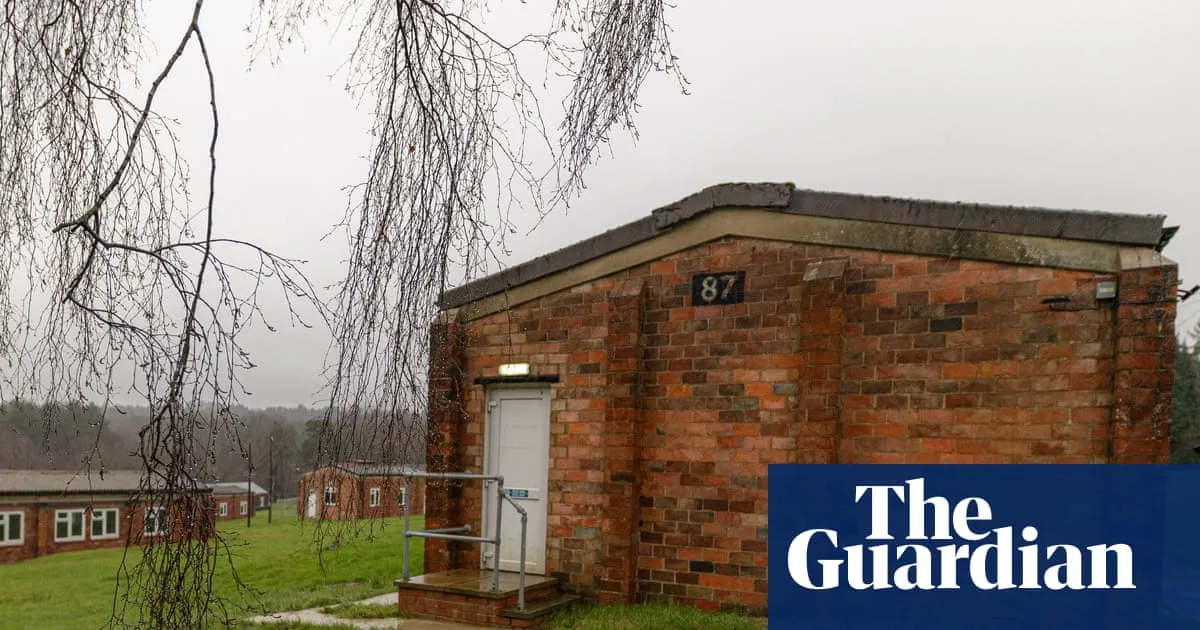
Hundreds of asylum seekers have been removed from government-funded hotels while others have been sent to live in army barracks, the Home Office has announced.Eleven “asylum hotels” in England, Scotland and Northern Ireland have been closed, as first reported by the Guardian, and more will close “in the coming weeks”. About 350 claimants have been moved to the Crowborough military camp in East Sussex, described by a spokesperson as “basic accommodation”.The moves follow Keir Starmer’s pledge to close all hotels housing asylum seekers before the next general election. It comes weeks before Labour faces a potential wipeout in England’s local elections.Reform UK has continued to campaign for the closure of all 200 asylum hotels, which house approximately 30,000 people. Other asylum seekers – more than 70,000 people – live in other types of accommodation such as shared housing or military barracks.The number of hotels still used to house asylum seekers is 185, down from a peak of 400. Asylum seekers have little choice but to live in government-funded accommodation because they are forbidden from working for the first year they spend in the UK while their claims are being processed. The Home Office is obliged to house them.An anti-immigrant march took place in Crowborough, East Sussex in January this year. Photograph: Andrew Hasson/Andrew Hasson/The GuardianIn a statement, the Home Office said it was no longer housing asylum seekers in the Banbury House hotel in Oxfordshire, a three-storey Georgian building which had been the focus of some protests. The Marine Court hotel in Bangor, County Down, was in February closed to asylum seekers after four years of hosting them, the local authority said.The Citrus hotel in Cheltenham, Gloucestershire, had been the focus of a campaign by local activists before it was emptied of asylum seekers some weeks ago. Other closed hotels include the Holiday Inn near Heathrow; the Britannia hotel in Wolverhampton; the Madeley Court hotel, near Telford, which was closed to asylum seekers earlier this week; the OYO Lakeside, in St Helens, Merseyside, which was vandalised in December; the Crewe Arms hotel in Crewe; the Sure hotel in Aberdeen; and the Rock hotel and the Wool Merchant hotel, both of which are in Halifax.Alex Norris, the immigration minister, said: “Hotels were meant to be a short-term stopgap under the previous government, but they spiralled out of control – costing taxpayers billions and dumping the consequences on local communities.“We are shutting them down by moving people into more basic accommodation, scaling up large sites, removing record numbers of people with no right to remain.”Under the last government, asylum decision-making ground to a halt and hotel use spiralled to nearly 400 sites. According to the Home Office, the latest hotel closures will save £65m.Protests outside the hotels across England have became tense over the last two summers. Some protests turned violent, such as in Rotherham in August 2024 when protesters tried to set fire to a hotel with asylum seekers inside.Anti-immigration protesters clash with police officers in Rotherham in 2024. Photograph: Hollie Adams/ReutersRefugee NGOs say hotels are unsuitable for long-term accommodation. A parliamentary investigation found the government had squandered billions on a “failed, chaotic and expensive system”.Imran Hussain, the director of external affairs at Refugee Council, said large military sites are not a suitable alternative to hotels. “The government’s own spending watchdog previously found that they are more expensive than hotels, and they isolate people from local communities and essential services,” he said.“There is a better way to end the use of hotels,” Hussain added. “By giving permission to stay for a limited period – subject to rigorous security checks – to people from countries like Sudan and Iran, the government could empty hotels within a few months.”Chris Philp, the shadow home secretary, said there were more asylum seekers in hotels than at the time of the election. “That’s despite the government shunting people from hotels into residential apartments to hide what is going on,” said Philp. “Those apartments are then not available for young people struggling to get on the housing ladder.”
SRCThe Guardian - World News
LANGEN
LEANCenter-Left
WORDS671
ENT10
TUE · 2026-04-14 · 18:51 GMTBRIEF NSR-2026-0414-68098
NSR-2026-0414-68098News Report·EN·Political Strategy
Hundreds of asylum seekers moved from hotels to army barracks, Home Office announces
The Home Office has announced the closure of eleven asylum hotels across England, Scotland, and Northern Ireland, relocating approximately 350 asylum seekers to the Crowborough military camp in East Sussex. This move is part of a broader effort to reduce the reliance on hotels, which currently house around 30,000 asylum seekers, down from a peak of 400 hotels.
Rajeev Syal Home affairs editorThe Guardian - World NewsFiled 2026-04-14 · 18:51 GMTLean · Center-LeftRead · 3 min
The Guardian - World NewsFIG 01
Reading time
3min
Word count
671words
Sources cited
2cited
Entities identified
10entities
Quality score
100%
§ 01
Briefing Summary
AI-generatedNEWSAR · AI
The Home Office has announced the closure of eleven asylum hotels across England, Scotland, and Northern Ireland, relocating approximately 350 asylum seekers to the Crowborough military camp in East Sussex. This move is part of a broader effort to reduce the reliance on hotels, which currently house around 30,000 asylum seekers, down from a peak of 400 hotels. The closures come amid political pressure, including pledges from Labour to end the use of asylum hotels and campaigns from Reform UK to close all 200 such facilities. Asylum seekers are often reliant on government-funded accommodation due to restrictions on working during the initial claim processing period. The Home Office stated that the closures will save taxpayer money and alleviate pressure on local communities.
Confidence 0.90Sources 2Claims 5Entities 10
§ 02
Article analysis
Model · rule-basedFraming
Political Strategy
Economic Impact
Tone
Measured
AI-assessed
CalmNeutralAlarmist
Factuality
0.80 / 1.00
Factual
LowHigh
Sources cited
2
Limited
FewMany
§ 03
Key claims
5 extracted01
The number of hotels still used to house asylum seekers is 185, down from a peak of 400.
statistic
Confidence
1.00
02
Eleven “asylum hotels” in England, Scotland and Northern Ireland have been closed.
factualThe Guardian
Confidence
1.00
03
Hundreds of asylum seekers have been moved from hotels to army barracks.
factualHome Office
Confidence
1.00
04
The latest hotel closures will save £65m.
statisticHome Office
Confidence
0.90
05
About 350 claimants have been moved to the Crowborough military camp in east Sussex.
factualunnamed spokesperson
Confidence
0.90
§ 04
Full report
3 min read · 671 words§ 05
Entities
10 identifiedKey playerOppositionContextPositiveNeutralNegative
§ 06
Keywords & salience
8 termsasylum seekers
1.00
asylum hotels
0.90
army barracks
0.70
home office
0.70
government-funded accommodation
0.60
immigration
0.50
local elections
0.40
anti-immigrant march
0.40
§ 07
Topic connections
Interactive graph Network visualization showing 51 related topics
View Full Graph Person Organization Location Event|Click node to navigate|Edge numbers = shared articles