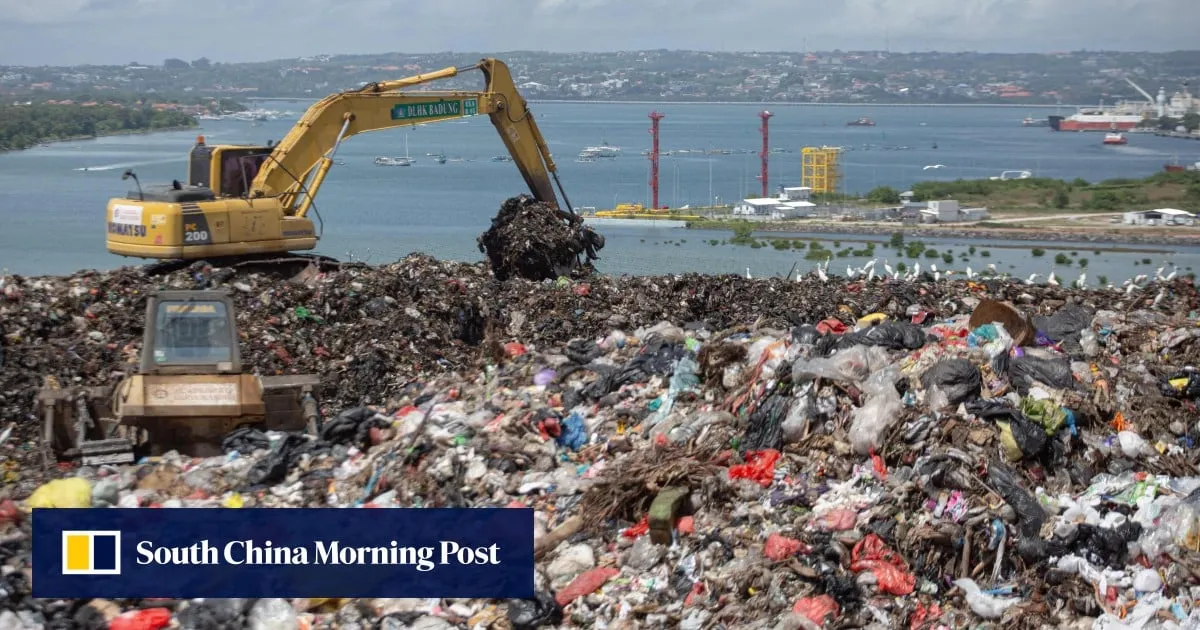
The partial closure of a major landfill site on the Indonesian holiday island of Bali is forcing thousands of residents to instead burn trash in their gardens, sparking widespread environmental and health concerns.Suwung landfill, about 10km (six miles) northeast of Denpasar International Airport, used to handle some 1,000 tonnes (1,100 tons) of rubbish a day.As the site nears capacity, authorities said it would stop taking organic waste as of April 1 in an attempt to direct that matter instead to places where it can be composted or dealt with in a more appropriate way.Organic waste such as household scraps, spoiled produce and leftover food from the island’s hundreds of hotels and beach clubs was one of Suwung’s biggest challenges.A pile of waste materials is seen at Bali’s Kuta Beach during the Eid al-Fitr holidays on March 25. Photo: EPAOnce in landfill, it produces methane, a greenhouse gas that contributes to global warming. Organic waste accounts for about two-thirds of all waste produced in Bali.But with few other disposal options, people have started burning the rubbish, or dumping more of it in rivers or along the roadside.
SRCSouth China Morning Post
LANGEN
LEANCenter-Right
WORDS186
ENT6
THU · 2026-04-16 · 02:48 GMTBRIEF NSR-2026-0416-69875
NSR-2026-0416-69875News Report·EN·Environmental
Residents on Indonesia’s Bali resort to burning trash after landfill ban on organic waste
Due to the partial closure of Bali's Suwung landfill on April 1st, residents are resorting to burning trash in their gardens, causing environmental and health concerns. The landfill, which previously processed 1,000 tonnes of waste daily, stopped accepting organic waste in an effort to promote composting.
BloombergSouth China Morning PostFiled 2026-04-16 · 02:48 GMTLean · Center-RightRead · 1 min
South China Morning PostFIG 01
Reading time
1min
Word count
186words
Sources cited
0cited
Entities identified
6entities
Quality score
100%
§ 01
Briefing Summary
AI-generatedNEWSAR · AI
Due to the partial closure of Bali's Suwung landfill on April 1st, residents are resorting to burning trash in their gardens, causing environmental and health concerns. The landfill, which previously processed 1,000 tonnes of waste daily, stopped accepting organic waste in an effort to promote composting. Organic waste, accounting for two-thirds of Bali's total waste, posed a significant challenge at the landfill, producing methane. With limited alternative disposal methods available, the ban has led to increased trash burning, as well as illegal dumping in rivers and roadsides. The situation raises concerns about air pollution and overall environmental degradation on the Indonesian island.
Confidence 0.90Claims 5Entities 6
§ 02
Article analysis
Model · rule-basedFraming
Environmental
Public Health
Tone
Measured
AI-assessed
CalmNeutralAlarmist
Factuality
0.80 / 1.00
Factual
LowHigh
Sources cited
0
No named sources
FewMany
§ 03
Key claims
5 extracted01
People have started burning rubbish, or dumping more of it in rivers or along the roadside.
factualnull
Confidence
1.00
02
Organic waste accounts for about two-thirds of all waste produced in Bali.
statisticnull
Confidence
1.00
03
Authorities said Suwung landfill would stop taking organic waste as of April 1.
factualnull
Confidence
1.00
04
Suwung landfill used to handle some 1,000 tonnes of rubbish a day.
statisticnull
Confidence
1.00
05
Partial closure of Suwung landfill is forcing residents to burn trash in their gardens.
factualnull
Confidence
1.00
§ 04
Full report
1 min read · 186 words§ 05
Entities
6 identifiedKey playerOppositionContextPositiveNeutralNegative
Locations5
§ 06
Keywords & salience
10 termswaste management
0.90
bali
0.90
organic waste
0.80
landfill
0.80
suwung landfill
0.70
burning trash
0.70
environmental concerns
0.60
methane
0.50
greenhouse gas
0.50
composting
0.40
§ 07
Topic connections
Interactive graph Network visualization showing 16 related topics
View Full Graph Person Organization Location Event|Click node to navigate|Edge numbers = shared articles