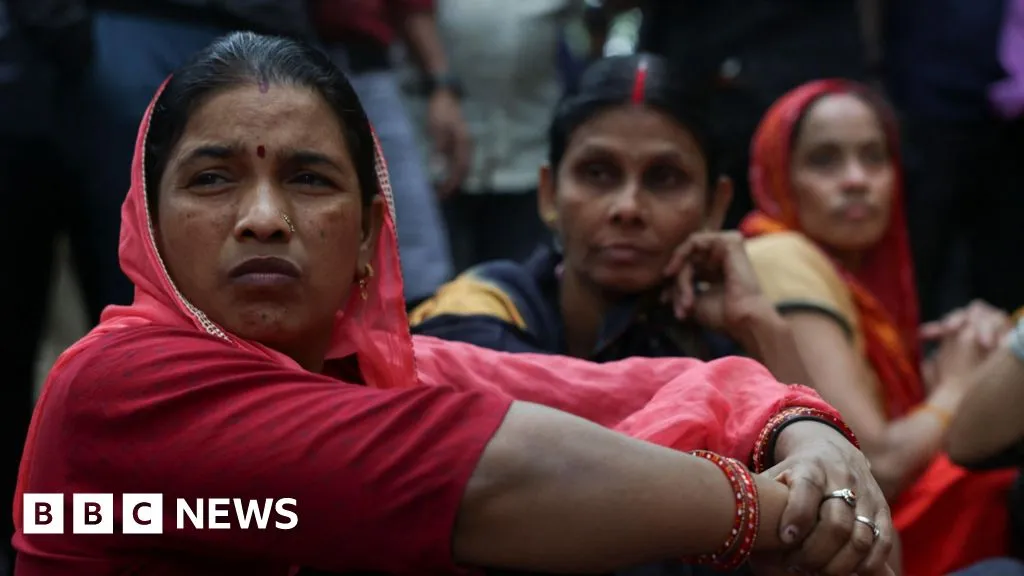
Earlier this week, rare scenes unfolded in Noida, a satellite city of India's capital Delhi, as thousands of factory workers blocked roads, demanding higher wages and better working conditions.Most were non-unionised contract workers employed in small factories across industrial clusters, producing auto parts, electronics and garments, among other things. They earn between 10,000 rupees ($107; £79) and 15,000 rupees a month - wages that have remained largely unchanged for years. Many are migrant workers, living hand-to-mouth in cramped housing on the city's outskirts.What began about a week ago as small, mostly peaceful protests across northern India has since escalated, turning violent in some areas. In Noida, police used tear gas to disperse crowds at several locations and arrested more than 300 people.The unrest has been driven in part by stark pay disparities between states, highlighted by neighbouring Haryana's recent 35% increase in minimum wages following similar demonstrations.As protests intensified, the government of Uttar Pradesh - where Noida is located - also announced a temporary wage increase in two districts and promised further measures. But many workers say the rise falls short, reflecting a broader struggle over fair pay that continues to fuel the protests.Factory worker Soni Singh says his payslip does not reflect the hours he puts in. He typically works 12 to 14 hours a day, but is paid overtime for only three hours beyond his eight-hour shift, he told news agency PTI. His monthly income is about 13,000 rupees.Experts say the issue is not just low pay, but how inconsistently labour rules are enforced.
SRCBBC News - World
LANGEN
LEANCenter
WORDS256
ENT7
THU · 2026-04-16 · 22:25 GMTBRIEF NSR-2026-0417-70268
NSR-2026-0417-70268News Report·EN·Economic Impact
'How does one survive?': Factory protests expose strain in India's industrial system
Thousands of factory workers in Noida, India, recently protested for higher wages and improved working conditions, blocking roads and leading to clashes with police. The protests, which began peacefully, escalated due to stagnant wages (between 10,000-15,000 rupees monthly) and pay disparities with neighboring states like Haryana, which recently increased minimum wages.
BBC News - WorldFiled 2026-04-16 · 22:25 GMTLean · CenterRead · 2 min
BBC News - WorldFIG 01
Reading time
2min
Word count
256words
Sources cited
1cited
Entities identified
7entities
Quality score
100%
§ 01
Briefing Summary
AI-generatedNEWSAR · AI
Thousands of factory workers in Noida, India, recently protested for higher wages and improved working conditions, blocking roads and leading to clashes with police. The protests, which began peacefully, escalated due to stagnant wages (between 10,000-15,000 rupees monthly) and pay disparities with neighboring states like Haryana, which recently increased minimum wages. The majority of the protestors are non-unionized contract workers in industries like auto parts, electronics, and garments. The Uttar Pradesh government announced a temporary wage increase in response, but workers claim it is insufficient. Experts point to inconsistent enforcement of labor rules as a contributing factor to the unrest, highlighting the struggle for fair pay and better working conditions within India's industrial system.
Confidence 0.90Sources 1Claims 5Entities 7
§ 02
Article analysis
Model · rule-basedFraming
Economic Impact
Social Justice
Tone
Measured
AI-assessed
CalmNeutralAlarmist
Factuality
0.70 / 1.00
Factual
LowHigh
Sources cited
1
Limited
FewMany
§ 03
Key claims
5 extracted01
Factory worker Soni Singh says he typically works 12 to 14 hours a day, but is paid overtime for only three hours beyond his eight-hour shift.
quoteSoni Singh
Confidence
1.00
02
Haryana recently increased minimum wages by 35% following similar demonstrations.
factual
Confidence
1.00
03
Police used tear gas to disperse crowds in Noida and arrested more than 300 people.
factual
Confidence
1.00
04
Most workers earn between 10,000 and 15,000 rupees a month, wages that have remained largely unchanged for years.
factual
Confidence
1.00
05
Thousands of factory workers blocked roads in Noida demanding higher wages and better working conditions.
factual
Confidence
1.00
§ 04
Full report
2 min read · 256 words§ 05
Entities
7 identifiedKey playerOppositionContextPositiveNeutralNegative
Organizations1
§ 06
Keywords & salience
8 termsfactory protests
0.90
wage increase
0.80
working conditions
0.70
low pay
0.70
contract workers
0.60
industrial system
0.50
labor rules
0.50
minimum wages
0.40
§ 07
Topic connections
Interactive graph No topic relationship data available yet. This graph will appear once topic relationships have been computed.