The Indian government has failed to pass a bill to increase female representation in parliament after being accused of using the plan as a guise to redraw the country’s electoral map.It was the first time in 12 years in power that a constitutional amendment proposed by Narendra Modi’s Bharatiya Janata party (BJP) government was not passed by parliament.The failure followed a fierce debate, with the government accused of an “attack on democracy” after it tethered a bill reserving one-third of parliamentary seats for women to a wider, controversial exercise of “delimitation”. The process would redraw parliamentary constituencies along population lines based on the 2011 census, and would increase the number of MPs in the lower chamber from 543 to about 850.As a constitutional measure, the bill required a two-thirds majority, making it more challenging for the BJP and its National Democratic Alliance, which does not have an outright majority, to pass it. In the final tally, 298 MPs voted in favour and 230 against.India’s often fragmented opposition parties showed rare unity in fighting the bill. The Indian National Congress member Priyanka Gandhi Vadra called it an “open attack” on democracy, while another senior figure, Gaurav Gogoi, accused the Modi government of trying to “bulldoze” delimitation through the backdoor.Delimitation is one of the most divisive federal issues in India. It is particularly contentious in more prosperous southern states such as Tamil Nadu and Kerala, which have reduced population growth in recent years and fear their political representation would be penalised.Meanwhile, poorer, more populous northern states – considered the BJP’s political heartland – stand to gain the most seats if redrawn.The last time that India’s electoral map was redrawn was in 1971 and southern states want those boundaries frozen for another 25 years.MPs from Dravida Munnetra Kazhagam (DMK), which governs Tamil Nadu, arrived in parliament on Friday dressed in black in protest. The previous day, Tamil Nadu’s chief minister, MK Stalin, described the bill as a “punishment” for southern states and burned a copy outside parliament.Opposition MPs questioned why women’s representation had been linked to a much larger political exercise. Rahul Gandhi, a senior figure in the opposition Indian National Congress party, said: “The first truth is that this is not a women’s bill. This has nothing to do with the empowerment of women. This is an attempt to change the electoral map of India.”A bill reserving one-third of the seats for women was passed unanimously by parliament back in 2023, but its implementation has been delayed until at least 2029 due to certain electoral processes. The BJP said the new bill would speed up the implementation of female parliamentary quotas.Modi said: “Let all of us not miss this important opportunity to give reservation to women. I have come to appeal to you – do not see this from a political lens, this is in national interest.”In parliament, the home affairs minister, Amit Shah, said delimitation was needed to reflect population growth in a country of more than 1.4 billion people. “Every voter should have an equal value for their right, and post this expansion, we believe, they will,” he said on Friday.In response, the opposition MP Shashi Tharoor said that linking women’s reservations to delimitation “effectively holds the aspirations of Indian women hostage to one of the most contentious political exercises in our history”.“We risk creating a tyranny of the demographic majority where a handful of large, poor states could theoretically determine the fate of the entire country,” he added.
SRCThe Guardian - World News
LANGEN
LEANCenter-Left
WORDS579
ENT12
FRI · 2026-04-17 · 17:28 GMTBRIEF NSR-2026-0417-70384
NSR-2026-0417-70384News Report·EN·Political Strategy
India fails to pass bill to boost women’s representation after delimitation row
India's government failed to pass a bill aimed at increasing female representation in parliament due to a dispute over its connection to a controversial "delimitation" process. The bill, requiring a two-thirds majority, sought to reserve one-third of parliamentary seats for women, but was tied to redrawing electoral constituencies based on the 2011 census, potentially increasing the number of MPs.
Hannah Ellis-Petersen in DelhiThe Guardian - World NewsFiled 2026-04-17 · 17:28 GMTLean · Center-LeftRead · 3 min
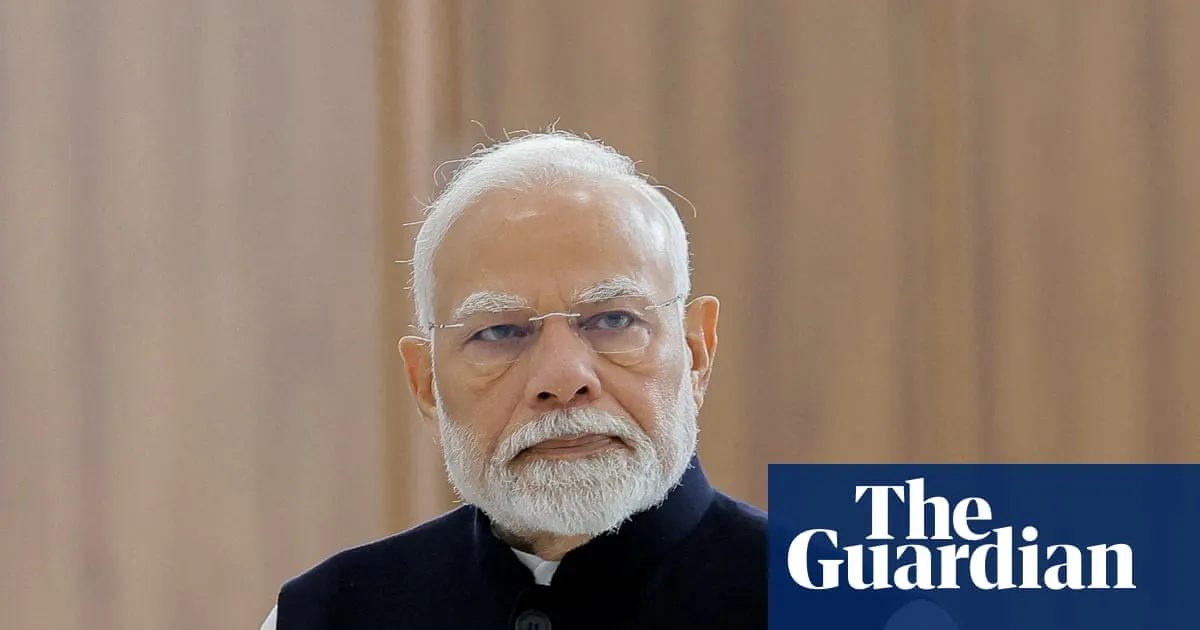
The Guardian - World NewsFIG 01
Reading time
3min
Word count
579words
Sources cited
9cited
Entities identified
12entities
Quality score
100%
§ 01
Briefing Summary
AI-generatedNEWSAR · AI
India's government failed to pass a bill aimed at increasing female representation in parliament due to a dispute over its connection to a controversial "delimitation" process. The bill, requiring a two-thirds majority, sought to reserve one-third of parliamentary seats for women, but was tied to redrawing electoral constituencies based on the 2011 census, potentially increasing the number of MPs. Opposition parties united against the bill, accusing the government of using it to push through delimitation, which is a divisive issue. Southern states, fearing a reduction in political representation due to lower population growth, strongly opposed the redrawing of boundaries. The bill's failure marks the first time in 12 years that a constitutional amendment proposed by the ruling BJP government was not passed.
Confidence 0.90Sources 9Claims 5Entities 12
§ 02
Article analysis
Model · rule-basedFraming
Political Strategy
Conflict
Tone
Measured
AI-assessed
CalmNeutralAlarmist
Factuality
0.70 / 1.00
Factual
LowHigh
Sources cited
9
Well sourced
FewMany
§ 03
Key claims
5 extracted01
A bill reserving one-third of the seats for women was passed unanimously by parliament back in 2023, but its implementation has been delayed.
factual
Confidence
1.00
02
Priyanka Gandhi Vadra called it an “open attack” on democracy.
quotePriyanka Gandhi Vadra
Confidence
1.00
03
The process would redraw parliamentary constituencies along population lines based on the 2011 census, and would increase the number of MPs in the lower chamber from 543 to about 850.
factual
Confidence
1.00
04
The bill was tethered to a wider exercise of delimitation, redrawing parliamentary constituencies based on the 2011 census.
factual
Confidence
1.00
05
The Indian government failed to pass a bill to increase female representation in parliament.
factual
Confidence
1.00
§ 04
Full report
3 min read · 579 words§ 05
Entities
12 identifiedKey playerOppositionContextPositiveNeutralNegative
People5
Organizations4
§ 06
Keywords & salience
8 termswomen's representation
1.00
delimitation
0.90
parliamentary seats
0.70
constitutional amendment
0.60
electoral map
0.60
political representation
0.50
population growth
0.40
indian politics
0.40
§ 07
Topic connections
Interactive graph Network visualization showing 51 related topics
View Full Graph Person Organization Location Event|Click node to navigate|Edge numbers = shared articles