NEWSAR
Multi-perspective news intelligence
SRCAssociated Press (AP)
LANGEN
LEANCenter
WORDS1 816
ENT11
SAT · 2026-04-18 · 07:23 GMTBRIEF NSR-2026-0418-70469
News/Ukraine works with Interpol to find thou/Russia has looted thousands of Ukrainian cultural objects in…
NSR-2026-0418-70469News Report·EN·Conflict

Russia has looted thousands of Ukrainian cultural objects in the war. Finding them is a challenge

Since the start of the war in early 2022, Russia has looted thousands of Ukrainian cultural objects, including artwork from museums. The Kherson Art Museum director discovered nearly 10,000 pieces missing after Russian forces retreated in late 2022, with much of the collection transported to Russian-annexed Crimea.

Associated Press (AP)Filed 2026-04-18 · 07:23 GMTLean · CenterRead · 8 min
Russia has looted thousands of Ukrainian cultural objects in the war. Finding them is a challenge
Associated Press (AP)FIG 01
Reading time
8min
Word count
1 816words
Sources cited
1cited
Entities identified
11entities
Quality score
100%
§ 01

Briefing Summary

AI-generated
NEWSAR · AI

Since the start of the war in early 2022, Russia has looted thousands of Ukrainian cultural objects, including artwork from museums. The Kherson Art Museum director discovered nearly 10,000 pieces missing after Russian forces retreated in late 2022, with much of the collection transported to Russian-annexed Crimea. Ukraine is now raising concerns about the looting as Russia seeks to participate in the upcoming Venice Biennale, fearing it will whitewash war crimes against Ukrainian cultural heritage. The Kherson case is unique because the museum director had created a digital archive of the collection before the war, aiding in the effort to trace and recover the stolen items. However, the lack of such documentation in other parts of Ukraine makes it difficult to pursue legal action for cultural losses.

Confidence 0.90Sources 1Claims 5Entities 11
§ 02

Article analysis

Model · rule-based
Framing
Conflict
Human Rights
Tone
Measured
AI-assessed
CalmNeutralAlarmist
Factuality
0.80 / 1.00
Factual
LowHigh
Sources cited
1
Limited
FewMany
§ 03

Key claims

5 extracted
01

Alina Dotsenko created a digital archive of the museum's holdings before the Russian occupation.

factualArticle's own claim
Confidence
0.90
02

Ukraine says the Venice Biennale must not become a stage for whitewashing war crimes.

quoteUkraine
Confidence
0.90
03

The Kherson Art Museum held more than 14,000 works before Russia’s full-scale invasion.

factualArticle's own claim
Confidence
0.90
04

Thousands of artworks vanished from the Kherson Art Museum after Russian forces occupied the city.

factualArticle's own claim
Confidence
0.90
05

Nearly 10,000 pieces from the Kherson Art Museum are of unknown fate.

factualArticle's own claim
Confidence
0.80
§ 04

Full report

8 min read · 1 816 words
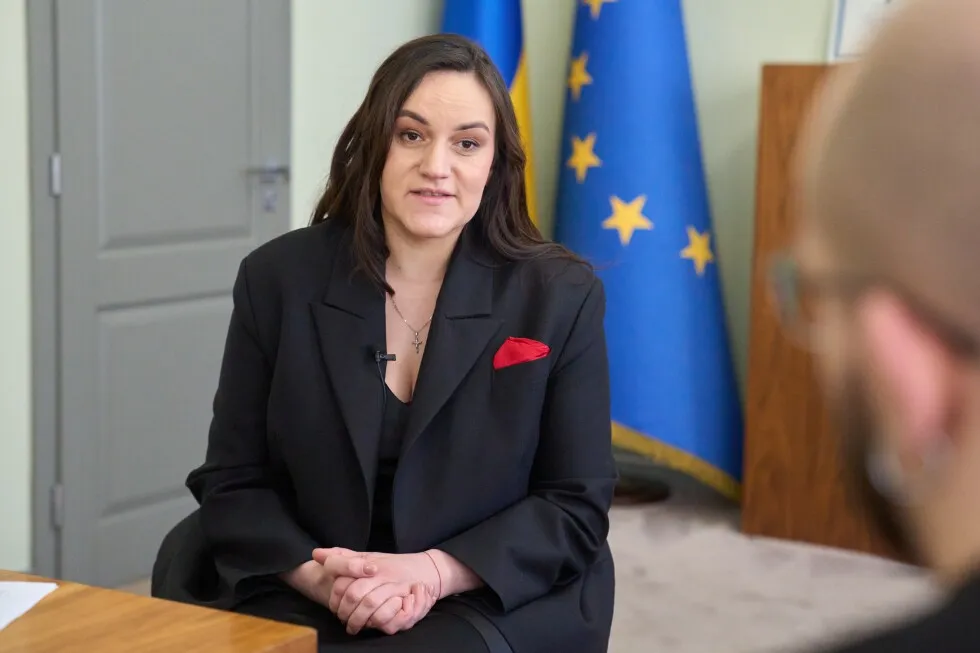
Ukraine's Culture Minister Tetiana Berezhna speaks during an interview with the Associated Press in Kyiv, Ukraine, on Feb. 20, 2026. (AP Photo/Efrem Lukatsky) 2026-04-18T06:27:48Z Kyiv, Ukraine (AP) — When Alina Dotsenko returned to her museum after Ukrainian forces retook the southern city of Kherson from Russian forces in late 2022, she found thousands of artworks had vanished. “I walked in and saw empty storage rooms, empty shelves. My legs gave way, and I just sat down by the wall, like a child,” the Kherson-art-museum" class="entity-link entity-organization" data-entity-id="117841" data-entity-type="organization">Kherson Art Museum director said. Before Russia’s full-scale invasion in early 2022, the museum held more than 14,000 works in a collection “ranging from America to Japan.” As the Russians retreated, they loaded much of it onto trucks and took it to Russian-annexed Crimea, according to Dotsenko and video filmed by residents. The fate of nearly 10,000 pieces remains unknown. Ukraine is again raising its voice over the looting as Russia seeks to return to the world’s cultural stage. Next month’s Venice Biennale plans to allow Russian representatives to take part for the first time since 2022. Ukraine has said the event “must not become a stage for whitewashing the war crimes that Russia commits daily against the Ukrainian people and our cultural heritage.” freestar.queue.push(function () { window.fsAdCount = window.fsAdCount + 1 || 0; let customChannel = '/dynamic_' + fsAdCount; let adList = document.querySelectorAll(".fs-feed-ad") let thisAd = adList[fsAdCount]; let randId = Math.random().toString(36).slice(2); thisAd.id = randId; let thisPlacement = fsAdCount == 0 ? "apnews_story_feed" : "apnews_story_feed_dynamic"; freestar.newAdSlots({ placementName: thisPlacement, slotId: randId }, customChannel); }); A rare documented case of looting The Kherson case stands out because Ukraine knows exactly what was lost. Years before the war, Dotsenko began photographing every item in the museum’s holdings, creating a digital archive. When Russian forces occupied Kherson, she hid the hard drives containing it. After Ukrainian troops returned, she retrieved them. Today, that archive forms the most detailed record of looted cultural property during the war, allowing prosecutors to work with Interpol to trace missing works and pursue those responsible. Across much of Ukraine, however, such documentation does not exist. And cultural losses can only be pursued in court if they can be proved, item by item. /* Desktop-first: fully collapse by default */ #ap-readmore-embed { display: none; margin: 0; padding: 0; height: 0; min-height: 0; overflow: hidden; text-align: center; position: relative; z-index: 2; } /* Only show on mobile */ @media (max-width: 767px) { #ap-readmore-embed { display: block; margin: 28px 0; height: auto; overflow: visible; } } #ap-readmore-embed .ap-readmore-btn { appearance: none; -webkit-appearance: none; border: 0; background: #000; color: #fff; cursor: pointer; display: inline-flex; align-items: center; justify-content: center; gap: 10px; padding: 14px 22px; border-radius: 999px; font-family: inherit, "AP Sans", -apple-system, BlinkMacSystemFont, "Helvetica Neue", Arial, sans-serif; font-weight: 700; font-size: 16px; letter-spacing: 0.2px; line-height: 1; box-shadow: 0 10px 18px rgba(0,0,0,0.12); transition: transform 120ms ease, box-shadow 120ms ease, opacity 120ms ease; touch-action: manipulation; -webkit-tap-highlight-color: transparent; position: relative; z-index: 3; } #ap-readmore-embed .ap-readmore-btn:hover { transform: translateY(-1px); box-shadow: 0 14px 22px rgba(0,0,0,0.16); } #ap-readmore-embed .ap-readmore-btn:active { transform: translateY(0); box-shadow: 0 10px 18px rgba(0,0,0,0.12); opacity: 0.95; } #ap-readmore-embed .ap-readmore-btn:focus-visible { outline: 3px solid rgba(228, 0, 43, 0.35); outline-offset: 3px; } #ap-readmore-embed .ap-readmore-icon { width: 10px; height: 10px; border-right: 2px solid currentColor; border-bottom: 2px solid currentColor; transform: rotate(45deg); margin-top: -2px; } #ap-readmore-embed .ap-readmore-fade { display: none; height: 48px; margin-top: -48px; pointer-events: none; background: linear-gradient(to bottom, rgba(255,255,255,0), rgba(255,255,255,1)); } Read More (function () { var APRM_EMBED_ID = "ap-readmore-embed"; var APRM_MOBILE_MQ = "(max-width: 767px)"; function APRM_onReady(fn) { if (document.readyState === "loading") { document.addEventListener("DOMContentLoaded", fn); } else { fn(); } } APRM_onReady(function () { var APRM_embedEl = document.getElementById(APRM_EMBED_ID); if (!APRM_embedEl) return; // 🚨 DESKTOP: remove entire module wrapper and bail early if (!window.matchMedia(APRM_MOBILE_MQ).matches) { var APRM_rootModule = APRM_embedEl.closest(".HTMLModuleEnhancement") || APRM_embedEl.closest(".HtmlModule"); if (APRM_rootModule && APRM_rootModule.parentNode) { APRM_rootModule.parentNode.removeChild(APRM_rootModule); } else if (APRM_embedEl.parentNode) { APRM_embedEl.parentNode.removeChild(APRM_embedEl); } return; // stop the rest of the script from running } }); })(); (function () { var EMBED_ID = "ap-readmore-embed"; var BTN_ID = "apReadMoreBtn"; var FADE_ID = "apReadMoreFade"; var STOP_SELECTOR = ".Page-below"; var SIGN_IN_GATE_SELECTOR = ".sign-in-gate-content"; var HIDDEN_ATTR = "data-ap-readmore-hidden"; var MOBILE_MQ = "(max-width: 767px)"; function ready(fn) { if (document.readyState === "loading") { document.addEventListener("DOMContentLoaded", fn); } else { fn(); } } function isElementNode(n) { return n && n.nodeType === 1; } function cancelEvent(e) { if (!e) return; if (typeof e.preventDefault === "function") e.preventDefault(); if (typeof e.stopPropagation === "function") e.stopPropagation(); if (typeof e.stopImmediatePropagation === "function") e.stopImmediatePropagation(); e.cancelBubble = true; e.returnValue = false; } function collapseDesktopEmbed(embed) { if (!embed) return true; if (!window.matchMedia(MOBILE_MQ).matches) { var maybeWrappers = [ embed.parentElement, embed.closest(".html-embed"), embed.closest("[data-type='htmlembed']"), embed.closest("[class*='embed']"), embed.closest("[class*='Embed']") ].filter(Boolean); embed.style.display = "none"; embed.style.margin = "0"; embed.style.padding = "0"; embed.style.height = "0"; embed.style.minHeight = "0"; embed.style.overflow = "hidden"; maybeWrappers.forEach(function (el) { el.style.margin = "0"; el.style.padding = "0"; el.style.height = "0"; el.style.minHeight = "0"; el.style.overflow = "hidden"; }); if (embed.parentNode) { embed.parentNode.removeChild(embed); } return true; } return false; } ready(function () { var embed = document.getElementById(EMBED_ID); var btn = document.getElementById(BTN_ID); var fade = document.getElementById(FADE_ID); if (!embed || !btn) return; if (collapseDesktopEmbed(embed)) return; var signInGate = document.querySelector(SIGN_IN_GATE_SELECTOR); if (signInGate) { embed.innerHTML = ""; return; } // — Analytics: impression when embed enters viewport — if ("IntersectionObserver" in window) { var io = new IntersectionObserver(function (entries, observer) { if (entries[0].isIntersecting) { window.dataLayer = window.dataLayer || []; window.dataLayer.push({ event: "ap_readmore_impression" }); observer.disconnect(); } }, { threshold: 0 }); io.observe(btn); } var stopEl = document.querySelector(STOP_SELECTOR); if (!stopEl) return; var rootCandidates = [ embed.closest(".Page"), embed.closest("article"), embed.closest("main"), document.body ].filter(Boolean); var root = rootCandidates.find(function (c) { return c.contains(stopEl); }) || document.body; var all = root.getElementsByTagName("*"); var hidden = []; for (var i = 0; i The Russian Culture Ministry did not respond to an Associated Press request for comment on the alleged removal of items from Ukrainian museums. In the past, Russian-appointed officials in occupied territories described the removal as protective measures. Kirill Stremousov, the former Russia-installed deputy administrator in Kherson who died shortly before Ukrainian forces liberated the city, said removed statues would “definitely return” once fighting stopped. freestar.queue.push(function () { window.fsAdCount = window.fsAdCount + 1 || 0; let customChannel = '/dynamic_' + fsAdCount; let adList = document.querySelectorAll(".fs-feed-ad") let thisAd = adList[fsAdCount]; let randId = Math.random().toString(36).slice(2); thisAd.id = randId; let thisPlacement = fsAdCount == 0 ? "apnews_story_feed" : "apnews_story_feed_dynamic"; freestar.newAdSlots({ placementName: thisPlacement, slotId: randId }, customChannel); }); Carrying catalogs through checkpoints Halyna Chumak, former director of the Donetsk Regional Art Museum, fled Russian-controlled Donetsk in 2014, carrying what she could: catalogs documenting a fraction of the museum’s roughly 15,000 artworks. She spent a year transporting the catalogs through checkpoints into Ukrainian-controlled territory, leaving most behind as she tried not to draw attention from pro-Russian forces who searched her at each crossing. Those catalogs covering just over 1,000 items are the only surviving evidence. More than a decade later, Ukrainian entrepreneur Oleksandr Velychko is digitizing them. It took his team over three painstaking months to process about 400 works. Once completed, the database will be given to Ukrainian authorities, providing a partial legal basis to claim ownership of missing items. freestar.queue.push(function () { window.fsAdCount = window.fsAdCount + 1 || 0; let customChannel = '/dynamic_' + fsAdCount; let adList = document.querySelectorAll(".fs-feed-ad") let thisAd = adList[fsAdCount]; let randId = Math.random().toString(36).slice(2); thisAd.id = randId; let thisPlacement = fsAdCount == 0 ? "apnews_story_feed" : "apnews_story_feed_dynamic"; freestar.newAdSlots({ placementName: thisPlacement, slotId: randId }, customChannel); }); Prosecutors turn to open-source intelligence Officials say many cases across Ukraine resemble Donetsk more than Kherson. Anna Sosonska, deputy head of a war crimes unit at Ukraine’s Prosecutor General’s Office, said her department is handling 23 criminal proceedings involving cultural crimes, covering 174 episodes of looting, damage and destruction. The Kherson museum case is among the priorities, she said, largely because of Dotsenko’s digital archive. Sosonska said Russian forces often remove inventory books and other documentation from museums, making it harder to establish what was taken. Prosecutors sometimes rely on open-source intelligence, tracking artworks through photos, auction records and other online traces — a labor-intensive process that cannot reconstruct entire collections. It takes time, but Sosonska noted that cultural crimes fall under international law and have no statute of limitations. freestar.queue.push(function () { window.fsAdCount = window.fsAdCount + 1 || 0; let customChannel = '/dynamic_' + fsAdCount; let adList = document.querySelectorAll(".fs-feed-ad") let thisAd = adList[fsAdCount]; let randId = Math.random().toString(36).slice(2); thisAd.id = randId; let thisPlacement = fsAdCount == 0 ? "apnews_story_feed" : "apnews_story_feed_dynamic"; freestar.newAdSlots({ placementName: thisPlacement, slotId: randId }, customChannel); }); The scale of looting remains unknown Ukrainian officials say the scale of looting far exceeds what can be documented. According to Ukraine’s Culture Ministry, Russia as of March had destroyed or damaged 1,707 cultural heritage sites and 2,503 cultural infrastructure facilities including events spaces and galleries, notably the Mariupol Drama Theatre . The ministry said over 2.1 million museum objects remain in Russian-occupied territories. Of the territories Ukraine has retaken since 2022, over 35,000 museum items are confirmed to have been looted. Large parts of Ukraine have been under Russian occupation since 2014, and much original documentation has been lost, destroyed or removed. Russia has moved to formalize control over seized collections. In 2023, it amended legislation to incorporate 77 Ukrainian museums in the occupied Donetsk, Luhansk, Kherson and Zaporizhzhia regions into its national catalog, a step critics say effectively prohibits the return of looted works. freestar.queue.push(function () { window.fsAdCount = window.fsAdCount + 1 || 0; let customChannel = '/dynamic_' + fsAdCount; let adList = document.querySelectorAll(".fs-feed-ad") let thisAd = adList[fsAdCount]; let randId = Math.random().toString(36).slice(2); thisAd.id = randId; let thisPlacement = fsAdCount == 0 ? "apnews_story_feed" : "apnews_story_feed_dynamic"; freestar.newAdSlots({ placementName: thisPlacement, slotId: randId }, customChannel); }); Appointed as Ukraine’s culture minister in October 2025, Tetiana Berezhna said digitalization will be a key priority for her office to preserve collections. “If we had digitalized them beforehand, then we would know how many objects were stolen and what they look like,” she said. One case of accountability A recent case in Europe has drawn attention to the possibility of accountability. In March, a Polish court ruled that Oleksandr Butiahin, a Russian national, can be extradited to Ukraine over allegations he conducted illegal excavations in Crimea, removing artifacts from a site Ukraine considers its cultural heritage. Butiahin was detained in Poland last year at Ukraine’s request. The court’s decision remains subject to appeal. Sosonska described the case as the first time a Russian national could face prosecution for crimes against Ukraine’s cultural heritage linked to occupied territory. For museum workers like Dotsenko, the issue remains deeply personal. She spoke with The Associated Press at an exhibition in Kyiv featuring reproductions of the paintings taken from the Kherson museum. “While these works are still in captivity, we all hope the situation will be resolved in favor of the Kherson-art-museum" class="entity-link entity-organization" data-entity-id="117841" data-entity-type="organization">Kherson Art Museum. I didn’t dedicate 50 years of my life to this museum for nothing,” she said. ——— AP journalist Dmytro Zhyhinas contributed to this report ILLIA NOVIKOV Novikov is an Associated Press reporter covering news in Ukraine since 2022. He is based in Kyiv. instagram mailto
§ 05

Entities

11 identified
§ 06

Keywords & salience

9 terms
cultural looting
0.90
ukrainian cultural objects
0.80
russia-ukraine war
0.70
kherson art museum
0.70
cultural heritage
0.60
artworks
0.60
war crimes
0.50
digital archive
0.50
interpol
0.40
§ 07

Topic connections

Interactive graph
Network visualization showing 51 related topics
View Full Graph
Person Organization Location Event|Click node to navigate|Edge numbers = shared articles