NEWSAR
Multi-perspective news intelligence
SRCAssociated Press (AP)
LANGEN
LEANCenter
WORDS1 927
ENT12
SAT · 2026-04-18 · 06:53 GMTBRIEF NSR-2026-0418-70470
News/Stories of Black and Indigenous patriots come into focus as …
NSR-2026-0418-70470News Report·EN·Social Justice

Stories of Black and Indigenous patriots come into focus as US remembers the American Revolution

As the U.S. approaches its 250th anniversary, efforts are underway to highlight the contributions of Black and Indigenous patriots during the American Revolution.

Associated Press (AP)Filed 2026-04-18 · 06:53 GMTLean · CenterRead · 8 min
Stories of Black and Indigenous patriots come into focus as US remembers the American Revolution
Associated Press (AP)FIG 01
Reading time
8min
Word count
1 927words
Sources cited
1cited
Entities identified
12entities
Quality score
100%
§ 01

Briefing Summary

AI-generated
NEWSAR · AI

As the U.S. approaches its 250th anniversary, efforts are underway to highlight the contributions of Black and Indigenous patriots during the American Revolution. The story focuses on Prince Estabrook, an enslaved man who fought alongside white colonists at the Battle of Lexington in 1775 and continued to serve throughout the war. Charlie Price, a 95-year-old Korean War veteran, portrayed Estabrook in reenactments for 50 years and notes the lack of awareness surrounding Black soldiers' participation. Through museum exhibits, films, and lectures, a more complete and accurate historical narrative is emerging, moving beyond the traditional focus on white leaders to showcase the diverse individuals who shaped the nation's founding. These programs aim to provide a fuller understanding of the Revolution's complexities.

Confidence 0.90Sources 1Claims 4Entities 12
§ 02

Article analysis

Model · rule-based
Framing
Social Justice
Human Interest
Tone
Measured
AI-assessed
CalmNeutralAlarmist
Factuality
0.80 / 1.00
Factual
LowHigh
Sources cited
1
Limited
FewMany
§ 03

Key claims

4 extracted
01

Charlie Price played the role of Prince Estabrook for 50 years in Revolutionary War reenactments.

factualAP
Confidence
1.00
02

Prince Estabrook, an enslaved man, joined his white neighbors on Lexington Green on April 19, 1775, and was wounded.

factualAP
Confidence
1.00
03

There were Black men in the ranks who were fighting in Concord and Lexington and fought on Bunker Hill.

quoteChristopher Brown, British Empire historian at Columbia University
Confidence
0.90
04

Museum exhibits, documentary films and lectures have traditionally focused on white leaders of the American Revolution.

factualAP
Confidence
0.90
§ 04

Full report

8 min read · 1 927 words
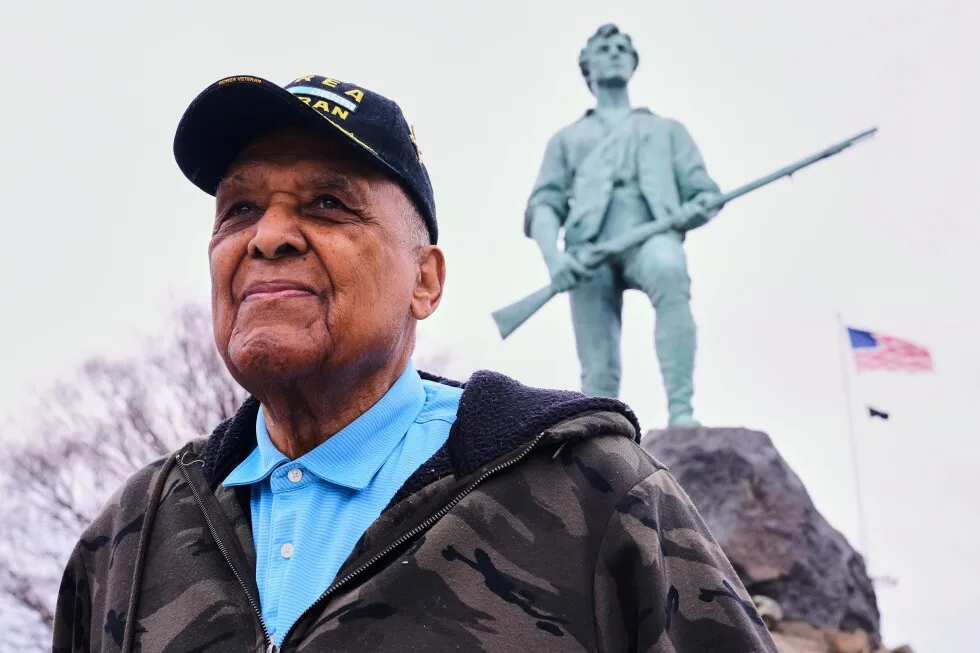
Revolutionary War re-enactor Charles Price, 95, who for decades portrayed enslaved Minuteman Prince Estabrook, poses for a portrait near the Minute Man statue, Monday, April 13, 2026, in Lexington, Mass. (AP Photo/Charles Krupa) 2026-04-18T04:05:21Z LEXINGTON, Mass. (AP) — Charlie Price says he didn’t learn much about the American Revolution in school. He knew about George Washington , the Battle of Bunker Hill and that the patriots won. It wasn’t until he joined the Lexington Minutemen — a group of Revolutionary War reenactors — that he realized there’s so much more to the story. The Lexington Minutemen are marking the anniversary of the Battle of Lexington in Massachusetts on Saturday, as they do every year, and among the soldiers represented will be Prince Estabrook, an enslaved man who joined his white neighbors on Lexington Green in April 19, 1775, as British troops approached. He was wounded that day but went on to serve in multiple deployments throughout the war. “I wasn’t surprised that we didn’t know about it,” said Price, a 95-year-old Black Korean War veteran who played the role of Estabrook for 50 years. “I was surprised that there was one Black soldier out here.” As America prepares to celebrate its 250th anniversary, Estabrook and other patriots of color are being celebrated through programs nationwide that aim to tell a more complete story of the birth of the nation. freestar.queue.push(function () { window.fsAdCount = window.fsAdCount + 1 || 0; let customChannel = '/dynamic_' + fsAdCount; let adList = document.querySelectorAll(".fs-feed-ad") let thisAd = adList[fsAdCount]; let randId = Math.random().toString(36).slice(2); thisAd.id = randId; let thisPlacement = fsAdCount == 0 ? "apnews_story_feed" : "apnews_story_feed_dynamic"; freestar.newAdSlots({ placementName: thisPlacement, slotId: randId }, customChannel); }); Telling the whole story Museum exhibits, documentary films and lectures have traditionally focused on the white leaders of the American Revolution , such as Washington, Benjamin Franklin and Paul Revere. Christopher Brown, a British Empire historian at Columbia University, said the Revolution has long been portrayed as a “simple story and a moral story that celebrates American origins and that looks to the American past in a kind of idealized version of what the present is.” But in recent decades, “a more accurate view of the past” has emerged that showcases the diverse collection of men and women who played critical roles in the fight for freedom. “There were Black men in the ranks who were fighting in Concord and Lexington and fought on Bunker Hill,” he said. “They knew all of the work that women were doing to support the revolutionary effort. The fact that we didn’t know that is more of a sign of our lack of curiosity and the need for greater research.” /* Desktop-first: fully collapse by default */ #ap-readmore-embed { display: none; margin: 0; padding: 0; height: 0; min-height: 0; overflow: hidden; text-align: center; position: relative; z-index: 2; } /* Only show on mobile */ @media (max-width: 767px) { #ap-readmore-embed { display: block; margin: 28px 0; height: auto; overflow: visible; } } #ap-readmore-embed .ap-readmore-btn { appearance: none; -webkit-appearance: none; border: 0; background: #000; color: #fff; cursor: pointer; display: inline-flex; align-items: center; justify-content: center; gap: 10px; padding: 14px 22px; border-radius: 999px; font-family: inherit, "AP Sans", -apple-system, BlinkMacSystemFont, "Helvetica Neue", Arial, sans-serif; font-weight: 700; font-size: 16px; letter-spacing: 0.2px; line-height: 1; box-shadow: 0 10px 18px rgba(0,0,0,0.12); transition: transform 120ms ease, box-shadow 120ms ease, opacity 120ms ease; touch-action: manipulation; -webkit-tap-highlight-color: transparent; position: relative; z-index: 3; } #ap-readmore-embed .ap-readmore-btn:hover { transform: translateY(-1px); box-shadow: 0 14px 22px rgba(0,0,0,0.16); } #ap-readmore-embed .ap-readmore-btn:active { transform: translateY(0); box-shadow: 0 10px 18px rgba(0,0,0,0.12); opacity: 0.95; } #ap-readmore-embed .ap-readmore-btn:focus-visible { outline: 3px solid rgba(228, 0, 43, 0.35); outline-offset: 3px; } #ap-readmore-embed .ap-readmore-icon { width: 10px; height: 10px; border-right: 2px solid currentColor; border-bottom: 2px solid currentColor; transform: rotate(45deg); margin-top: -2px; } #ap-readmore-embed .ap-readmore-fade { display: none; height: 48px; margin-top: -48px; pointer-events: none; background: linear-gradient(to bottom, rgba(255,255,255,0), rgba(255,255,255,1)); } Read More (function () { var APRM_EMBED_ID = "ap-readmore-embed"; var APRM_MOBILE_MQ = "(max-width: 767px)"; function APRM_onReady(fn) { if (document.readyState === "loading") { document.addEventListener("DOMContentLoaded", fn); } else { fn(); } } APRM_onReady(function () { var APRM_embedEl = document.getElementById(APRM_EMBED_ID); if (!APRM_embedEl) return; // 🚨 DESKTOP: remove entire module wrapper and bail early if (!window.matchMedia(APRM_MOBILE_MQ).matches) { var APRM_rootModule = APRM_embedEl.closest(".HTMLModuleEnhancement") || APRM_embedEl.closest(".HtmlModule"); if (APRM_rootModule && APRM_rootModule.parentNode) { APRM_rootModule.parentNode.removeChild(APRM_rootModule); } else if (APRM_embedEl.parentNode) { APRM_embedEl.parentNode.removeChild(APRM_embedEl); } return; // stop the rest of the script from running } }); })(); (function () { var EMBED_ID = "ap-readmore-embed"; var BTN_ID = "apReadMoreBtn"; var FADE_ID = "apReadMoreFade"; var STOP_SELECTOR = ".Page-below"; var SIGN_IN_GATE_SELECTOR = ".sign-in-gate-content"; var HIDDEN_ATTR = "data-ap-readmore-hidden"; var MOBILE_MQ = "(max-width: 767px)"; function ready(fn) { if (document.readyState === "loading") { document.addEventListener("DOMContentLoaded", fn); } else { fn(); } } function isElementNode(n) { return n && n.nodeType === 1; } function cancelEvent(e) { if (!e) return; if (typeof e.preventDefault === "function") e.preventDefault(); if (typeof e.stopPropagation === "function") e.stopPropagation(); if (typeof e.stopImmediatePropagation === "function") e.stopImmediatePropagation(); e.cancelBubble = true; e.returnValue = false; } function collapseDesktopEmbed(embed) { if (!embed) return true; if (!window.matchMedia(MOBILE_MQ).matches) { var maybeWrappers = [ embed.parentElement, embed.closest(".html-embed"), embed.closest("[data-type='htmlembed']"), embed.closest("[class*='embed']"), embed.closest("[class*='Embed']") ].filter(Boolean); embed.style.display = "none"; embed.style.margin = "0"; embed.style.padding = "0"; embed.style.height = "0"; embed.style.minHeight = "0"; embed.style.overflow = "hidden"; maybeWrappers.forEach(function (el) { el.style.margin = "0"; el.style.padding = "0"; el.style.height = "0"; el.style.minHeight = "0"; el.style.overflow = "hidden"; }); if (embed.parentNode) { embed.parentNode.removeChild(embed); } return true; } return false; } ready(function () { var embed = document.getElementById(EMBED_ID); var btn = document.getElementById(BTN_ID); var fade = document.getElementById(FADE_ID); if (!embed || !btn) return; if (collapseDesktopEmbed(embed)) return; var signInGate = document.querySelector(SIGN_IN_GATE_SELECTOR); if (signInGate) { embed.innerHTML = ""; return; } // — Analytics: impression when embed enters viewport — if ("IntersectionObserver" in window) { var io = new IntersectionObserver(function (entries, observer) { if (entries[0].isIntersecting) { window.dataLayer = window.dataLayer || []; window.dataLayer.push({ event: "ap_readmore_impression" }); observer.disconnect(); } }, { threshold: 0 }); io.observe(btn); } var stopEl = document.querySelector(STOP_SELECTOR); if (!stopEl) return; var rootCandidates = [ embed.closest(".Page"), embed.closest("article"), embed.closest("main"), document.body ].filter(Boolean); var root = rootCandidates.find(function (c) { return c.contains(stopEl); }) || document.body; var all = root.getElementsByTagName("*"); var hidden = []; for (var i = 0; i The National Park Service estimates that by the end of the Revolution more than 5,500 patriots of color — including Black and Indigenous people — served on the colonial side, while many runaway slaves fought for the British. freestar.queue.push(function () { window.fsAdCount = window.fsAdCount + 1 || 0; let customChannel = '/dynamic_' + fsAdCount; let adList = document.querySelectorAll(".fs-feed-ad") let thisAd = adList[fsAdCount]; let randId = Math.random().toString(36).slice(2); thisAd.id = randId; let thisPlacement = fsAdCount == 0 ? "apnews_story_feed" : "apnews_story_feed_dynamic"; freestar.newAdSlots({ placementName: thisPlacement, slotId: randId }, customChannel); }); The stories of Black patriots cannot be told without mentioning slavery, which was legal at the time in all 13 Colonies. Some Blacks who fought were enslaved and others fought in the hopes of gaining freedom. Indigenous soldiers made similar calculations, even as tribes fought for their very survival. But despite the documented military diversity of that time, efforts to promote such stories are under pressure. The Trump administration has ordered the removal or censorship of some exhibits highlighting the history of slavery and enslaved people, the Civil Rights Movement and the mistreatment of Indigenous people. Roger Davidson, Jr. an associate professor of history at Bowie State University, said failure to recognize that important part of history can impact communities of color today. freestar.queue.push(function () { window.fsAdCount = window.fsAdCount + 1 || 0; let customChannel = '/dynamic_' + fsAdCount; let adList = document.querySelectorAll(".fs-feed-ad") let thisAd = adList[fsAdCount]; let randId = Math.random().toString(36).slice(2); thisAd.id = randId; let thisPlacement = fsAdCount == 0 ? "apnews_story_feed" : "apnews_story_feed_dynamic"; freestar.newAdSlots({ placementName: thisPlacement, slotId: randId }, customChannel); }); “If you’re not seen as having contributed to society, to the military, to any of it, then people can sort of overlook you,” Davidson said. “It plays into, and I hate to put it this way, but it plays into some people’s biases. Why should we pay any attention to you in the present day, politically, socially, economically, if you have not contributed?” Remembering patriots of color MA250 has handed out millions of dollars in grants to commemorate the battles across Massachusetts that helped lead to America’s independence. Among the beneficiaries is the Black Heritage Trail in Concord that highlights the lives of Black residents in the town during the Revolution. Museum exhibitions celebrating Black patriots have also received grants. Among those highlighted is Crispus Attucks, a sailor of African and Indigenous ancestry who died on March 5, 1770, when British troops fired on a crowd in what is known as the Boston Massacre. Another, Salem Poor, was born enslaved but purchased his freedom before fighting at Bunker Hill. freestar.queue.push(function () { window.fsAdCount = window.fsAdCount + 1 || 0; let customChannel = '/dynamic_' + fsAdCount; let adList = document.querySelectorAll(".fs-feed-ad") let thisAd = adList[fsAdCount]; let randId = Math.random().toString(36).slice(2); thisAd.id = randId; let thisPlacement = fsAdCount == 0 ? "apnews_story_feed" : "apnews_story_feed_dynamic"; freestar.newAdSlots({ placementName: thisPlacement, slotId: randId }, customChannel); }); American Ancestors, a nonprofit history and heritage center in Boston that also received MA250 funding, opens its “Patriots of Color” exhibit next week, throwing a spotlight on the lives of 26 Black and Indigenous men and women who played a role in the American Revolution. They include: Prince Ames, a Black and Narragansett man from Andover, who was forced to join the Continental Army in place of his enslaver; and Paul Cuffe, a Black and Wampanoag businessman, who petitioned the Massachusetts government to reject taxation without representation. Some of their descendants will attend the opening of the exhibition. “By telling these lesser known stories, we want to highlight that ordinary people made a tremendous difference in the arc of the country’s history,” Ryan Woods, president and CEO of American Ancestors, said. freestar.queue.push(function () { window.fsAdCount = window.fsAdCount + 1 || 0; let customChannel = '/dynamic_' + fsAdCount; let adList = document.querySelectorAll(".fs-feed-ad") let thisAd = adList[fsAdCount]; let randId = Math.random().toString(36).slice(2); thisAd.id = randId; let thisPlacement = fsAdCount == 0 ? "apnews_story_feed" : "apnews_story_feed_dynamic"; freestar.newAdSlots({ placementName: thisPlacement, slotId: randId }, customChannel); }); The details of Estabrook’s life Records about Prince Estabrook’s life are scant, but according to the National Park Service, he was likely born in the Lexington area around 1740. His father was enslaved by landowner Benjamin Estabrook, so Prince was born into slavery. It is unclear what his life was like before he trained as a soldier in the Lexington militia. The Park Service says he was serving under the command of Colonel John Parker on April 19, 1775, when his left shoulder was struck by a musket ball. He recovered from that injury and went on to serve eight years with the militia and the Continental Army. After the Revolution, he was granted freedom and returned to Lexington, where tax records from 1790 indicate he joined Benjamin Estabrook’s payroll as ‘a non-white freeman.’ It is unclear if he ever married, had children or owned property. According to family records, he died in 1830, around the age of 90, and was buried in the same cemetery as Benjamin’s son, Nathan, in Ashby, Massachusetts. Price, who has handed reenactment duties to a younger colleague but still attends the early morning reenactment every year, says it is important to know about the soldier’s life. “Keep the story alive to make sure that everybody knows, everybody that we can get in touch with, everybody knows that Prince Estabrook was here,” Price said. “He was a viable person. He did his role, he did his part in fighting for the country.” MICHAEL CASEY Casey writes about the environment, housing and inequality for The Associated Press. He lives in Boston. twitter mailto 获取更多RSS: https://feedx.net https://feedx.site
§ 05

Entities

12 identified
§ 06

Keywords & salience

9 terms
american revolution
1.00
black patriots
0.80
indigenous patriots
0.80
prince estabrook
0.70
revolutionary war
0.70
reenactors
0.60
american history
0.60
battle of lexington
0.50
diverse history
0.50
§ 07

Topic connections

Interactive graph
No topic relationship data available yet. This graph will appear once topic relationships have been computed.