Earth continues to get brighter every year, researchers have found, but the location and intensity of the progression has become increasingly volatile because of Covid-19, regulations on light pollution, and a faltering global economy.NASA-funded researchers at the University of Connecticut (UConn) studied more than 1.1m satellite images taken over a nine-year period to establish that the planet’s artificial light increased by a net 16% between 2014 and 2022.The figure is in keeping with a 2017 study that found Earth’s artificially lit outdoor areas grew by 2% annually over the previous five years, and that light pollution encroached on darkness almost everywhere.The difference in the latest study, published this month in Nature after peer review, is the finding that some parts of the planet became dimmer, helping to offset a 34% overall rise in global radiance.Europe dimmed significantly due to efficiency regulations, the researchers said, while Venezuela lost more than 26% of its night-time light due to economic collapse.More generally, lockdowns, a slowdown in industrial activity and reduced tourism caused by the coronavirus pandemic also had an impact in many areas during the early years of the decade; and more recently, the Ukraine-Russia War left “visible signatures” in that region.Asia, unsurprisingly, continued to lead all regions in brightening.“What satellites now reveal about our nights is not a tidy narrative of progress or decline,” Zhe Zhu, the study’s co-author and director of UConn’s Global Environmental Remote Sensing Laboratory, said in a report posted to NASA’s website.“It is a dynamic portrait of a species reshaping its environment in real time, building, destroying, conserving, and collapsing, often all at once. The world is not simply getting brighter. It is flickering.”Zhu and his team analyzed the 1.16m satellite images pixel by pixel, filtering out interference from moonlight, clouds and atmospheric effects to allow in an approach he said was like using smart glasses to detect real changes in night-time light.The experience was, he said, “like watching the heartbeat of the planet”.Led by chief researcher Tian Li, Zhu’s team spent months looking at the images taken at approximately 1.30am local time every day of the nine-year study period by NASA’s Visible Infrared Imaging Radiometer Suite. The brightening and dimming can be seen in a number of visualizations posted on the internet by the space agency.West coast cities of the US grew brighter as their populations increased, and much of the east coast showed dimming, which the researchers attributed to the higher use of energy-efficient LEDs and broader economic restructuring, the report said.Night-time light “surged” in China and northern India along with urban development, while energy conservation measures coincided with reduced light pollution in Paris and throughout France, which experienced a 33% dimming, it said.The UK and the Netherlands experienced a respective 22% and 21% dimming, and European nights dimmed sharply in 2022 during a regional energy crisis that followed the outbreak of the Russia-Ukraine conflict, the researchers said.The study also lifted a lid on the level of burn-offs by US energy companies during a period in which domestic production of oil and natural gas reached record levels. Satellite imagery revealed cycles of intense gas burn-offs, or flaring, over central US regions, particularly the Permian Basin in Texas and North Dakota’s Bakken Formation, NASA said.Deborah Gordon, senior principal of the Rocky Mountain Institute’s climate intelligence program, told the agency: “Letting operators, investors, and insurers know that this is happening is a huge value proposition, both privately and publicly to the world.“Understanding where gas is being wasted around the globe, and to have this data be public, is huge for energy, and economic and environmental security.”
SRCThe Guardian - World News
LANGEN
LEANCenter-Left
WORDS598
ENT10
SAT · 2026-04-18 · 11:00 GMTBRIEF NSR-2026-0418-70501
NSR-2026-0418-70501News Report·EN·Environmental
Earth gets brighter every year but progression is volatile, study finds
A NASA-funded study by the University of Connecticut found that Earth's artificial light increased by 16% between 2014 and 2022, confirming a trend of increasing global brightness. However, the study, published in Nature, revealed a volatile pattern with some regions dimming, offsetting a 34% overall radiance increase.
Richard LuscombeThe Guardian - World NewsFiled 2026-04-18 · 11:00 GMTLean · Center-LeftRead · 3 min
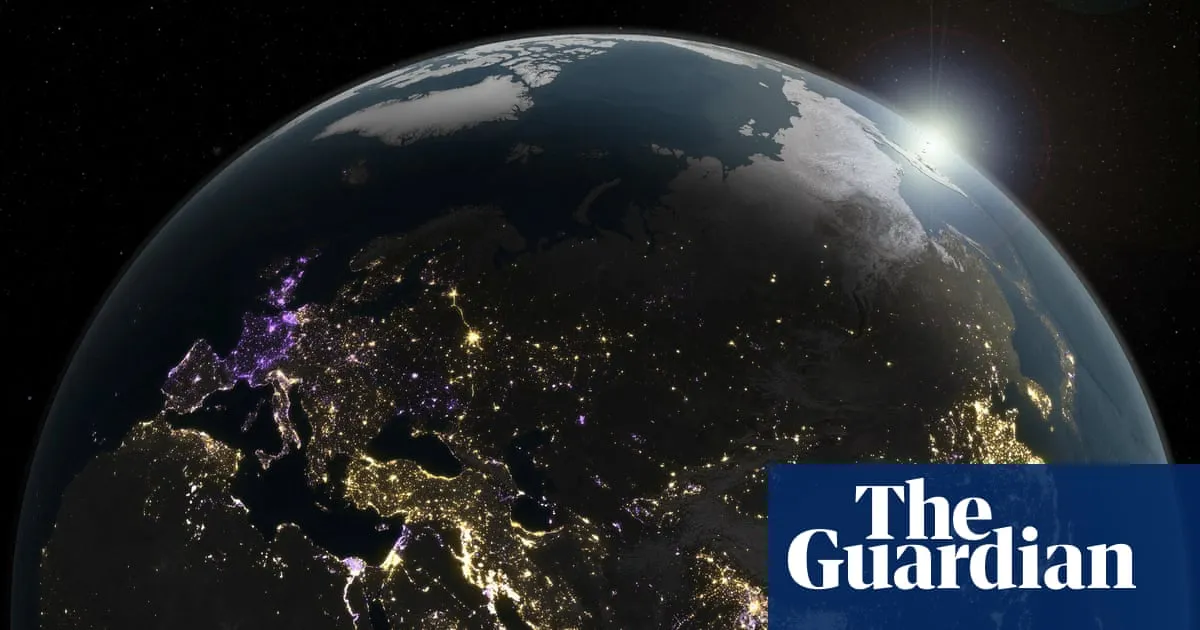
The Guardian - World NewsFIG 01
Reading time
3min
Word count
598words
Sources cited
4cited
Entities identified
10entities
Quality score
100%
§ 01
Briefing Summary
AI-generatedNEWSAR · AI
A NASA-funded study by the University of Connecticut found that Earth's artificial light increased by 16% between 2014 and 2022, confirming a trend of increasing global brightness. However, the study, published in Nature, revealed a volatile pattern with some regions dimming, offsetting a 34% overall radiance increase. Europe dimmed due to efficiency regulations, while Venezuela experienced dimming due to economic collapse. The Covid-19 pandemic, the war in Ukraine, and fluctuating economic activity also contributed to regional variations in light emissions. Researchers analyzed over 1.1 million satellite images to track these changes, noting Asia as the region with the most significant brightening.
Confidence 0.90Sources 4Claims 3Entities 10
§ 02
Article analysis
Model · rule-basedFraming
Environmental
Tone
Measured
AI-assessed
CalmNeutralAlarmist
Factuality
0.85 / 1.00
Factual
LowHigh
Sources cited
4
Well sourced
FewMany
§ 03
Key claims
3 extracted01
Asia led all regions in brightening, with 'visible signatures' left by the Ukraine-Russia war in that region.
statisticResearchers at the University of Connecticut (UConn)
Confidence
1.00
02
Europe dimmed significantly due to efficiency regulations, while Venezuela lost more than 26% of its night-time light.
statisticResearchers at the University of Connecticut (UConn)
Confidence
1.00
03
The planet's artificial light increased by a net 16% between 2014 and 2022.
statisticResearchers at the University of Connecticut (UConn)
Confidence
1.00
§ 04
Full report
3 min read · 598 words§ 05
Entities
10 identifiedKey playerOppositionContextPositiveNeutralNegative
Organizations3
§ 06
Keywords & salience
9 termsearth brightening
1.00
artificial light
0.90
light pollution
0.80
satellite images
0.70
global radiance
0.60
covid-19
0.50
economic collapse
0.50
efficiency regulations
0.40
night-time light
0.40
§ 07
Topic connections
Interactive graph No topic relationship data available yet. This graph will appear once topic relationships have been computed.