The milky way and traces of meteors illuminate the sky over Burg on the Baltic Sea island of Fehmarn, northern Germany, April 20, 2018. (Daniel Reinhardt/dpa via AP, File) 2026-04-18T12:03:32Z NEW YORK (AP) — This year’s Lyrid meteor shower is getting a boost thanks to a dim crescent moon. Skywatchers could see 10 to 20 shooting stars per hour soar across the spring sky, according to NASA, when the fiery display peaks Tuesday night into Wednesday morning. The show will be visible across the globe, but views will be best in the Northern Hemisphere. And there’s no risk of the crescent moon photobombing the Lyrid shower. It’ll set before the fun starts. Meteor showers happen when the Earth plows through debris trails left behind by space rocks. Those stray bits get hot as they enter the atmosphere, producing fiery streaks that are also known as shooting stars. Contrary to the name, most meteor showers are actually debris from comets. The Lyrids are the leftovers from an icy ball called comet Thatcher. “We only get to see the actual comet once every 415 years. But we pass through the grains that have been left in its wake every year around the same time,” said Maria Valdes, who studies meteorites and works at the School of the Art Institute of Chicago. A handful of random meteors are visible on any given night. At predictable times throughout the year, enough can be seen at once to make a more exciting spectacle. The Lyrids are one of the oldest recorded meteor showers, with reported sightings dating back over 2,500 years. To see the Lyrids, go outside after midnight and venture away from tall buildings and city lights. It’ll take at least 15 to 30 minutes for your eyes to adjust to the nighttime sky and remember to resist looking at your phone. (
SRCAssociated Press (AP)
LANGEN
LEANCenter
WORDS309
ENT6
SAT · 2026-04-18 · 12:53 GMTBRIEF NSR-2026-0418-70566
NSR-2026-0418-70566News Report·EN·Technology
The Lyrid meteor shower is visible now and peaking soon. Here’s how to spot it
The Lyrid meteor shower, an annual celestial event, is currently visible and will peak Tuesday night into Wednesday morning. Viewers, particularly in the Northern Hemisphere, may see 10 to 20 meteors per hour.
Associated Press (AP)Filed 2026-04-18 · 12:53 GMTLean · CenterRead · 2 min
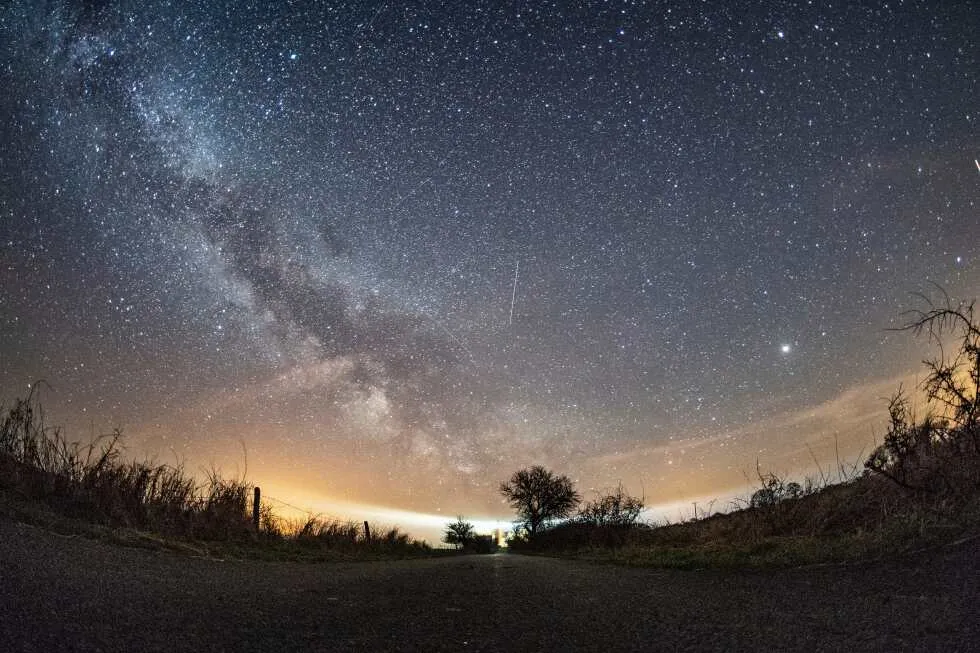
Associated Press (AP)FIG 01
Reading time
2min
Word count
309words
Sources cited
2cited
Entities identified
6entities
Quality score
100%
§ 01
Briefing Summary
AI-generatedNEWSAR · AI
The Lyrid meteor shower, an annual celestial event, is currently visible and will peak Tuesday night into Wednesday morning. Viewers, particularly in the Northern Hemisphere, may see 10 to 20 meteors per hour. The shower is caused by Earth passing through debris from comet Thatcher, which only appears every 415 years. These meteor showers are predictable times throughout the year when enough meteors can be seen at once to make a more exciting spectacle. To best view the Lyrids, observers should go outside after midnight, away from city lights, and allow their eyes to adjust to the darkness. The Lyrids are one of the oldest recorded meteor showers, with reported sightings dating back over 2,500 years.
Confidence 0.90Sources 2Claims 5Entities 6
§ 02
Article analysis
Model · rule-basedFraming
Technology
Human Interest
Tone
Measured
AI-assessed
CalmNeutralAlarmist
Factuality
0.90 / 1.00
Factual
LowHigh
Sources cited
2
Limited
FewMany
§ 03
Key claims
5 extracted01
We only get to see the actual comet once every 415 years.
quoteMaria Valdes, School of the Art Institute of Chicago
Confidence
1.00
02
The Lyrids are the leftovers from an icy ball called comet Thatcher.
factual
Confidence
1.00
03
The show will be visible across the globe, but views will be best in the Northern Hemisphere.
factual
Confidence
0.90
04
This year’s Lyrid meteor shower is getting a boost thanks to a dim crescent moon.
factual
Confidence
0.90
05
Skywatchers could see 10 to 20 shooting stars per hour soar across the spring sky.
predictionNASA
Confidence
0.80
§ 04
Full report
2 min read · 309 words§ 05
Entities
6 identifiedKey playerOppositionContextPositiveNeutralNegative
People1
Locations2
§ 06
Keywords & salience
8 termslyrid meteor shower
1.00
meteor shower
0.90
shooting stars
0.70
comet thatcher
0.60
crescent moon
0.50
northern hemisphere
0.50
debris trails
0.40
space rocks
0.40
§ 07
Topic connections
Interactive graph No topic relationship data available yet. This graph will appear once topic relationships have been computed.