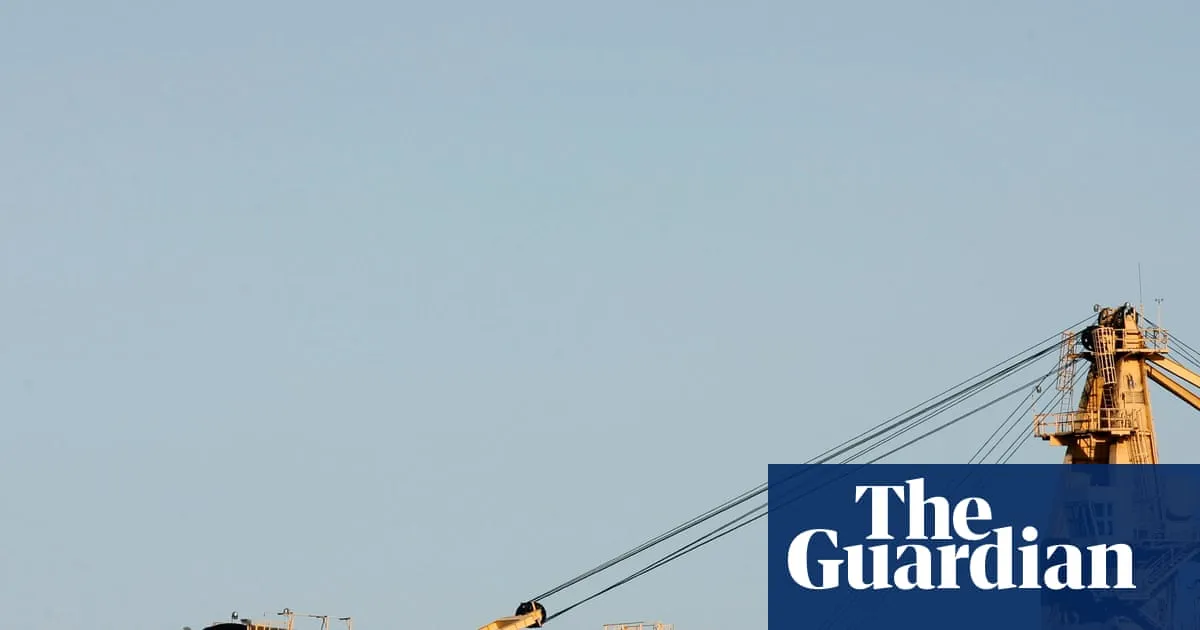
About 80% of Australia’s coalmines pumped more emissions into the atmosphere during the last financial year than their government-imposed limit, new data shows. Pictured: A coal stacker pours coal into piles ready for export in Newcastle, NSW. Photograph: Mick Tsikas/REUTERS View image in fullscreen About 80% of Australia’s coalmines pumped more emissions into the atmosphere during the last financial year than their government-imposed limit, new data shows. Pictured: A coal stacker pours coal into piles ready for export in Newcastle, NSW. Photograph: Mick Tsikas/REUTERS Analysis Australia’s coalmine emissions are increasing. Is this how a major policy to cut climate pollution is meant to work? Adam Morton The Albanese government overhauled policy and promised significant pollution cuts – but carbon offsets are still being used as an excuse Is this how a national scheme to cut climate pollution is supposed to work? Australian government data released this week shows emissions from Australian coalmines increased last financial year. About 80% of the coalmines pumped more into the atmosphere than their government-imposed limit. The overall rise is relatively small – about 0.5%. But it happened as the Albanese government has promised significant pollution cuts to help address the climate crisis and meet its legislated climate targets. That’s remarkable, and worth picking apart. The coalmines are covered by a policy with a mind-deadening name: the safeguard mechanism. Its role is crucially important. It’s meant to drive cleaner practice and emissions cuts at about 200 of the country’s major industrial sites. It’s now three years since the Albanese government overhauled what was a failing Coalition government scheme to make what sounds like significant annual cuts. Each year, most of the mines, gas processing facilities, steelworks, smelters, chemical manufacturers and other facilities covered by it are meant to reduce emissions intensity (how much they release relative to production) by 4.9%. Coalmines are the clearest example. Total emissions from coalmines last year were estimated to be 31.78m tonnes, up from 31.63m tonnes. The rise would have been greater if the Grosvenor mine had not been closed due to a fire. Nearly two-thirds of mines released more than the previous year. That has happened while the emissions limits imposed on mines are coming down. But while 80% of mines emitted more than their government-imposed targets, they didn’t actually miss their targets. They met their obligations by buying carbon offsets, said to represent emissions cuts being made somewhere else. The advice from scientists and experts is that this is no sort of climate solution – if it is allowed to continue. Addressing the climate crisis requires rapid direct emissions cuts wherever possible. That mainly means quickly taking steps to reduce fossil fuel use. To the extent to which offsets are justified, it is in cases where there are not yet viable alternatives. Cement making and some manufacturing processes that require extreme heat, for example. The most common form of offsets – carbon credits created by storing carbon dioxide (CO2) in forests and other nature – will ultimately be needed for “negative emissions”, drawing down heat-trapping gas already in the atmosphere. This can’t happen while offsets are being used as an excuse for expanding fossil fuel use. There are also questions about whether the carbon offset system is delivering the scale of emissions cuts claimed. Peer-reviewed studies have raised significant doubts about the main methods used to create credits in Australia. Georgina Woods, from campaign group Lock the Gate, says the reliance on offsets is “a major structural flaw” in the safeguard mechanism. “The Albanese government must fix this flabby policy that allows fossil fuel companies to lean heavily on land-sector offsets instead of investing in reducing pollution at the source. It’s a recipe for failure,” she says. “If offsets keep being used to disguise industrial greenhouse pollution, Australians will bear the cost through climate-related disasters and spiking cost-of-living.” This view is backed by several organisations. Kate Dooley, a senior research fellow in the school of geography, earth and atmospheric sciences at the University of Melbourne, says the reliance on land-based offsets to balance industrial emissions is not aligned with what scientific studies have found is necessary, and that offset use is “delaying real decarbonisation”. “Australia’s climate targets will only be met by reducing emissions at source and scaling up renewable energy, not through temporary storage of carbon in land,” she says. The climate change minister, Chris Bowen, says total onsite emissions under the scheme are coming down, even without offsets. According to the official data, they were 3.2m tonnes – or 2.3% – lower this year. But there is a wrinkle. There were 11 fewer industrial facilities covered by the scheme last year than in 2023-24. Why? Only places that emit more than 100,000 tonnes of CO2 in a year are included. Mines and factories that drop below that threshold are reducing pollution but unless they go to zero they are still pumping out emissions that just aren’t counted here. It means a direct comparison is not quickly possible, but the comparable direct cut was probably less than 2%. The cut is greater when offsets are included – about 5.5%, or 7m tonnes. Mining company Rio Tinto and gas producer Woodside both bought more than 1m carbon credits to offset their climate pollution last year, at a likely cost of about $40m each. A good thing about this: the companies are having to pay a carbon price for some of their damaging pollution. As that sum grows, that can be a deterrent that for some could be an incentive to make direct emissions cuts. It’s a better situation than under the Coalition, when big emitting businesses mostly faced no penalty. But for now it is a relatively small cost for multinational companies. The climate consultancy RepuTex found large decarbonisation initiatives were yet to be adopted at scale by the companies under the safeguard due to the long lead time and high cost of clean solutions in some industries. It says it expects that to change this financial year, particularly as off-grid mines invest in renewable energy and electric machinery. That would clearly be positive, but it won’t address fundamental questions over the design of the scheme. Some major coalmines – Adani’s Carmichael mine and Glencore’s Hail Creek mine – received the equivalent of millions of dollars in carbon credits last year for emitting less than their government limits, known as baselines. In the case of the Carmichael mine, this happened despite its pollution rising compared with the previous year. Its emissions were still much less than its baseline, which was calculated using a formula that factors in both the mine’s history and average emissions across the industry. If the Albanese government sees a problem with this, it hasn’t said so yet. To come back to the question raised at the top: this is how the system is designed to work. Bowen says the data shows the safeguard is “good policy, working well” as it is providing investment certainty for industry “to make sure that their operations are viable on an ongoing basis” while reducing overall emissions. Not all government agencies agree. The Net Zero Commission, which advises the New South Wales government, warned in December that the scheme was unlikely to drive onsite cuts at coalmines with the urgency required to meet legislated climate targets, partly because there is no restriction on how many carbon credits a company can buy. A review of the scheme is due to start in July, though it may be delayed due to the fuel crisis. There is an expectation among some people working in the area that it will be a relatively light touch. The evidence says it needs a much deeper look. Adam Morton is Guardian Australia’s climate and environment editor and writes the Clear Air newsletter Explore more on these topics Greenhouse gas emissions Australian politics Climate crisis Carbon offsetting Fossil fuels Mining Coal analysis Share Reuse this content
SRCThe Guardian - World News
LANGEN
LEANCenter-Left
WORDS1 318
ENT6
SAT · 2026-04-18 · 20:00 GMTBRIEF NSR-2026-0418-70603
NSR-2026-0418-70603Analysis·EN·Environmental
Australia’s coalmine emissions are increasing. Is this how a major policy to cut climate pollution is meant to work?
New Australian government data reveals that coalmine emissions increased in the last financial year, despite the Albanese government's pledge to cut pollution and meet climate targets. Approximately 80% of Australian coalmines exceeded their government-imposed emission limits, contributing to an overall rise of about 0.5% in total emissions from coalmines.
Adam MortonThe Guardian - World NewsFiled 2026-04-18 · 20:00 GMTLean · Center-LeftRead · 6 min
The Guardian - World NewsFIG 01
Reading time
6min
Word count
1 318words
Sources cited
0cited
Entities identified
6entities
Quality score
100%
§ 01
Briefing Summary
AI-generatedNEWSAR · AI
New Australian government data reveals that coalmine emissions increased in the last financial year, despite the Albanese government's pledge to cut pollution and meet climate targets. Approximately 80% of Australian coalmines exceeded their government-imposed emission limits, contributing to an overall rise of about 0.5% in total emissions from coalmines. This increase occurred even as the government's safeguard mechanism, designed to drive emissions cuts at major industrial sites, was in effect. While emissions limits are decreasing, nearly two-thirds of mines released more emissions than the previous year. The policy requires facilities to reduce emissions intensity by 4.9% annually, but carbon offsets are being used.
Confidence 0.90Claims 5Entities 6
§ 02
Article analysis
Model · rule-basedFraming
Environmental
Political Strategy
Tone
Measured
AI-assessed
CalmNeutralAlarmist
Factuality
0.60 / 1.00
Mixed
LowHigh
Sources cited
0
No named sources
FewMany
§ 03
Key claims
5 extracted01
They met their obligations by buying carbon offsets, said to represent emissions cuts being made somewhere else.
factual
Confidence
1.00
02
The coalmines are covered by a policy with a mind-deadening name: the safeguard mechanism.
factual
Confidence
1.00
03
Total emissions from coalmines last year were estimated to be 31.78m tonnes, up from 31.63m tonnes.
statistic
Confidence
1.00
04
About 80% of Australia’s coalmines pumped more emissions into the atmosphere during the last financial year than their government-imposed limit.
statisticAustralian government data
Confidence
1.00
05
Addressing the climate crisis requires rapid direct emissions cuts wherever possible.
factual
Confidence
0.90
§ 04
Full report
6 min read · 1 318 words§ 05
Entities
6 identifiedKey playerOppositionContextPositiveNeutralNegative
Organizations2
§ 06
Keywords & salience
9 termscoalmine emissions
1.00
climate pollution
0.90
safeguard mechanism
0.80
emissions targets
0.70
climate crisis
0.60
pollution cuts
0.50
carbon offsets
0.50
australian government
0.40
emissions intensity
0.40
§ 07
Topic connections
Interactive graph Network visualization showing 51 related topics
View Full Graph Person Organization Location Event|Click node to navigate|Edge numbers = shared articles