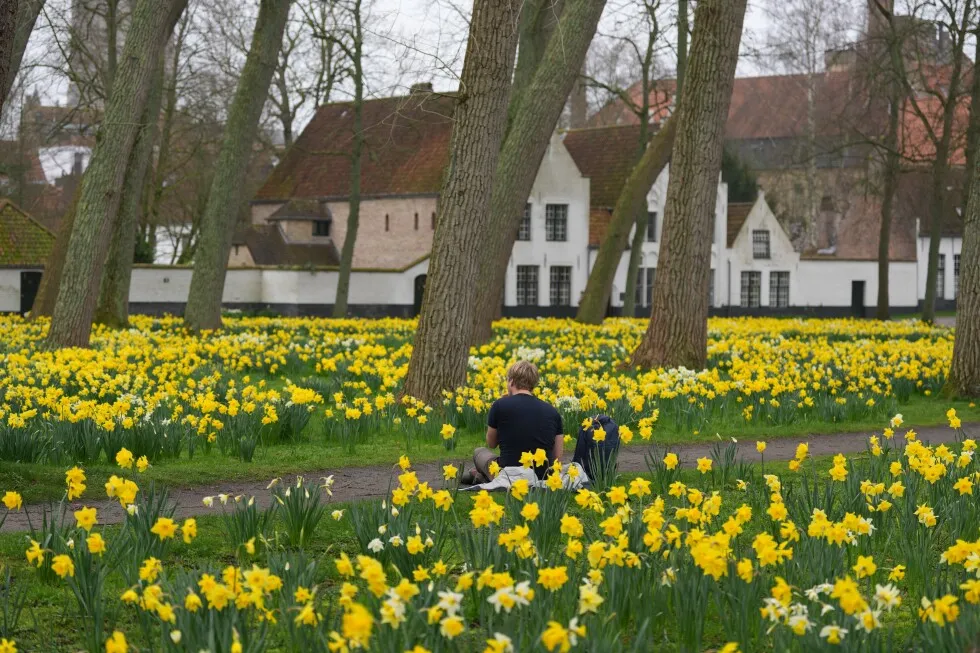
A visitor sits among the daffodils in the courtyard of the Beguinage Ten Wijngaerde of Bruges, Belgium, Tuesday March 10, 2026. (AP Photo/Virginia Mayo) 2026-04-19T05:07:12Z Bruges, Belgium (AP) — The clatter of suitcases rolling over cobblestones, motorboats chugging along a canal and visitors chattering in a smattering of languages provide a soundtrack to Bruges that makes it clear you are in one of Belgium’s most touristic cities. And yet, about two dozen women residents and visitors have found a hidden sanctuary from its bustle in a spot over a small bridge and under an ornate arch with an engraved Latin phrase “sauvegarde,” or “safe place” in English. Nestled in a sea of yellow daffodils lies an oasis of calm and tranquility founded in 1245: the Princely Beguinage Ten Wijngaerde of Bruges. For 22 years, Trees Dewever has called this beguinage her home. She said it provides “an overwhelming feeling of calm and I think we need that in this world.” Her neighbor, 23-year beguinage resident Jo Verplaetsen, said the spirit of the medieval shelter is today soothing and social. “Each day you are thankful to be here,” she said. A refuge for women from medieval to modern woes However serene now, the beguinages emerged after the 12th century as an antidote to devastation. Conflicts in the Middle Ages ravaged the male population, creating a glut of widows and single women who needed some kind of stability. They often chose the looser rules of the beguinages instead of stricter convents, said Michel Vanholder, a volunteer at the Grand Beguinage Church of Mechelen. “They didn’t want to go become nuns but nevertheless they wanted to live together without men because there were not enough men to marry,” he said. Women who joined were called beguines, and while forbidden to marry while residing in the beguinages, they were allowed free egress, could own their own property and did not take religious vows of celibacy and poverty like nuns in adjacent convents. (
SRCAssociated Press (AP)
LANGEN
LEANCenter
WORDS329
ENT8
SUN · 2026-04-19 · 11:23 GMTBRIEF NSR-2026-0419-70680
NSR-2026-0419-70680News Report·EN·Human Interest
Belgium’s Beguinages: Tranquil oases in a world of noise and distraction
The article discusses the Beguinage Ten Wijngaerde in Bruges, Belgium, a tranquil sanctuary offering respite from the city's bustling tourism. Founded in 1245, it provides a peaceful home for women, including long-term residents like Trees Dewever and Jo Verplaetsen.
Associated Press (AP)Filed 2026-04-19 · 11:23 GMTLean · CenterRead · 2 min
Associated Press (AP)FIG 01
Reading time
2min
Word count
329words
Sources cited
1cited
Entities identified
8entities
Quality score
100%
§ 01
Briefing Summary
AI-generatedNEWSAR · AI
The article discusses the Beguinage Ten Wijngaerde in Bruges, Belgium, a tranquil sanctuary offering respite from the city's bustling tourism. Founded in 1245, it provides a peaceful home for women, including long-term residents like Trees Dewever and Jo Verplaetsen. Beguinages originated in the 12th century to provide stability for widows and single women affected by medieval conflicts. Unlike convents, beguinages allowed women, known as beguines, to own property, leave freely, and not take vows of celibacy or poverty, offering a less restrictive communal living arrangement. The Beguinage in Bruges continues to offer a sense of calm and community for its residents.
Confidence 0.90Sources 1Claims 5Entities 8
§ 02
Article analysis
Model · rule-basedFraming
Human Interest
Tone
Measured
AI-assessed
CalmNeutralAlarmist
Factuality
0.80 / 1.00
Factual
LowHigh
Sources cited
1
Limited
FewMany
§ 03
Key claims
5 extracted01
They didn’t want to go become nuns but nevertheless they wanted to live together without men because there were not enough men to marry.
quoteMichel Vanholder, volunteer at the Grand Beguinage Church of Mechelen
Confidence
1.00
02
Each day you are thankful to be here.
quoteJo Verplaetsen, beguinage resident
Confidence
1.00
03
Women in beguinages were allowed free egress and could own property.
factualAP
Confidence
1.00
04
Beguinages emerged after the 12th century as a refuge for women.
factualAP
Confidence
1.00
05
The Princely Beguinage Ten Wijngaerde of Bruges was founded in 1245.
factualAP
Confidence
1.00
§ 04
Full report
2 min read · 329 words§ 05
Entities
8 identifiedKey playerOppositionContextPositiveNeutralNegative
People3
Locations4
§ 06
Keywords & salience
8 termsbeguinages
1.00
belgium
0.80
women
0.70
bruges
0.70
medieval
0.60
tranquility
0.60
refuge
0.50
convents
0.40
§ 07
Topic connections
Interactive graph No topic relationship data available yet. This graph will appear once topic relationships have been computed.