Wild Przewalski horses graze in a forest inside the Chernobyl-exclusion-zone" class="entity-link entity-location" data-entity-id="118852" data-entity-type="location">Chernobyl exclusion zone, Ukraine, Wednesday, April 8, 2026. Chornobyl is the Ukrainian name for the city. (AP Photo/Evgeniy Maloletka) 2026-04-19T05:18:50Z Chernobyl, Ukraine (AP) — On contaminated land that is too dangerous for human life, the world’s wildest horses roam free. Across the Chernobyl-exclusion-zone" class="entity-link entity-location" data-entity-id="118852" data-entity-type="location">Chernobyl exclusion zone, Przewalski’s horses — stocky, sand-colored and almost toy-like in appearance — graze in a radioactive landscape larger than Luxembourg. On April 26, 1986, an explosion at the nuclear power plant in Ukraine sent radiation across Europe and forced the evacuation of entire towns, displacing tens of thousands. It was the worst nuclear disaster in history. Four decades on, Chernobyl — which is transliterated as “Chornobyl” in Ukraine — remains too dangerous for humans. But the wildlife has moved back in. Wolves now prowl the vast no-man’s-land spanning Ukraine and Belarus, and brown bears have returned after more than a century. Populations of lynx, moose, red deer and even free-roaming packs of dogs have rebounded. Przewalski’s horses, native to Mongolia and once on the brink of extinction, were introduced here in 1998 as an experiment. Known as “takhi” in Mongolia (“spirit”), the horses are distinct from domestic breeds, with 33 pairs of chromosomes compared with 32 in domesticated horses. The modern name comes from the Russian explorer who first formally identified them. “The fact that Ukraine now has a free-ranging population is something of a small miracle,” said Denys Vyshnevskyi, the zone’s lead nature scientist. (
SRCAssociated Press (AP)
LANGEN
LEANCenter
WORDS249
ENT8
SUN · 2026-04-19 · 11:23 GMTBRIEF NSR-2026-0419-70689
NSR-2026-0419-70689News Report·EN·Environmental
Chernobyl’s radioactive landscape is testament to nature’s resilience and survival spirit
The Chernobyl exclusion zone, site of the 1986 nuclear disaster in Ukraine, remains too radioactive for humans but has become a haven for wildlife. Populations of animals like wolves, brown bears, lynx, moose, red deer, and free-roaming dogs have rebounded in the area.
Associated Press (AP)Filed 2026-04-19 · 11:23 GMTLean · CenterRead · 1 min
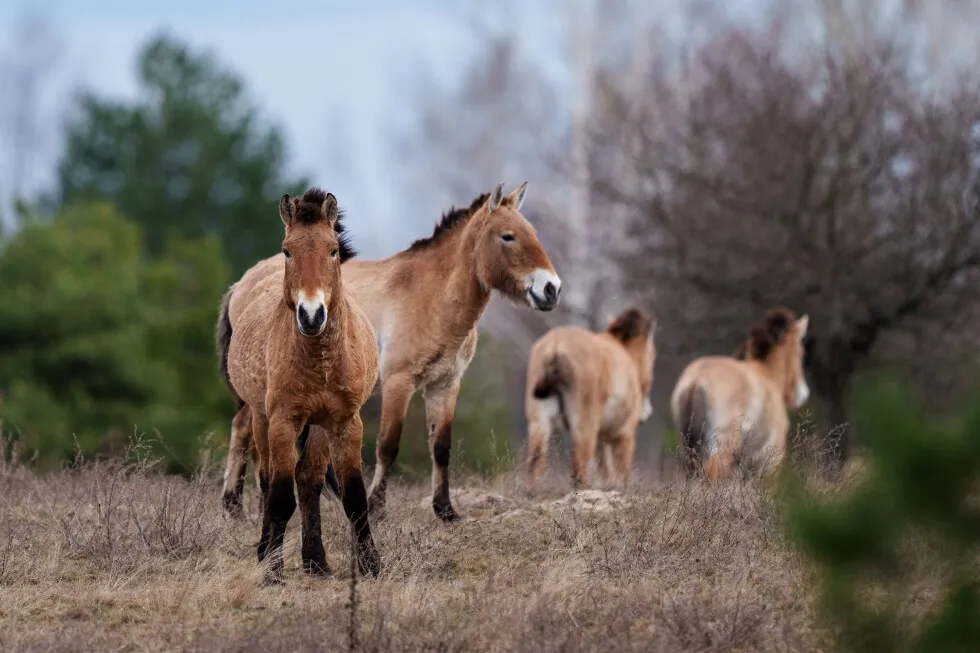
Associated Press (AP)FIG 01
Reading time
1min
Word count
249words
Sources cited
1cited
Entities identified
8entities
Quality score
100%
§ 01
Briefing Summary
AI-generatedNEWSAR · AI
The Chernobyl exclusion zone, site of the 1986 nuclear disaster in Ukraine, remains too radioactive for humans but has become a haven for wildlife. Populations of animals like wolves, brown bears, lynx, moose, red deer, and free-roaming dogs have rebounded in the area. Notably, Przewalski's horses, an endangered species native to Mongolia, were introduced to the zone in 1998 and have thrived. The horses, known as "takhi" or spirit, now roam freely across the contaminated landscape, which spans Ukraine and Belarus. The return of these animals demonstrates nature's resilience in the face of a catastrophic event.
Confidence 0.90Sources 1Claims 5Entities 8
§ 02
Article analysis
Model · rule-basedFraming
Environmental
Human Interest
Tone
Measured
AI-assessed
CalmNeutralAlarmist
Factuality
0.80 / 1.00
Factual
LowHigh
Sources cited
1
Limited
FewMany
§ 03
Key claims
5 extracted01
Ukraine now has a free-ranging population (of Przewalski's horses).
quoteDenys Vyshnevskyi, the zone’s lead nature scientist
Confidence
1.00
02
An explosion at the Chernobyl nuclear power plant in 1986 sent radiation across Europe.
factual
Confidence
1.00
03
Przewalski's horses roam free in the Chernobyl exclusion zone.
factual
Confidence
1.00
04
Wolves, brown bears, lynx, moose, and dogs have rebounded in the Chernobyl exclusion zone.
factual
Confidence
0.90
05
The Chernobyl exclusion zone remains too dangerous for humans.
factual
Confidence
0.90
§ 04
Full report
1 min read · 249 words§ 05
Entities
8 identifiedKey playerOppositionContextPositiveNeutralNegative
§ 06
Keywords & salience
10 termschernobyl
1.00
przewalski's horses
0.90
radioactive landscape
0.80
wildlife
0.70
nature's resilience
0.70
exclusion zone
0.70
ukraine
0.60
nuclear disaster
0.60
animal populations
0.50
radiation
0.50
§ 07
Topic connections
Interactive graph No topic relationship data available yet. This graph will appear once topic relationships have been computed.