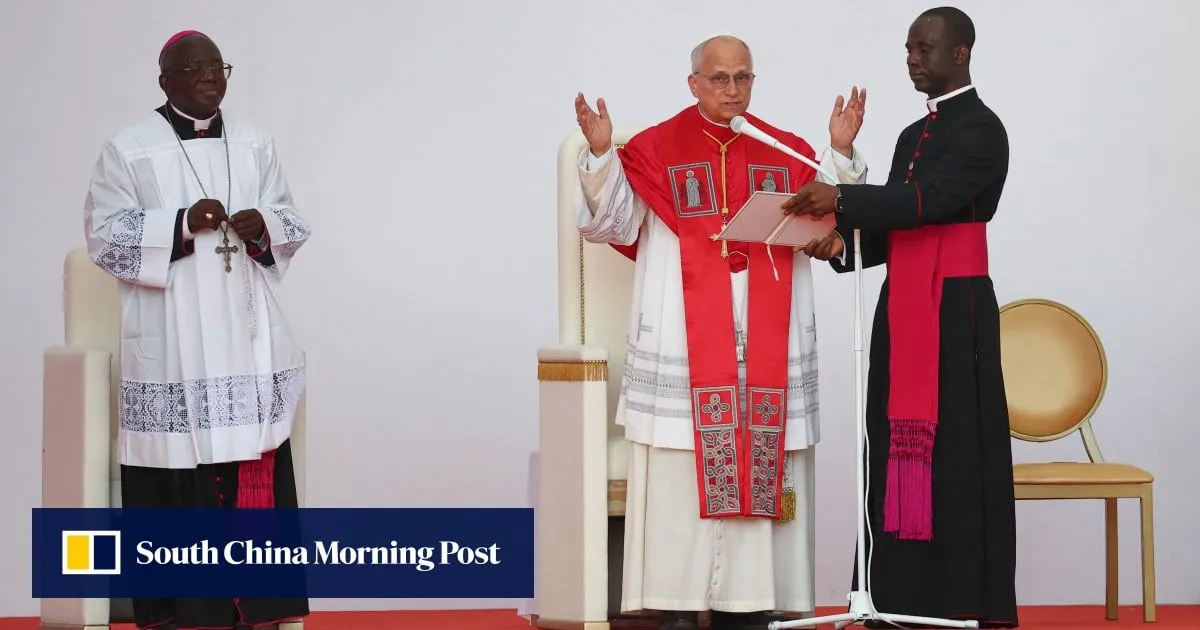
Pope Leo on Sunday recalled the “sorrow and great suffering” Angolans endured for centuries, as the American pope prayed at a Catholic shrine located at the site of an important hub of the African slave trade during Portugal’s colonial rule.Leo travelled to the Sanctuary of Mama Muxima, nestled in the Angolan savannahs of baobab trees at the edge of the Kwanza River. It became a major pilgrimage destination after believers reported an appearance by the Virgin Mary around 1833.But the Church of Our Lady of Muxima was originally built by Portuguese colonisers at the end of the 16th century as part of a fortress complex and it became a hub in the slave trade. It was where enslaved Africans were gathered to be baptised by Portuguese priests before being forced to walk to the port of Luanda, over 110km (70 miles) to the north, to be put on ships to the Americas.
SRCSouth China Morning Post
LANGEN
LEANCenter-Right
WORDS152
ENT8
SUN · 2026-04-19 · 18:25 GMTBRIEF NSR-2026-0419-70783
NSR-2026-0419-70783News Report·EN·Human Rights
Pope Leo prays at Catholic shrine in Angola that was a centre of African slave trade
Pope Leo visited the Sanctuary of Mama Muxima in Angola on Sunday, a Catholic shrine with a history deeply intertwined with the transatlantic slave trade. The shrine, originally built by Portuguese colonizers in the late 16th century, served as a hub where enslaved Africans were gathered and baptized before being transported to the port of Luanda.
Associated PressSouth China Morning PostFiled 2026-04-19 · 18:25 GMTLean · Center-RightRead · 1 min
South China Morning PostFIG 01
Reading time
1min
Word count
152words
Sources cited
0cited
Entities identified
8entities
Quality score
75%
§ 01
Briefing Summary
AI-generatedNEWSAR · AI
Pope Leo visited the Sanctuary of Mama Muxima in Angola on Sunday, a Catholic shrine with a history deeply intertwined with the transatlantic slave trade. The shrine, originally built by Portuguese colonizers in the late 16th century, served as a hub where enslaved Africans were gathered and baptized before being transported to the port of Luanda. From there, they were shipped to the Americas. Pope Leo acknowledged the "sorrow and great suffering" endured by Angolans during centuries of the slave trade. The Sanctuary of Mama Muxima became a major pilgrimage destination after reported apparitions of the Virgin Mary around 1833. The Pope's visit served as a moment of reflection on Angola's painful past.
Confidence 0.85Claims 5Entities 8
§ 02
Article analysis
Model · rule-basedFraming
Human Rights
Political Strategy
Tone
Measured
AI-assessed
CalmNeutralAlarmist
Factuality
0.90 / 1.00
Factual
LowHigh
Sources cited
0
No named sources
FewMany
§ 03
Key claims
5 extracted01
Luanda is over 110km (70 miles) to the north of the church.
factual
Confidence
1.00
02
Enslaved Africans were gathered to be baptised before being forced to walk to Luanda.
factual
Confidence
1.00
03
The church became a hub in the slave trade.
factual
Confidence
1.00
04
The Church of Our Lady of Muxima was built by Portuguese colonisers at the end of the 16th century.
factual
Confidence
1.00
05
Pope Leo recalled the “sorrow and great suffering” Angolans endured for centuries.
quotePope Leo
Confidence
1.00
§ 04
Full report
1 min read · 152 words§ 05
Entities
8 identifiedKey playerOppositionContextPositiveNeutralNegative
Organizations1